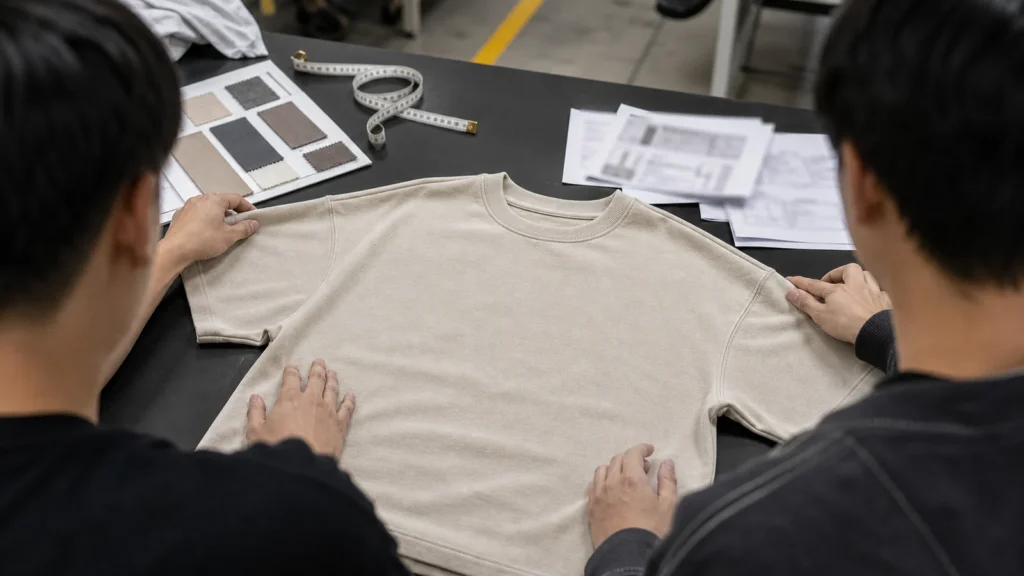
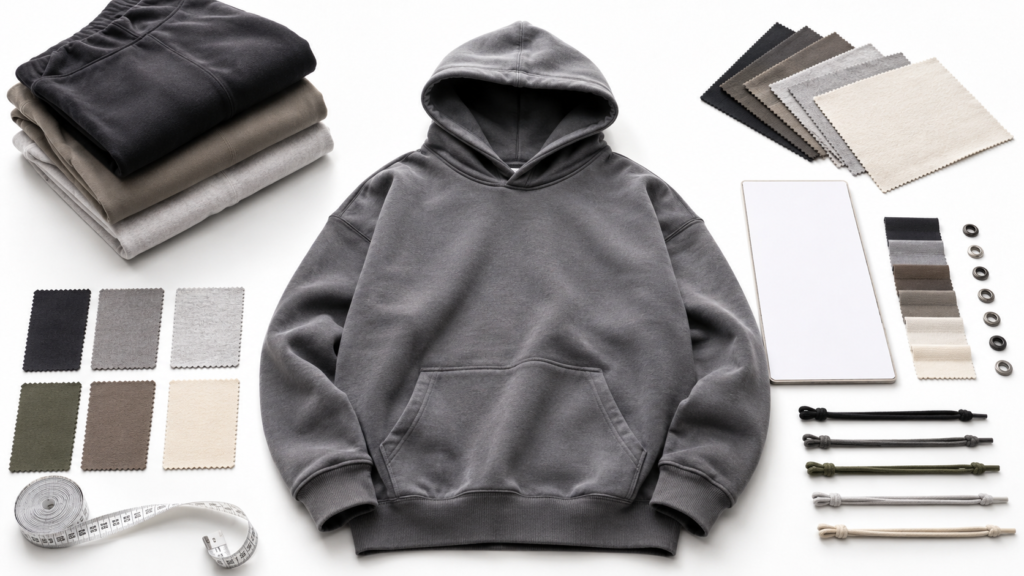
Choosing the right clothing manufacturer is one of the most important decisions for any fashion brand. Your manufacturer affects product quality, sample accuracy, production cost, delivery time, customer satisfaction and long-term brand growth.
Whether you are launching a new streetwear label, building a private label clothing brand or scaling an existing apparel business, the right manufacturing partner can help turn your design ideas into finished products with stable quality.
This guide explains how to choose a reliable clothing manufacturer, what to check before placing an order and how to reduce risks during sampling and bulk production.
Quick Answer: How Do You Choose the Right Clothing Manufacturer?
To choose the right clothing manufacturer, evaluate its product experience, fabric sourcing ability, sample development process, customization options, MOQ, quality control, communication, production capacity and export experience.
A suitable manufacturer should understand your product category, explain possible production risks, provide accurate samples and support your brand from design development to bulk production.
Why Choosing the Right Clothing Manufacturer Matters
A clothing manufacturer is not just a supplier. It is part of your fashion brand’s supply chain.
The right manufacturer can help you:
• Improve product quality
• Control production costs
• Develop better samples
• Reduce delivery delays
• Maintain consistent sizing
• Support custom branding
• Scale production as your brand grows
A poor manufacturing partner can lead to wrong measurements, unstable quality, delayed orders, poor communication and customer complaints.
For fashion brands, choosing a manufacturer should not be based only on the lowest price. The real goal is to find a reliable long-term production partner.
1. Define Your Product Category First
Before contacting any manufacturer, your brand should clearly define what type of clothing you want to produce.
Different factories may specialize in different categories, such as:
• Hoodies
• T-shirts
• Tracksuits
• Jackets
• Sweatpants
• Shorts
• Dresses
• Sportswear
• Streetwear
• Knitwear
A factory that produces T-shirts may not be the best choice for heavyweight hoodies. A factory that makes formal shirts may not understand oversized streetwear silhouettes.
If your brand focuses on streetwear or casual apparel, you should look for a manufacturer with experience in hoodies, T-shirts, tracksuits and custom casualwear production.
2. Check the Manufacturer’s Experience
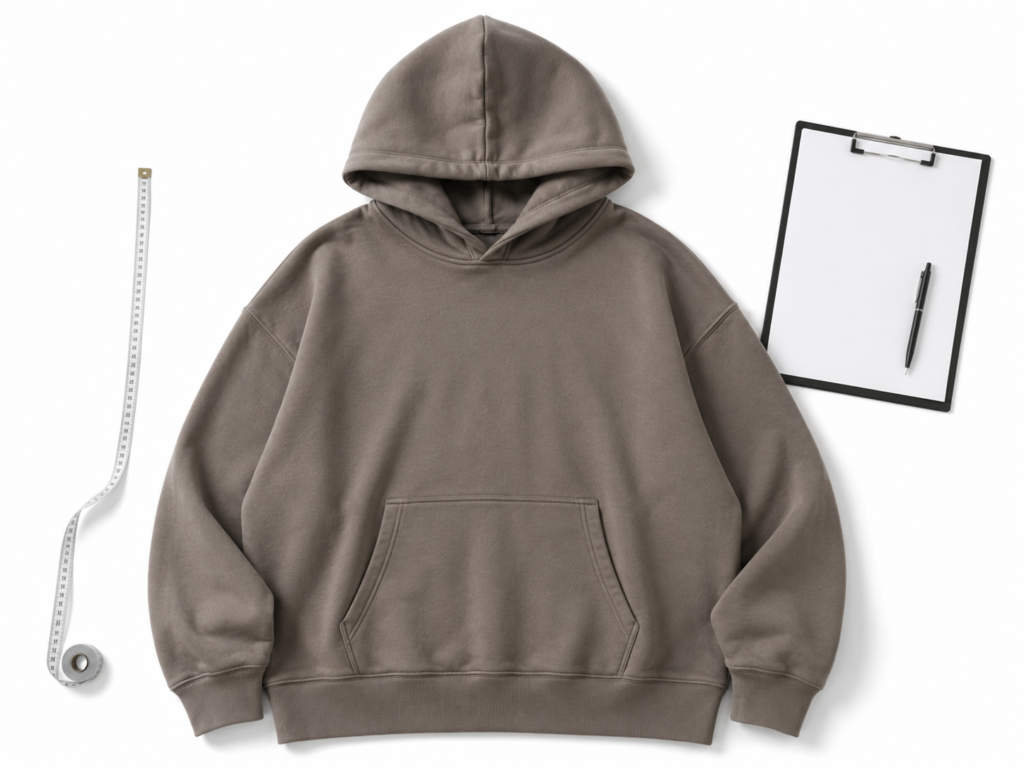
Experience matters because garment production involves many details.
An experienced clothing manufacturer should understand:
• Fabric behavior
• Pattern development
• Garment fit
• Size grading
• Cutting accuracy
• Sewing construction
• Printing and embroidery
• Labels and packaging
• Quality control
• Export requirements
Ask the manufacturer to show previous samples that are similar to your product. Do not judge a factory only by general factory photos or low prices.
Questions to Ask
• How many years have you produced this product category?
• Can you show similar samples?
• Do you support OEM and ODM production?
• Can you develop custom patterns?
• Can you work from a tech pack?
• Have you worked with international fashion brands?
A manufacturer that can answer clearly is usually easier to work with during sampling and production.
3. Evaluate Fabric Sourcing Ability
Fabric is one of the biggest factors affecting garment quality.
A reliable clothing manufacturer should help your brand choose suitable fabric based on your product design, target market, season and price range.
Common fabric options include:
• Cotton
• Polyester
• Cotton polyester blend
• French terry
• Fleece
• Jersey
• Rib fabric
• Nylon
• Denim
• Corduroy
• Mesh
• Satin
Before approving fabric, confirm:
• Fabric composition
• Fabric weight
• Hand feel
• Stretch and recovery
• Shrinkage
• Colorfastness
• Pilling resistance
• Surface texture
• Washing performance
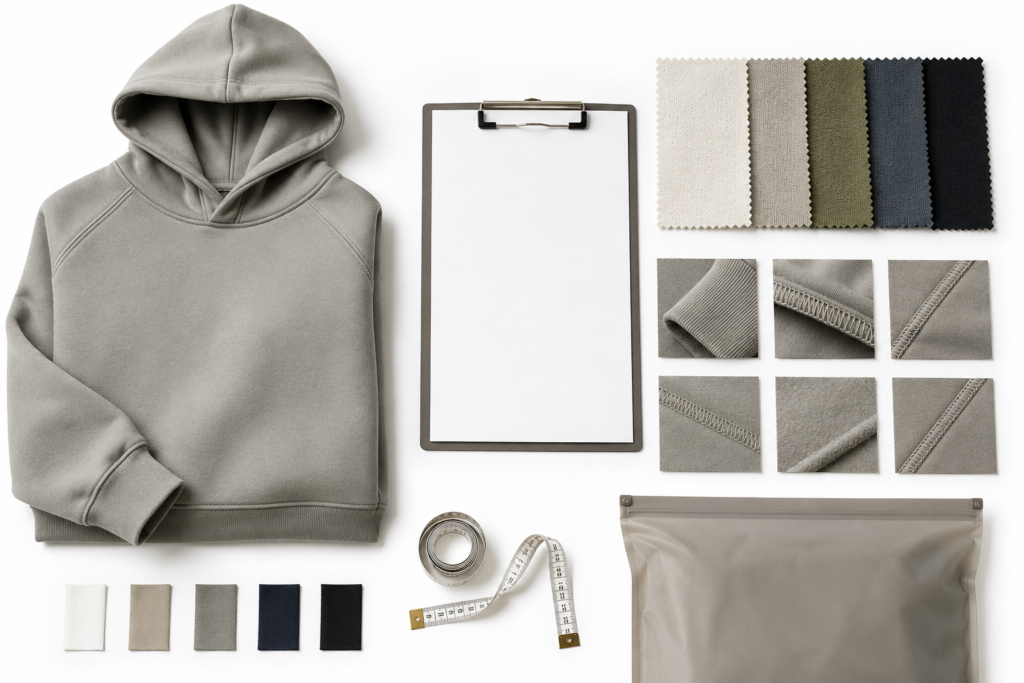
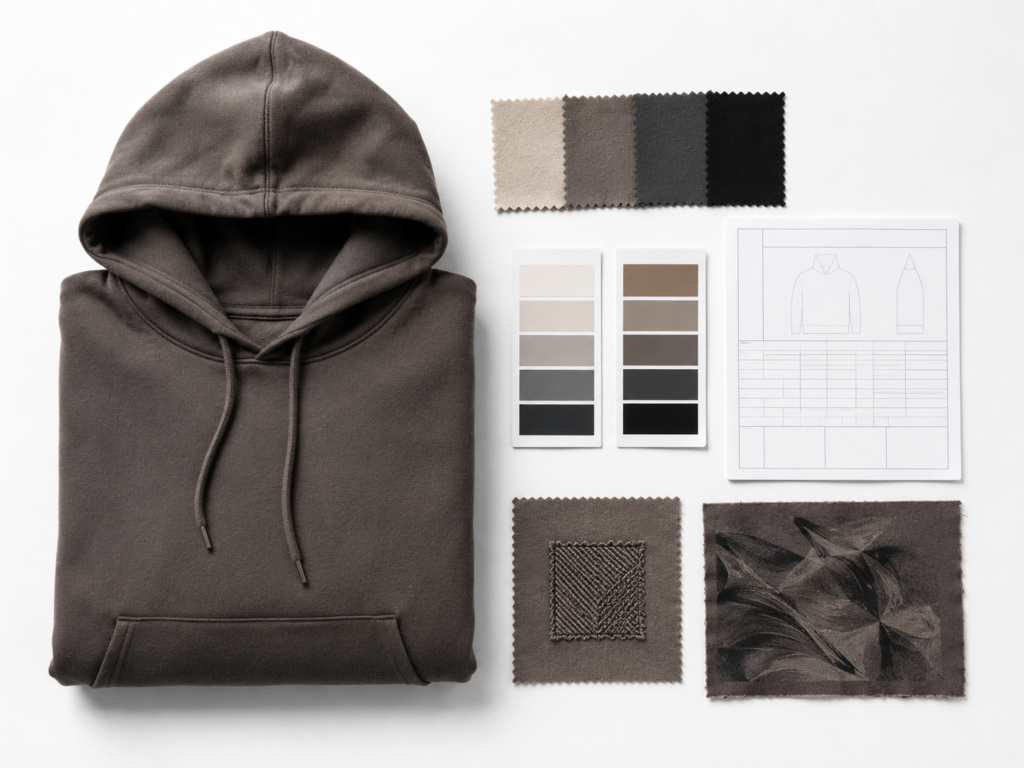
Do not choose fabric based only on photos. Physical fabric swatches are important because they allow you to check texture, weight, softness and stretch directly.
4. Understand MOQ Requirements
MOQ means minimum order quantity. It is one of the most common questions when brands contact clothing manufacturers.
MOQ may depend on:
• Product category
• Fabric type
• Fabric color
• Number of designs
• Number of colors
• Size breakdown
• Printing method
• Embroidery complexity
• Custom labels
• Custom packaging
• Production line setup
When asking about MOQ, do not only ask for the total order quantity. Ask whether the MOQ applies per style, per color, per fabric or across the whole order.
For new fashion brands, starting with fewer colors and fewer styles can reduce inventory risk and make production easier to manage.
5. Review Customization Capabilities
Fashion brands need more than blank garments. Customization helps create brand identity and product value.
A professional clothing manufacturer should support multiple customization options.
Garment Customization
• Custom fit
• Custom pattern
• Custom size chart
• Custom fabric
• Custom color
• Custom stitching details
• Custom trims
Printing Options
• Screen printing
• DTG printing
• Heat transfer printing
• Puff printing
• Reflective printing
• Silicone printing
• Sublimation printing
Embroidery Options
• Flat embroidery
• 3D puff embroidery
• Applique embroidery
• Patch embroidery
• Towel embroidery
Private Label Options
• Woven neck labels
• Printed neck labels
• Wash care labels
• Size labels
• Hang tags
• Custom drawstrings
• Custom zipper pullers
• Branded packaging bags
• Custom boxes
A good manufacturer should explain which customization method is suitable for your fabric and design, instead of simply saying every process is possible.
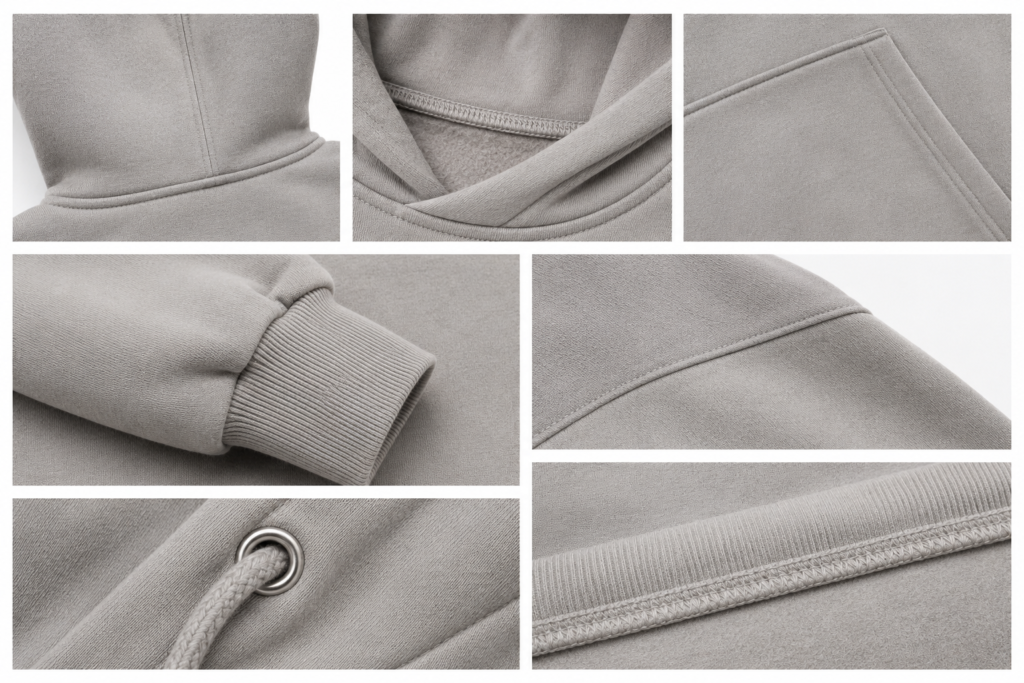
6. Request Samples Before Bulk Production
Never approve bulk production without checking samples.
A sample helps your brand confirm:
• Fabric quality
• Garment fit
• Measurements
• Sewing quality
• Printing result
• Embroidery result
• Color accuracy
• Label placement
• Packaging details
• Overall workmanship
Most brands need at least one sample round before bulk production. If the first sample needs changes, record all revisions clearly in writing.
Use a tech pack, measurement chart or sample comment sheet to avoid misunderstandings.
What to Check on a Clothing Sample
• Does the sample match the design?
• Are the measurements correct?
• Is the fabric suitable?
• Is the stitching clean?
• Is the print or embroidery positioned correctly?
• Are labels and trims correct?
• Does the garment fit the target style?
• Does the product still look good after washing?
Sampling is not just a formality. It is the key step that protects your brand before mass production.
7. Check Quality Control Process
Quality control should happen throughout production, not only at the end.
A professional clothing manufacturer should inspect:
• Fabric before cutting
• Cutting accuracy
• Sewing quality
• Printing quality
• Embroidery quality
• Measurements
• Loose threads
• Stains and marks
• Label placement
• Packaging accuracy
• Final product appearance
For fashion brands, quality control directly affects customer reviews and repeat purchases.
Ask the manufacturer whether they provide production photos, measurement reports, final inspection photos or third-party inspection support.
8. Evaluate Communication and Responsiveness
Good communication is essential in apparel manufacturing.
A reliable manufacturer should:
• Reply clearly
• Ask professional questions
• Confirm details in writing
• Explain production timelines
• Warn you about possible risks
• Update you during production
• Provide clear quotations
Poor communication often leads to wrong samples, delayed production and unnecessary cost.
Before placing an order, pay attention to how the manufacturer communicates during the first inquiry. If communication is already unclear before payment, it may become worse during production.
9. Compare Production Capacity and Lead Time
Your manufacturer should have enough capacity to support your order quantity and delivery schedule.
Ask about:
• Sample lead time
• Fabric sourcing time
• Bulk production time
• Monthly production capacity
• Peak season schedule
• Packaging time
• Shipping preparation
A typical production timeline may include:
• Fabric sourcing: 7–15 days
• Sample development: 7–14 days
• Sample revision: 5–10 days
• Bulk production: 20–35 days
• Inspection and packing: 3–7 days
The exact timeline depends on product complexity, fabric availability, order quantity and production season.
If your fashion brand has a launch date, confirm the full production schedule before placing the order.
10. Compare Total Value Instead of Lowest Price
The cheapest manufacturer is not always the best choice.
When comparing suppliers, evaluate:
• Fabric quality
• Sample accuracy
• Sewing quality
• Customization ability
• MOQ flexibility
• Quality control
• Communication
• Lead time
• Export experience
• After-sales support
A very low quotation may hide risks such as lower fabric quality, unstable workmanship, weak quality control or delayed delivery.
A reliable clothing manufacturer should provide a clear quotation that explains fabric, labor, printing, embroidery, labels, packaging and other costs.
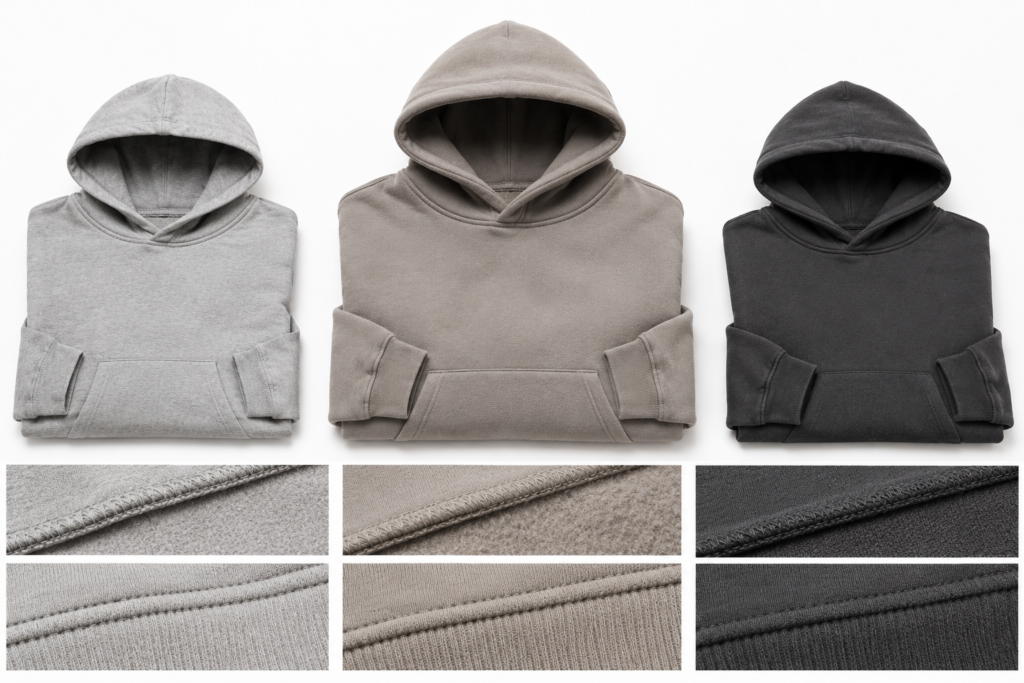
Clothing Manufacturer Evaluation Checklist
Use this checklist before choosing a supplier.
• Does the manufacturer specialize in your product category?
• Can they provide similar samples?
• Can they source suitable fabrics?
• Can they develop custom patterns and fits?
• Do they support printing and embroidery?
• Can they provide private label services?
• Is the MOQ clear?
• Is the quotation detailed?
• Do they have a clear sampling process?
• Do they inspect fabric and finished garments?
• Do they communicate clearly?
• Can they meet your lead time?
• Do they have export experience?
A good manufacturer should help your brand reduce risk, not simply produce garments at the lowest possible price.
Common Mistakes to Avoid
Avoid these mistakes when choosing a clothing manufacturer:
• Choosing based only on price
• Not preparing a tech pack
• Skipping sample development
• Not checking fabric swatches
• Using too many styles in the first order
• Not confirming MOQ per color
• Approving changes verbally
• Ignoring quality control
• Not checking packaging details
• Not confirming production timeline
• Choosing a factory without relevant product experience
These mistakes can lead to quality problems, delayed launches and higher production costs.
Frequently Asked Questions
What should I prepare before contacting a clothing manufacturer?
You should prepare product reference images, design files, fabric requirements, size chart, logo files, customization details, target quantity, color options, packaging requirements and delivery timeline. A complete tech pack helps the manufacturer provide a more accurate quotation.
How do I know if a clothing manufacturer is reliable?
A reliable manufacturer should provide clear communication, relevant product samples, fabric suggestions, transparent quotations, a clear sampling process, quality control support and realistic production timelines.
Should I choose a local manufacturer or a clothing manufacturer in China?
This depends on your budget, product category, lead time and customization needs. Many fashion brands choose Chinese clothing manufacturers because of strong supply chains, flexible customization, competitive costs and export experience.
What is the MOQ for custom clothing production?
MOQ depends on product type, fabric, color, printing, embroidery, labels and packaging. Always ask whether the MOQ applies per design, per color or across the full order.
Why is sampling important before bulk production?
Sampling allows you to check fabric, fit, measurements, sewing, printing, embroidery and label placement before mass production. It helps reduce mistakes and protects your brand from costly bulk production issues.
What makes a good clothing manufacturer for fashion brands?
A good manufacturer understands your product category, communicates clearly, provides accurate samples, supports customization, controls quality and can deliver stable bulk production.
Related Apparel Manufacturing Resources
- Custom Hoodie Manufacturing
- Custom T-Shirt Manufacturing
- Custom Tracksuit Manufacturing
- OEM/ODM Apparel Services
- Fleece Hoodie Fabric and GSM Guide
Conclusion
Choosing the right clothing manufacturer for your fashion brand requires careful evaluation. You need to compare product experience, fabric sourcing, sample accuracy, customization options, MOQ, quality control, communication, production capacity and total value.
The best manufacturer is not always the cheapest one. It is the partner that can understand your brand, reduce production risk and deliver consistent quality.
Before placing a bulk order, prepare your tech pack, request fabric swatches, develop samples and confirm all production details in writing.
Looking for a Clothing Manufacturer for Your Fashion Brand?
YECHENG APPAREL supports custom clothing manufacturing for fashion brands, including custom hoodies, custom T-shirts, custom tracksuits, fabric sourcing, fit development, printing, embroidery, private labels, packaging, sampling and bulk production.
Send us your design, tech pack or reference images to discuss your custom apparel project.