ODM Clothing Manufacturer for Product Development
Bring a reference garment, image, sketch or product direction. YECHENG helps fashion and streetwear brands identify the fit, fabric and construction decisions still open, then organize those decisions into a brief that can be tested in a sample.
Develop the Decisions Your Reference Does Not Define
ODM fits a buyer with a product direction and substantial open decisions. A reference garment can show a silhouette while sizing, fabric, construction and branding remain unresolved.
An image, sketch or mood board starts a discussion; it is not an approved specification or a direct instruction for bulk production. We identify what is known, what needs sourcing and what a sample must test.
- Bring your reference, intended use and any partial specification.
- Mark fit, measurements, fabric, construction, trims and decoration decisions still open.
- Record project-specific questions in a development brief.
- Review a sample and approve the garment reference before production planning.
If most specifications are already defined, use OEM manufacturing. If a defined product only needs a sample round, use Sampling. Compare routes in Services; for branding presentation alone, see Private Label.
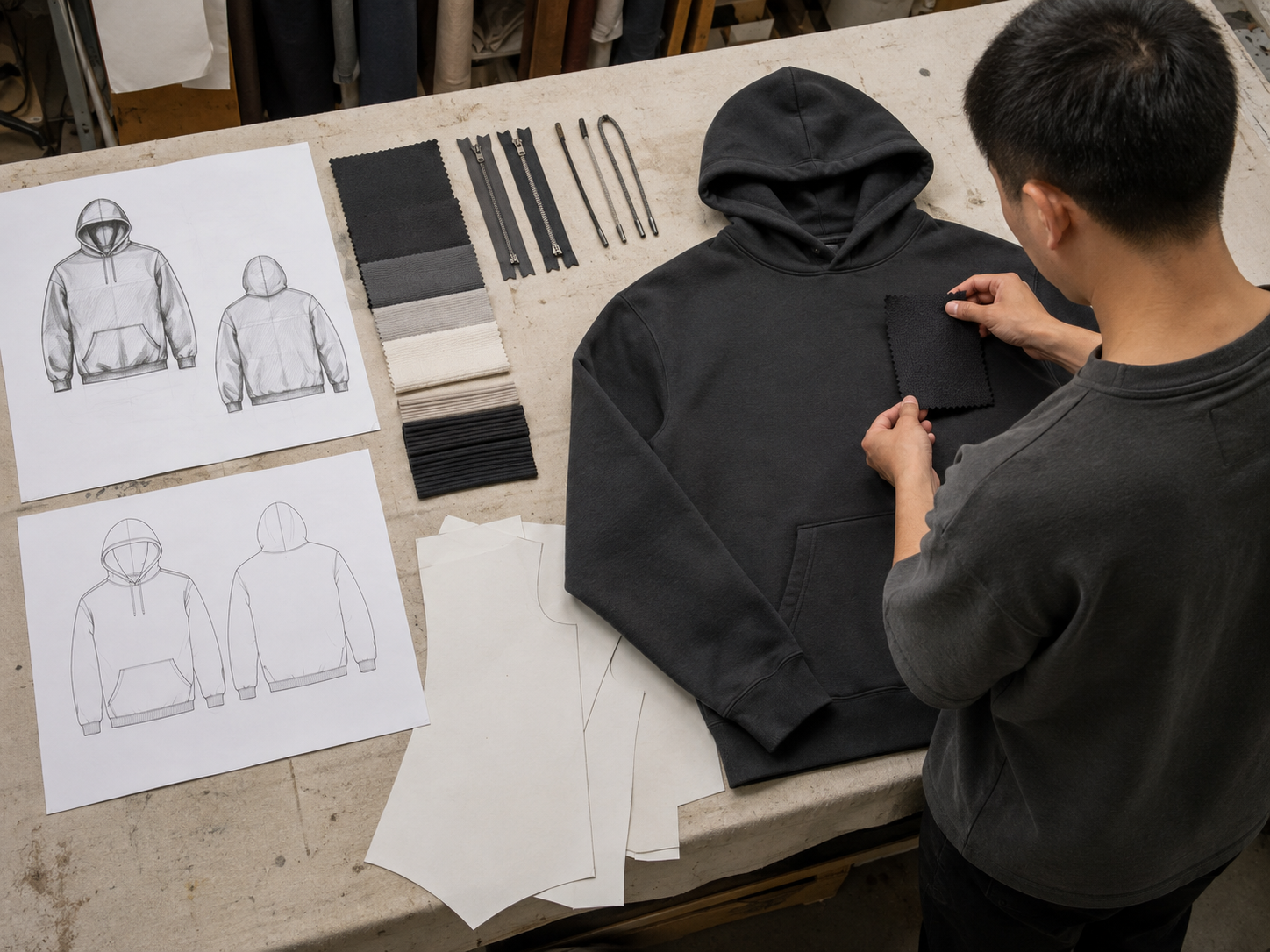
Bring a Reference and Mark What Is Still Open
References and partial specifications begin development. They do not confirm a production specification on their own.
Reference garment
Show the silhouette and details you want to retain. Note what should change in fit, fabric or construction.
Image or sketch
Identify the visual direction and details that still need a physical reference or technical decision.
Mood board or product concept
Explain the intended wearer, use and visual cues. The garment itself still needs a defined brief.
Partial specification
Bring known measurements, fabric or artwork and mark the gaps for development review.
Existing product to adapt
Describe desired changes in proportion, finish, decoration or material without assuming exact reproduction.
Brand presentation requirements
Bring label and packaging references where relevant. The full scope belongs to Private Label.
A mostly complete tech pack usually belongs on the OEM page. A defined item requiring a sample round belongs on the Sampling page. Branding presentation has a separate Private Label route.
Turn Open Product Decisions Into a Brief for Sampling
The brief records what is known, what the reference communicates, what remains open, what needs sourcing and what a sample must confirm.
For wider technical execution, see manufacturing capabilities.
Translate a Reference Into a Reviewable Garment Direction
A reference gives proportion and design direction, not an exact specification. Discuss the shape and construction decisions that require a sample.
- Silhouette and fitReview length, width, ease, sleeve and shoulder shape, hood or collar, and rise or leg shape where relevant.
- ConstructionIdentify panels, seams, pockets, closures, cuffs, waistbands and trims that affect the intended garment.
- MeasurementsRecord the dimensions and size direction that the sample needs to confirm; a reference is not a complete size specification.
- Decoration placementDiscuss artwork position, scale and method in the context of the proposed fabric and garment.
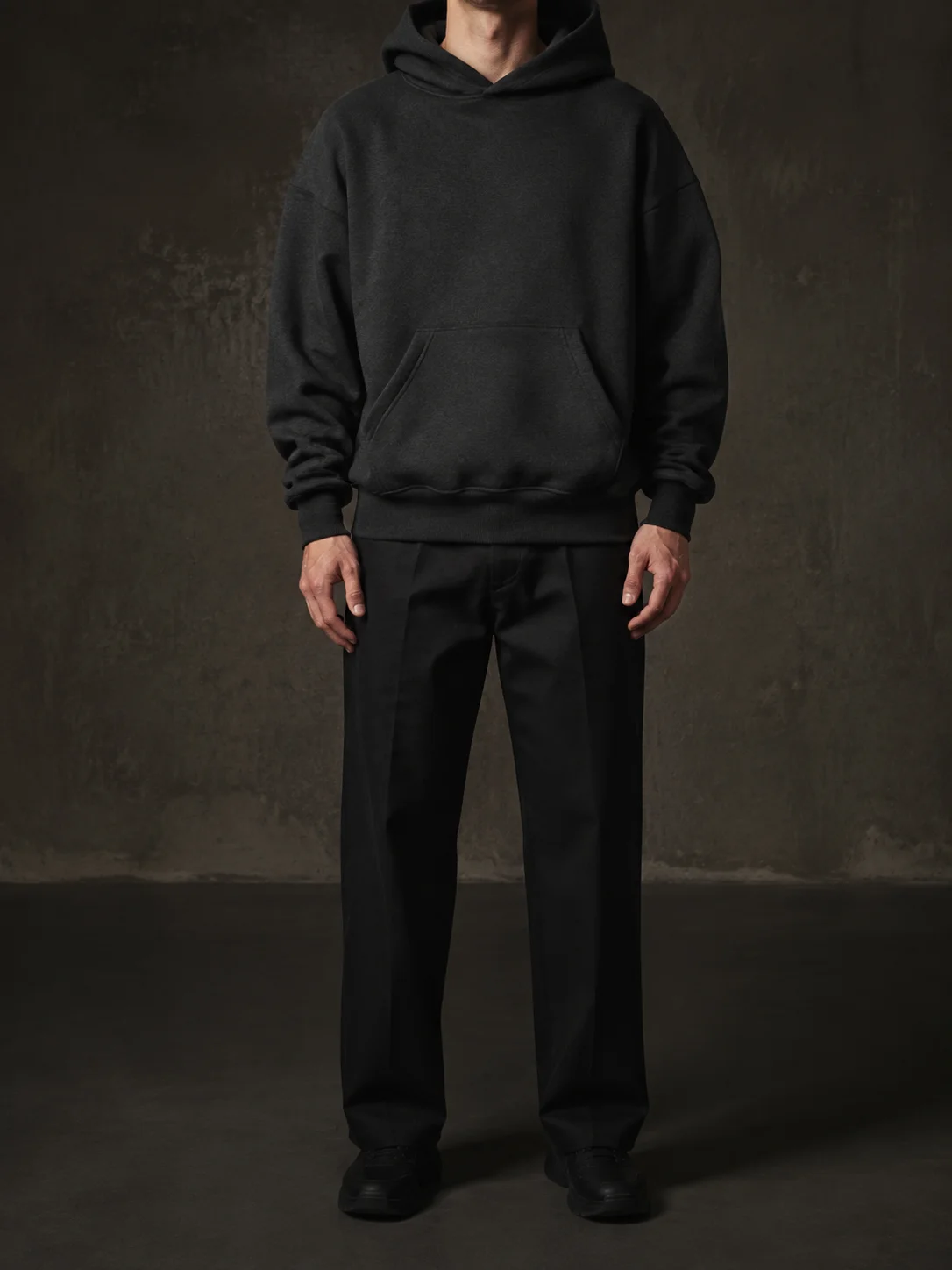
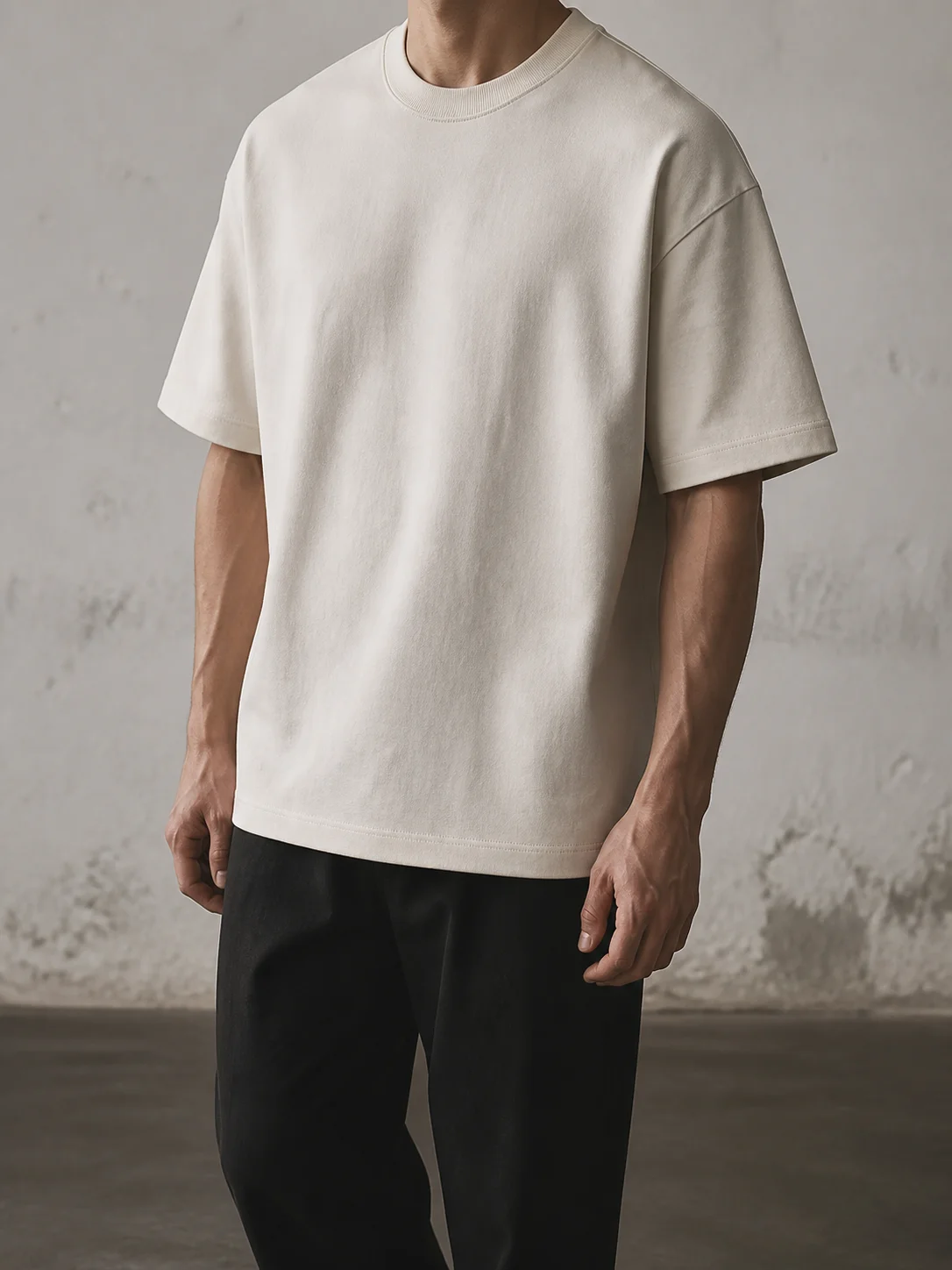
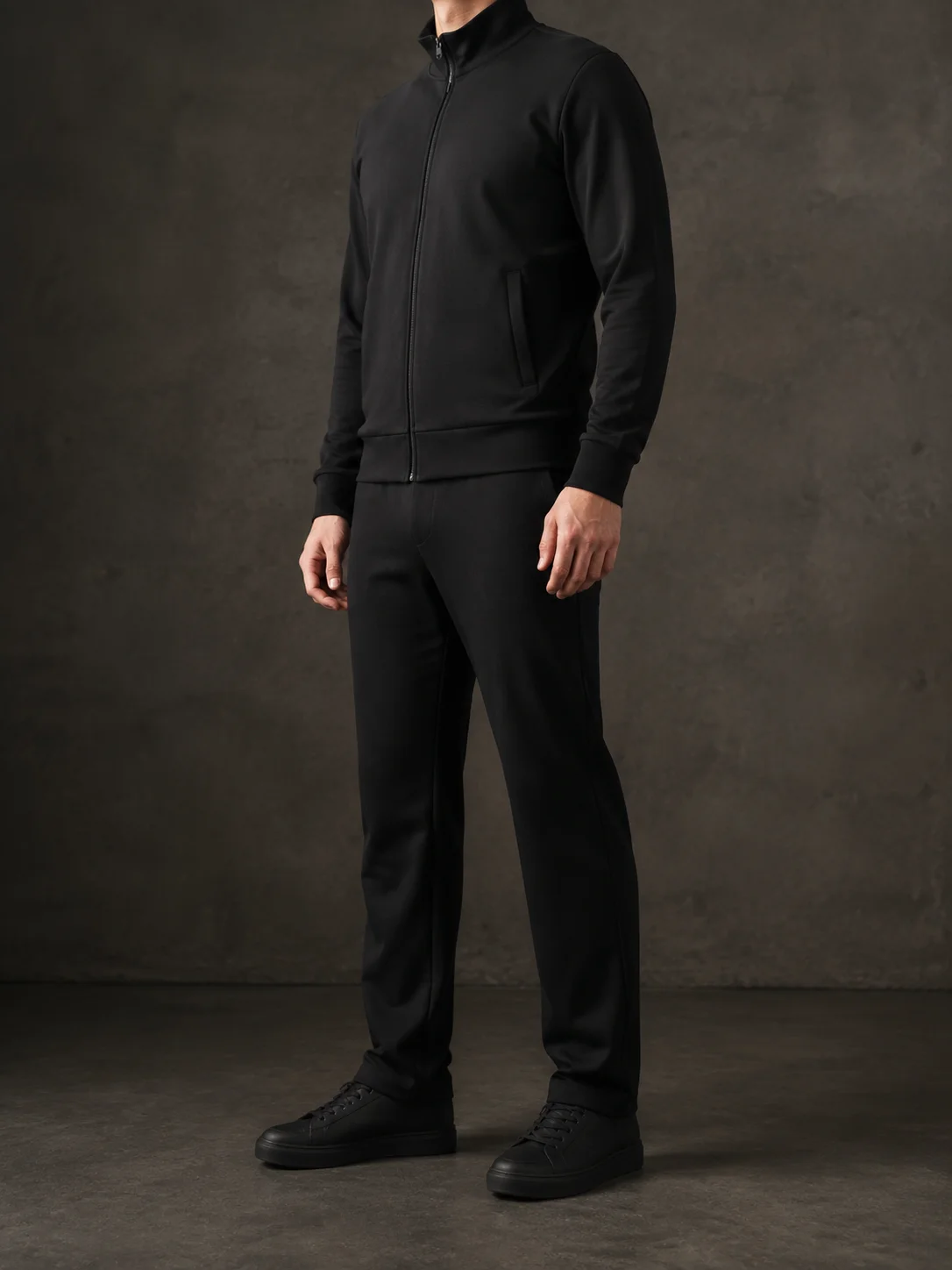
Product-specific decisions continue on Custom Hoodies, Custom T-Shirts and Custom Tracksuits.
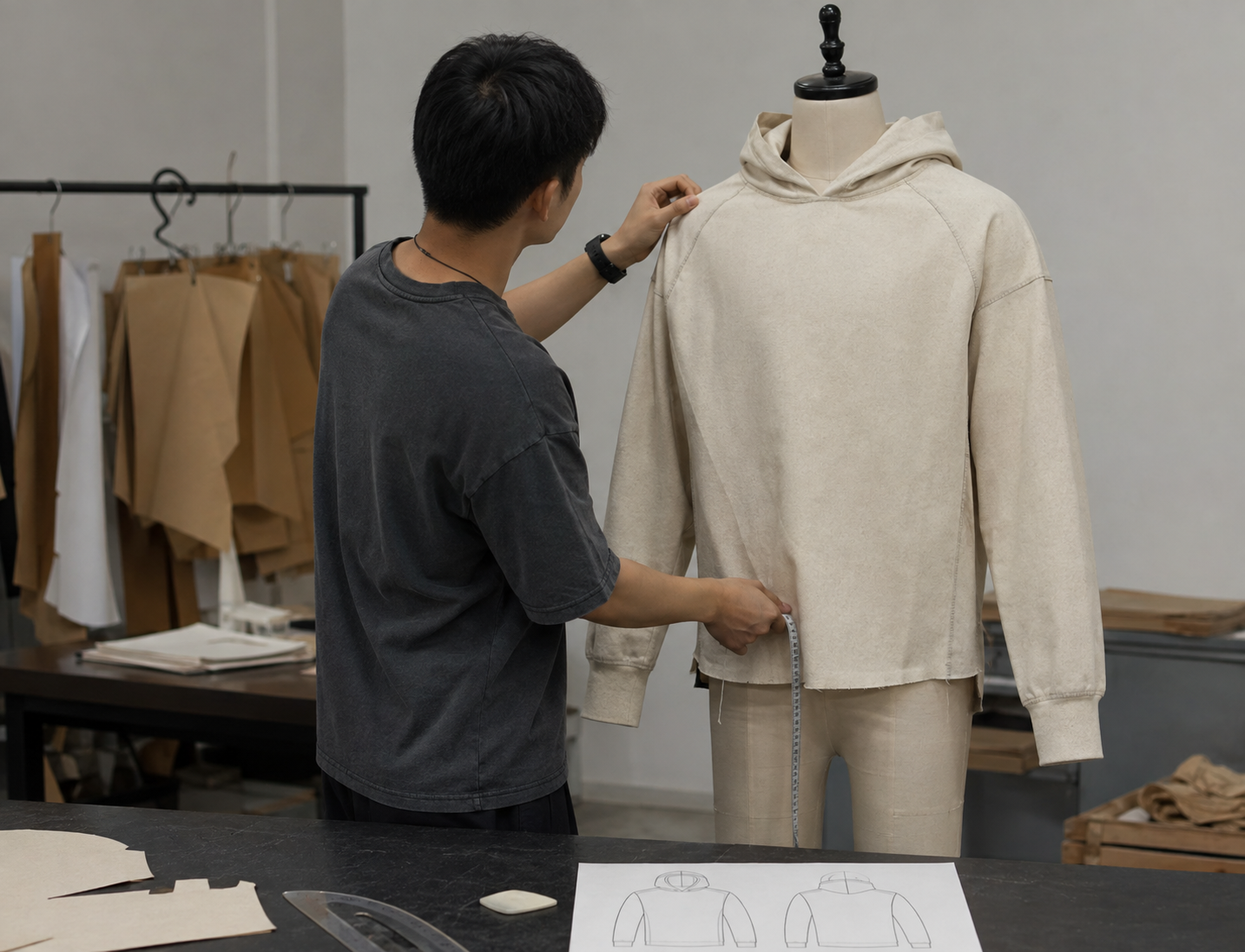
Review Materials and Details Against the Product Direction
Fabric, color, construction, artwork and branding are project decisions to review against the reference and the sample.
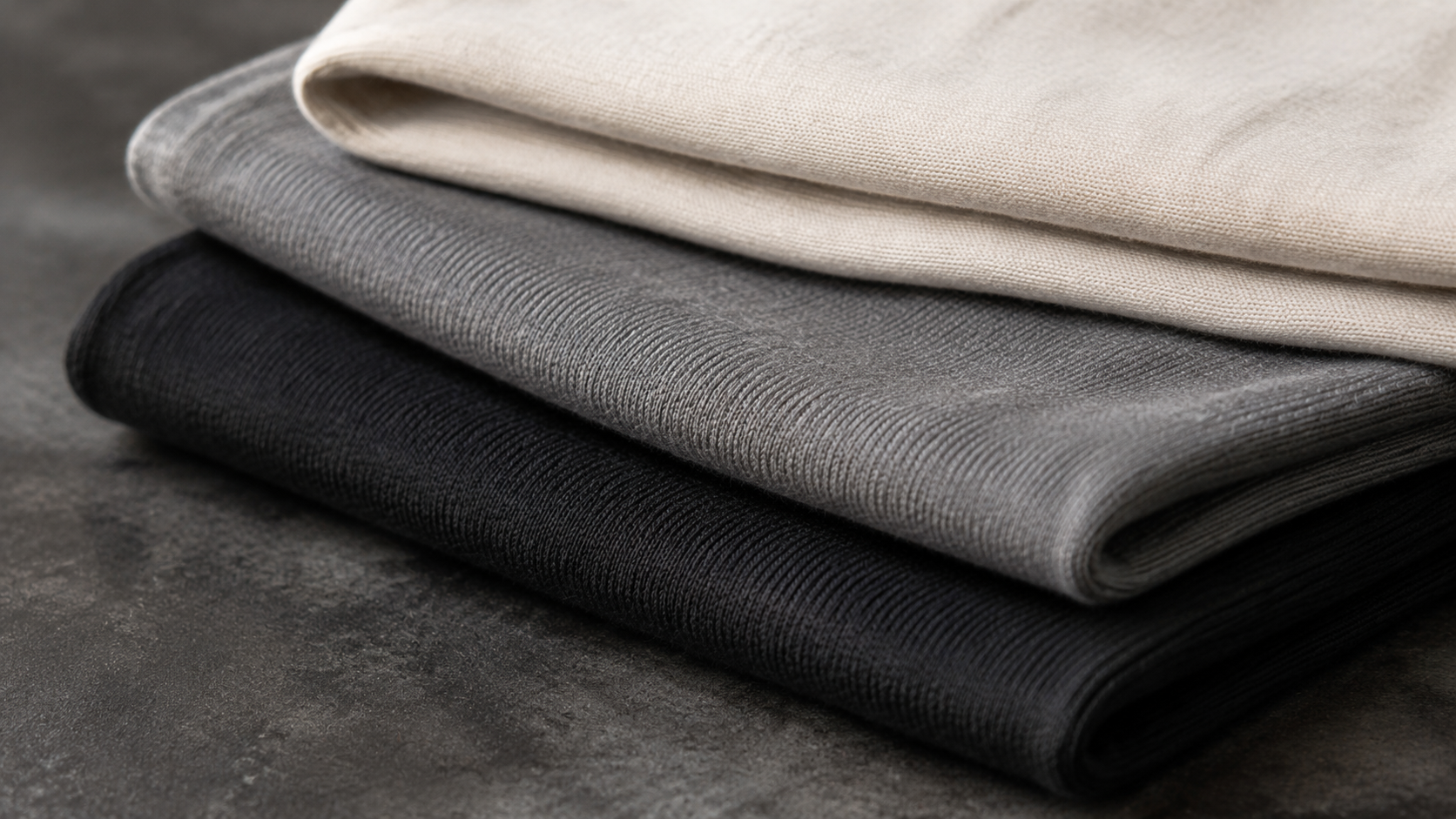
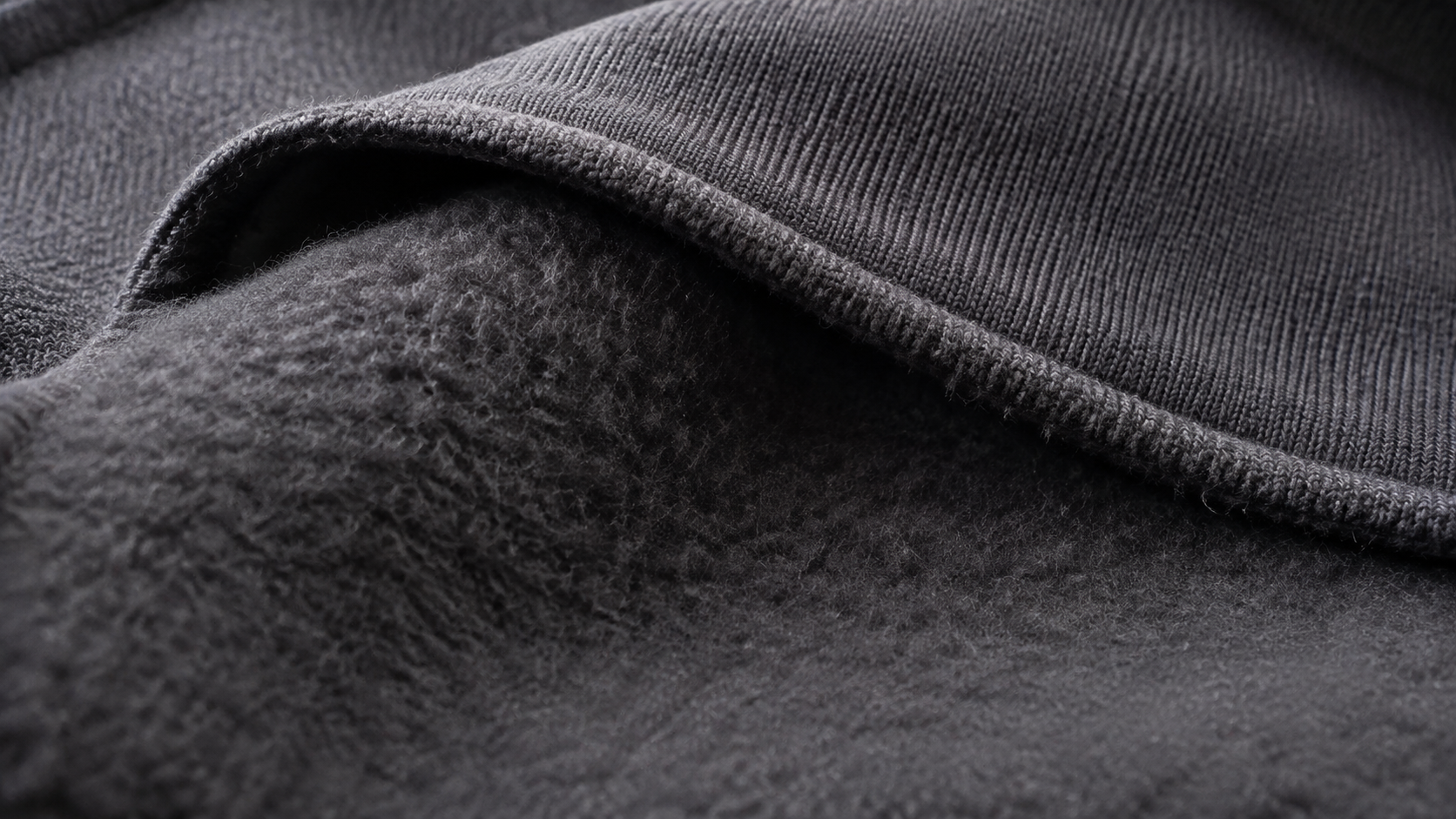
Fabric and hand feel
Compare composition, weight direction, drape, surface and finish with the reference and intended use. Confirm options through Fabric Sourcing and a sample.
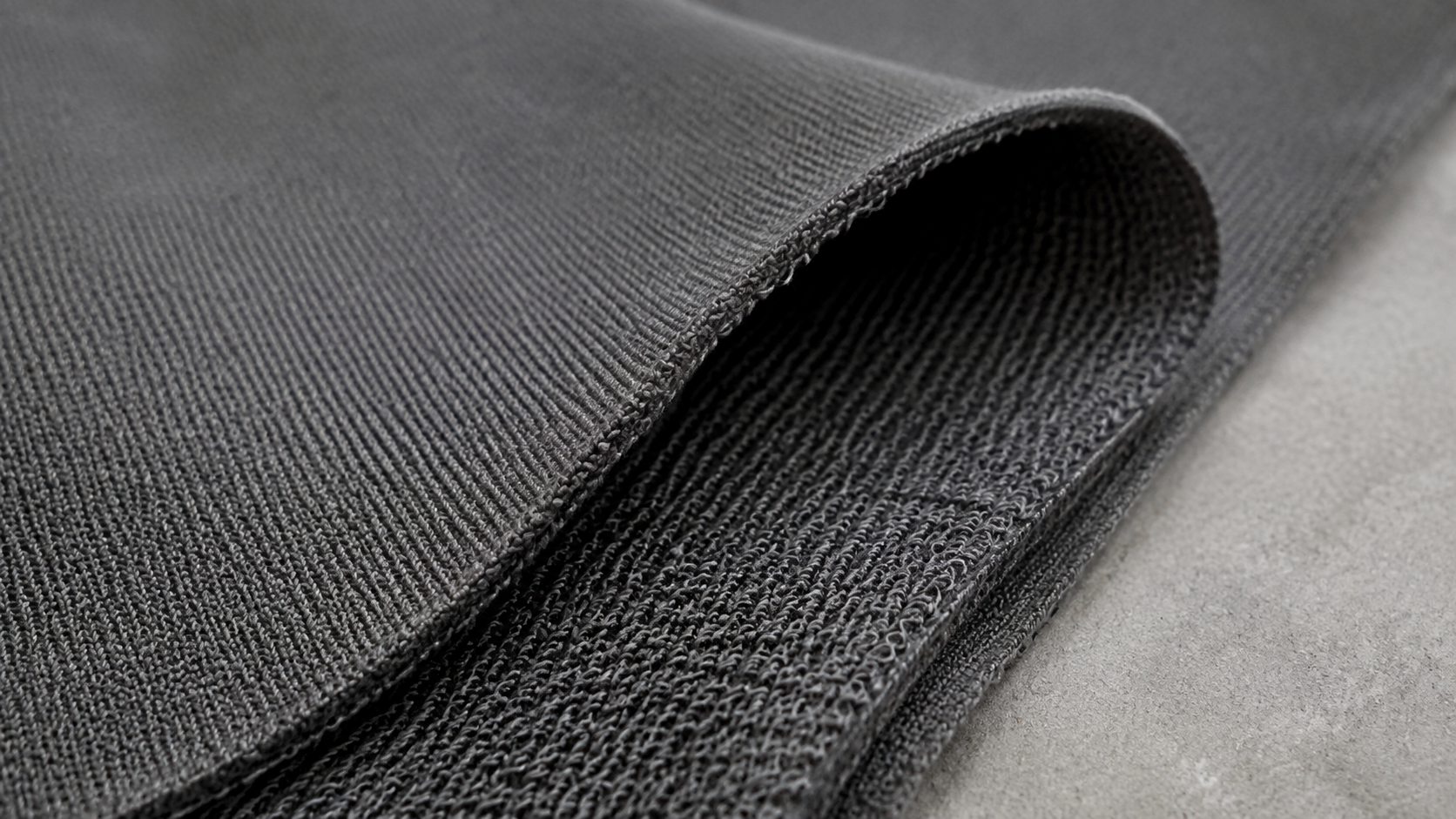
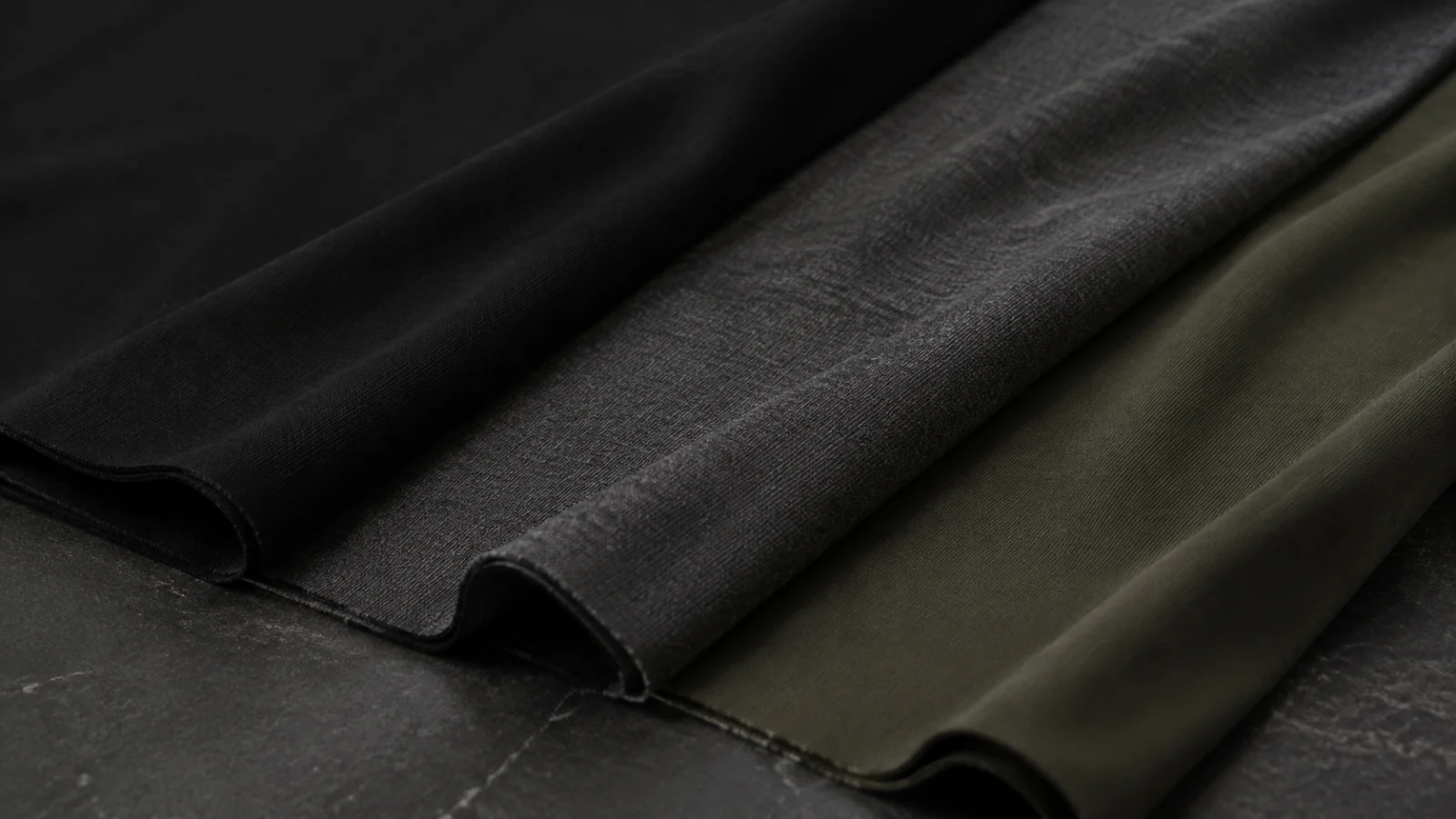
Color and wash
Use a color reference and discuss a possible wash or finish. Review the effect on the proposed fabric and sample without assuming an exact match.
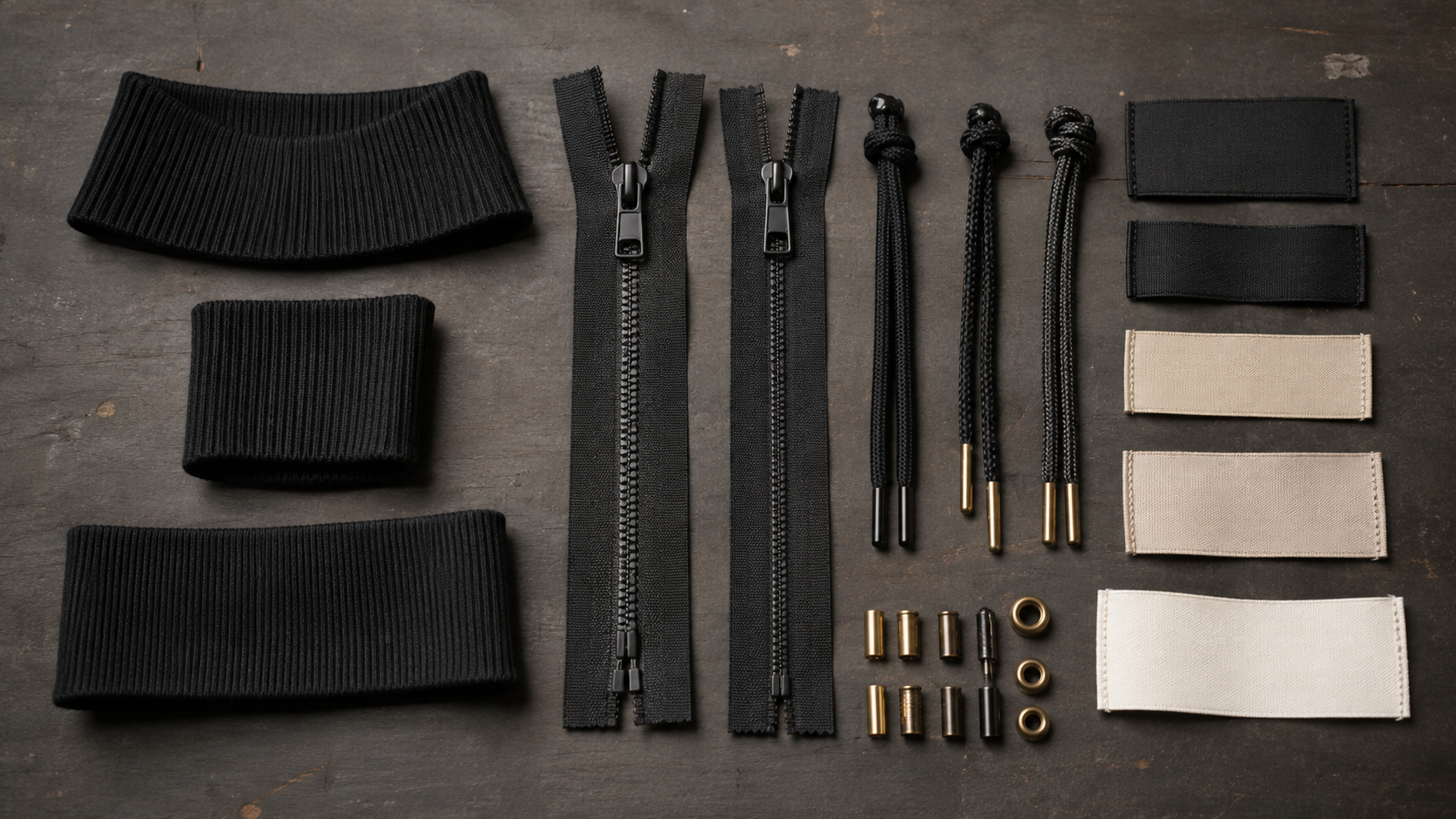
Construction and trims
Identify closures, zippers, drawcords, rib and hardware as project decisions. Confirm selected options on the approved sample.
Artwork and decoration
Record files, placement, scale and technique direction. Review fabric compatibility through Printing and Embroidery.
Labels and packaging
Record main label, care label, hang tag and packaging requirements if in scope. See Labels and Packaging and the Private Label route.
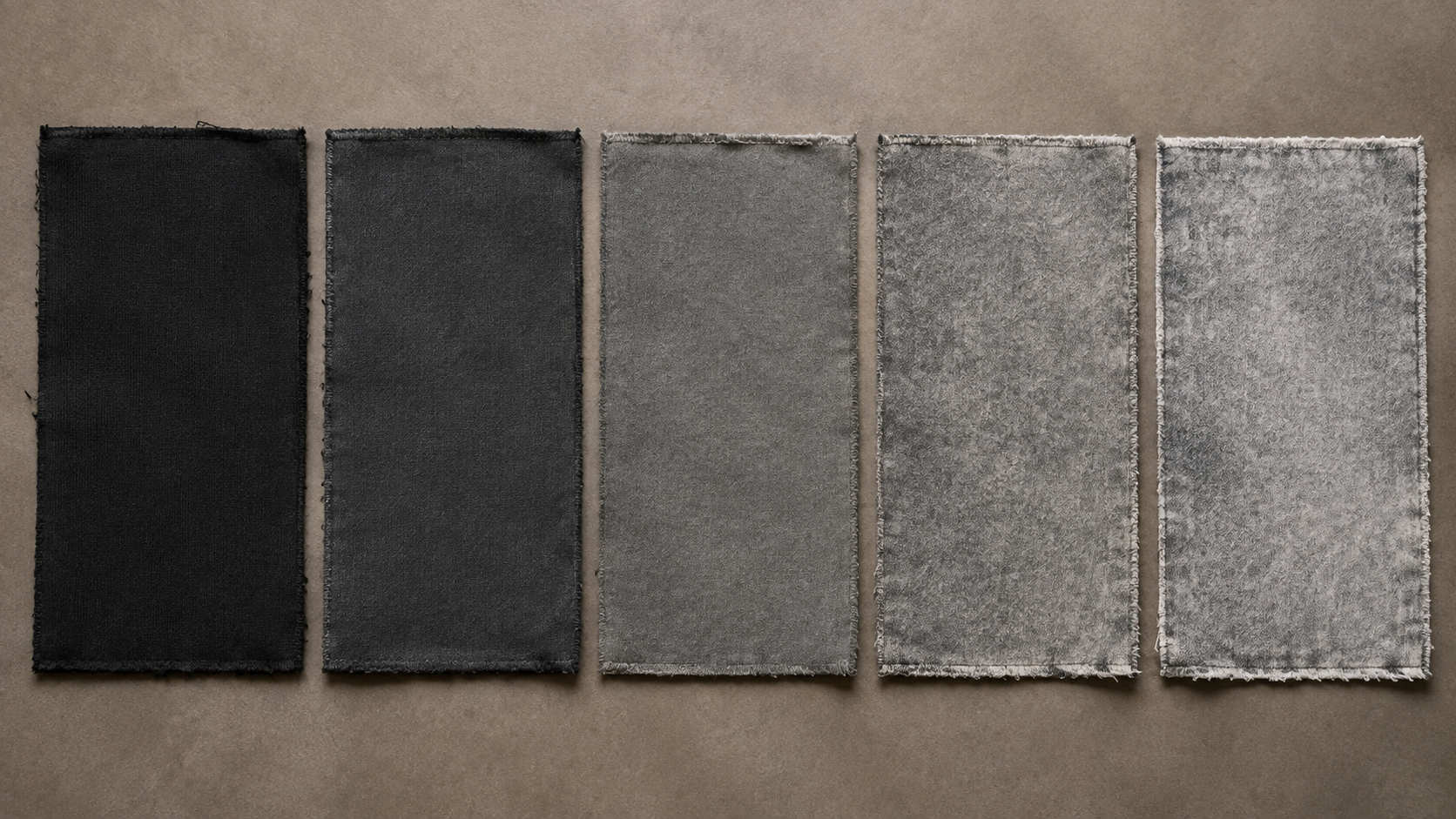
Finish
Describe any wash or surface direction as a sample question, rather than assuming one universal outcome.
ODM garment development and Private Label presentation can work together, but they answer different buyer questions.
Test the Development Brief in a Physical Sample
A sample lets the buyer test the product decisions in a physical garment. Record feedback and approve a reference before production planning.
What the first sample tests
Review fit, proportion, construction, material, decoration and any in-scope branding against the brief.
How feedback is recorded
Compare the garment with the brief and record measurements, comments and proposed changes.
Which decisions remain open
Identify sourcing, fit or decoration questions that require another review before approval.
What approval confirms
Document the sample and specification version that can guide production planning.
Sample scope, timing and revision needs depend on what remains unresolved. The Sampling Service owns the detailed sample round, review and approval process.
Apply the ODM Route to the Garment You Are Developing
Each product category brings distinct fit, fabric and construction questions. Use its owner page for category-specific detail or browse the Products Hub.
Move Forward When the Product Decisions Are Approved
Development is ready for production planning when key garment decisions are documented, the sample and specification have been reviewed, and remaining sourcing or order questions are explicit.
Approved reference
Identify the sample and specification version that buyers have reviewed.
Order questions
Record remaining quantity, material, decoration and schedule questions.
Specification-led execution
Continue with OEM manufacturing once product decisions are defined.
Review MOQ guidance, production lead time, quality control and manufacturing capabilities for project-specific planning.
ODM Product Development: Buyer Questions
Answers about buyer inputs, open decisions, sample questions and handoff.
01. What should I provide for an ODM clothing project?
02. Can I start from a reference garment or image?
03. What is the difference between ODM and OEM?
04. Which product decisions are defined during ODM development?
05. How are fabric and construction options reviewed?
06. When does sampling begin?
07. When is an ODM project ready for production planning?
08. How do I start an ODM project?
Ready to review your product direction?
Share the reference, product category, decisions already made and questions that remain open. Tell YECHENG what the first sample needs to confirm.