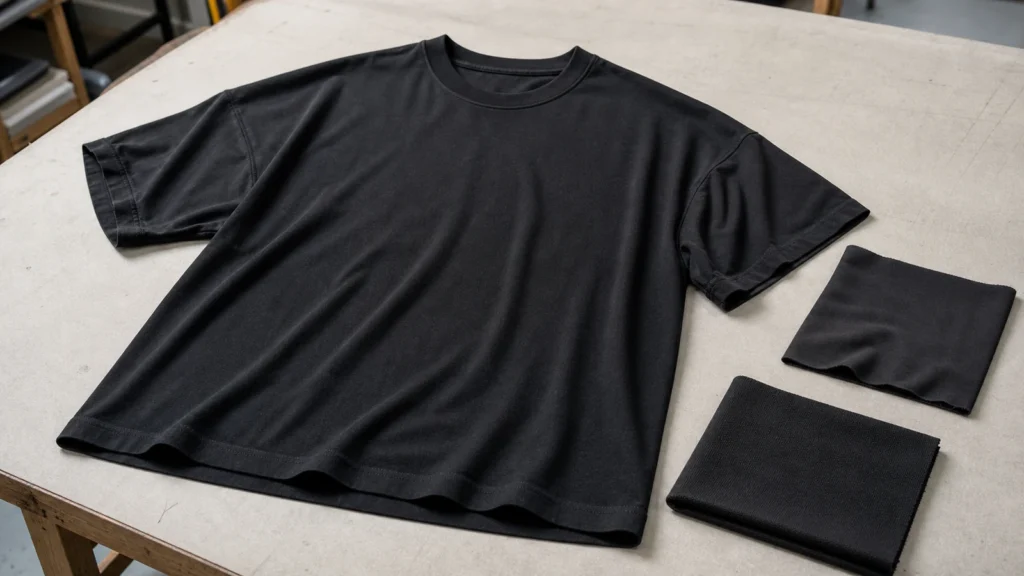
Choosing fabric weight is one of the earliest product-development decisions for a custom T-shirt. It influences the silhouette, drape, hand feel, decoration result and the way a garment fits into a seasonal collection. For a fashion brand, however, a GSM number should never be approved in isolation. The right specification also depends on the knit construction, yarn, finishing, intended fit and how the sample performs. This guide gives B2B buyers a practical framework for selecting fabric weight before moving from development into custom T-shirt manufacturing.
Quick Answer
Choose custom T-shirt fabric weight by starting with the intended silhouette and use case, then compare season, target-market expectations, print or embroidery requirements and desired hand feel. Approximate GSM bands can help narrow the options, but they are not quality grades or fixed standards. Confirm the knit construction, yarn, finishing and approved sample before bulk production.
What GSM Means for Custom T-Shirts
GSM means grams per square meter, a measure of fabric mass per unit area. A higher GSM fabric contains more mass over the same area, but that number does not automatically tell a buyer how soft, dense, breathable, stretchy or durable the finished T-shirt will feel.
The distinction matters because two fabrics at the same stated GSM may behave differently. Yarn characteristics, stitch density, knit construction and finishing can change the surface, drape, recovery and perceived thickness. A small swatch may also feel different once it is cut into a garment, sewn, decorated and washed.
Treat GSM as a useful specification point, not a complete fabric description. A clear development request should pair the target weight with the intended fit, surface, hand feel, color, decoration and performance checks.
Practical T-Shirt GSM Ranges
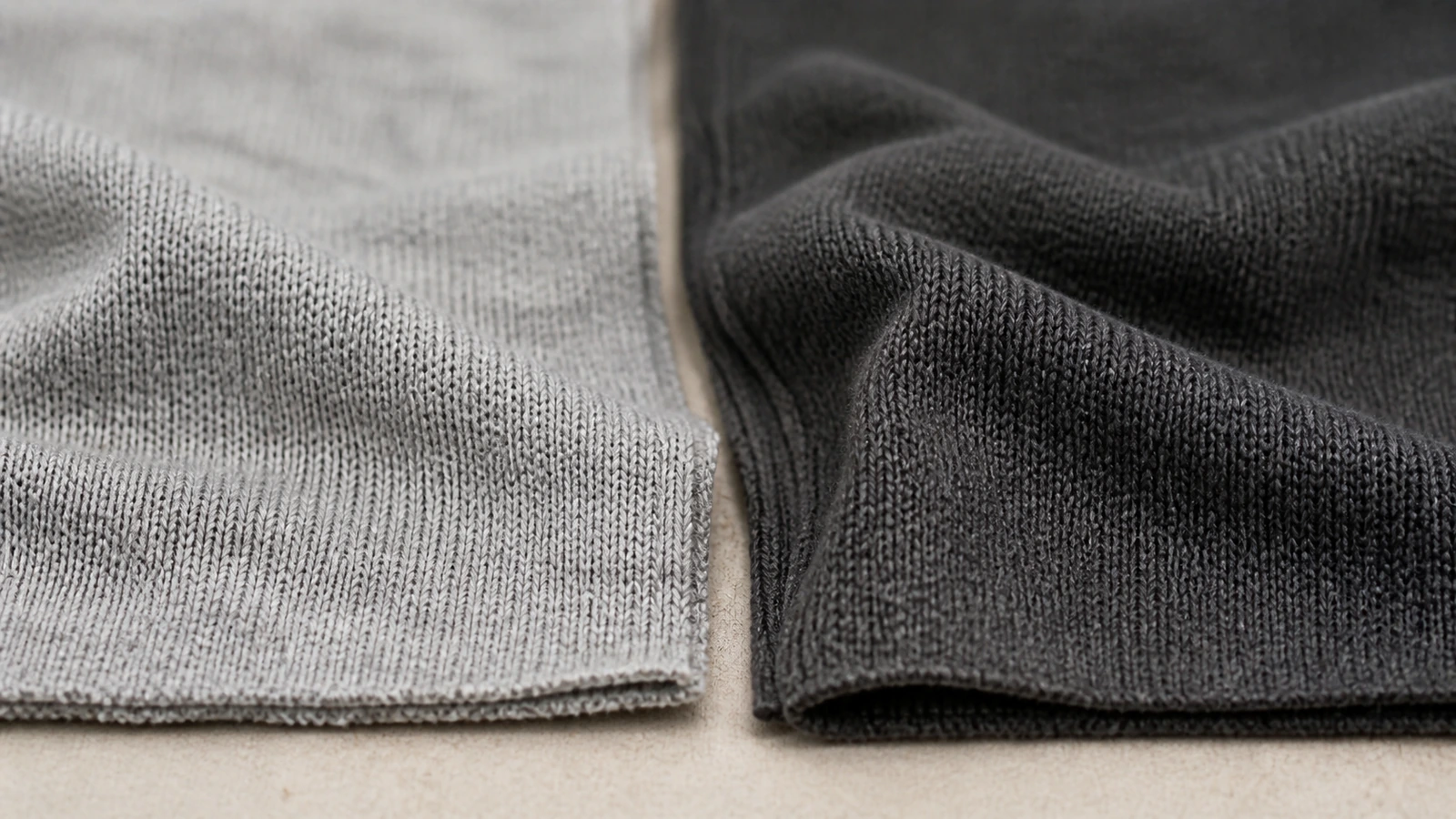
The ranges below are general manufacturing references, not universal standards. Actual results depend on fabric construction, yarn, knitting settings and garment finishing. Boundaries also overlap, so a fabric near the edge of a band should be judged from a physical swatch and sample rather than from the number alone.
| Approximate Fabric Weight | Typical Design Direction | Possible Advantages | What the Brand Should Verify |
|---|---|---|---|
| About 120–150 GSM | Lightweight or warm-weather T-shirts | Lighter hand, easier layering, fluid drape | Opacity, recovery, print coverage and whether the fabric supports the intended fit |
| About 150–180 GSM | Versatile everyday programs | Balanced hand and broad styling flexibility | Surface, shrinkage, color, measurement stability and decoration compatibility |
| About 180–220 GSM | More substantial or structured T-shirts | Fuller hand and clearer silhouette | Drape, neck-rib balance, seam behavior and comfort for the intended season |
| About 220–300+ GSM | Heavyweight or streetwear-led T-shirts | Stronger visual structure and a substantial hand | Bulk, heat comfort, print or embroidery behavior and whether the weight overwhelms the pattern |
These bands should not be used as promises of quality, durability or market acceptance. A lightweight fabric can be appropriate for a refined draped style, while a heavyweight fabric can be unsuitable if the pattern and use case require movement or warm-weather comfort.
Match Fabric Weight to Fit and Silhouette
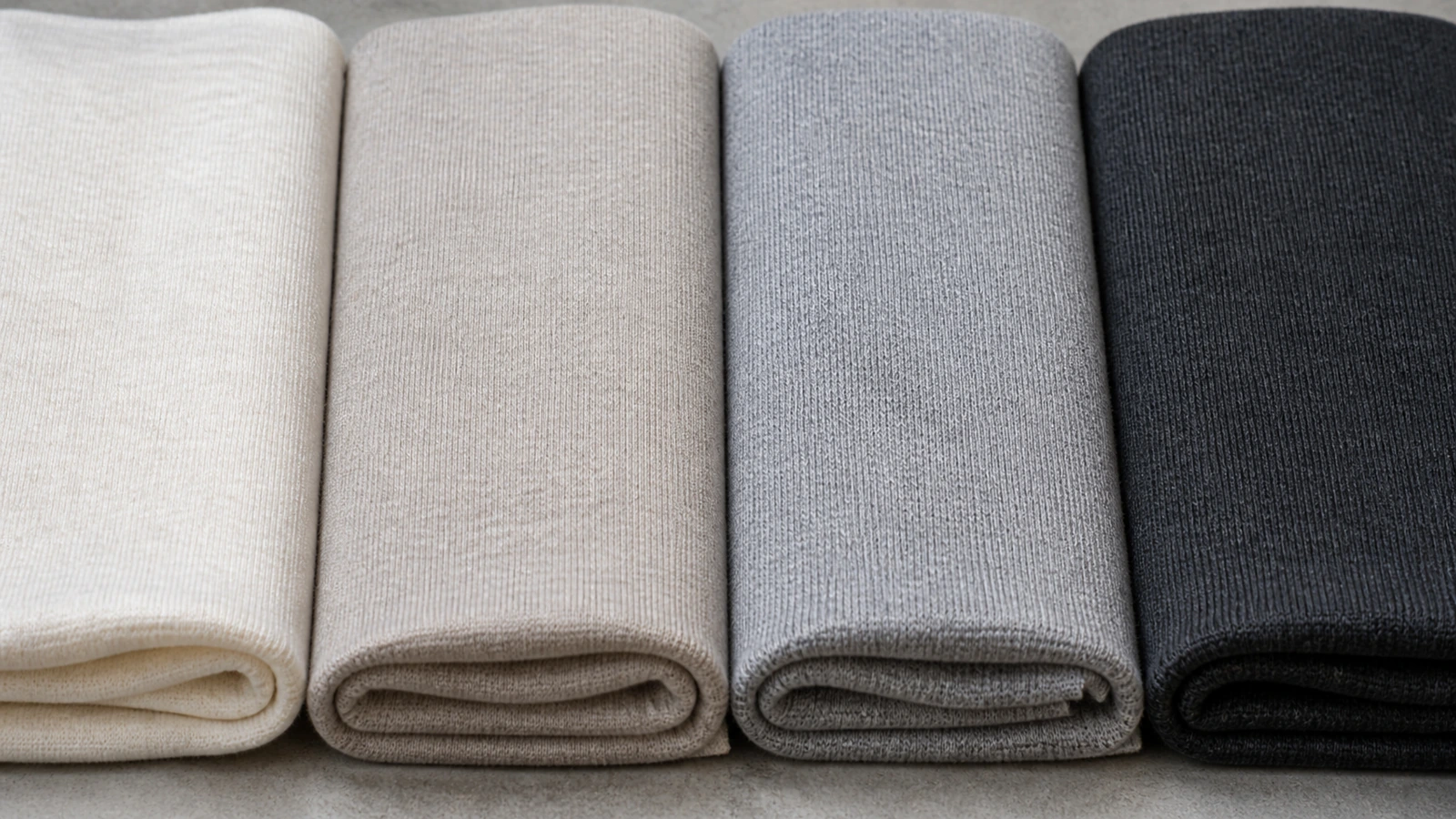
The intended silhouette should lead the GSM decision. A close or regular fit usually needs enough drape and recovery to follow the pattern without feeling rigid. A boxy or oversized T-shirt often benefits from more body, but increasing GSM alone does not guarantee that the shoulders, sleeves and hem will hold the planned shape.
Pattern dimensions and fabric behavior work together. A wide body with dropped shoulders may look clean in a stable knit and collapse in a softer one. Conversely, a highly structured fabric may make a regular-fit pattern feel bulky. Brands should define the visual goal in the tech pack or design notes: fluid, clean, crisp, relaxed, substantial or another specific direction.
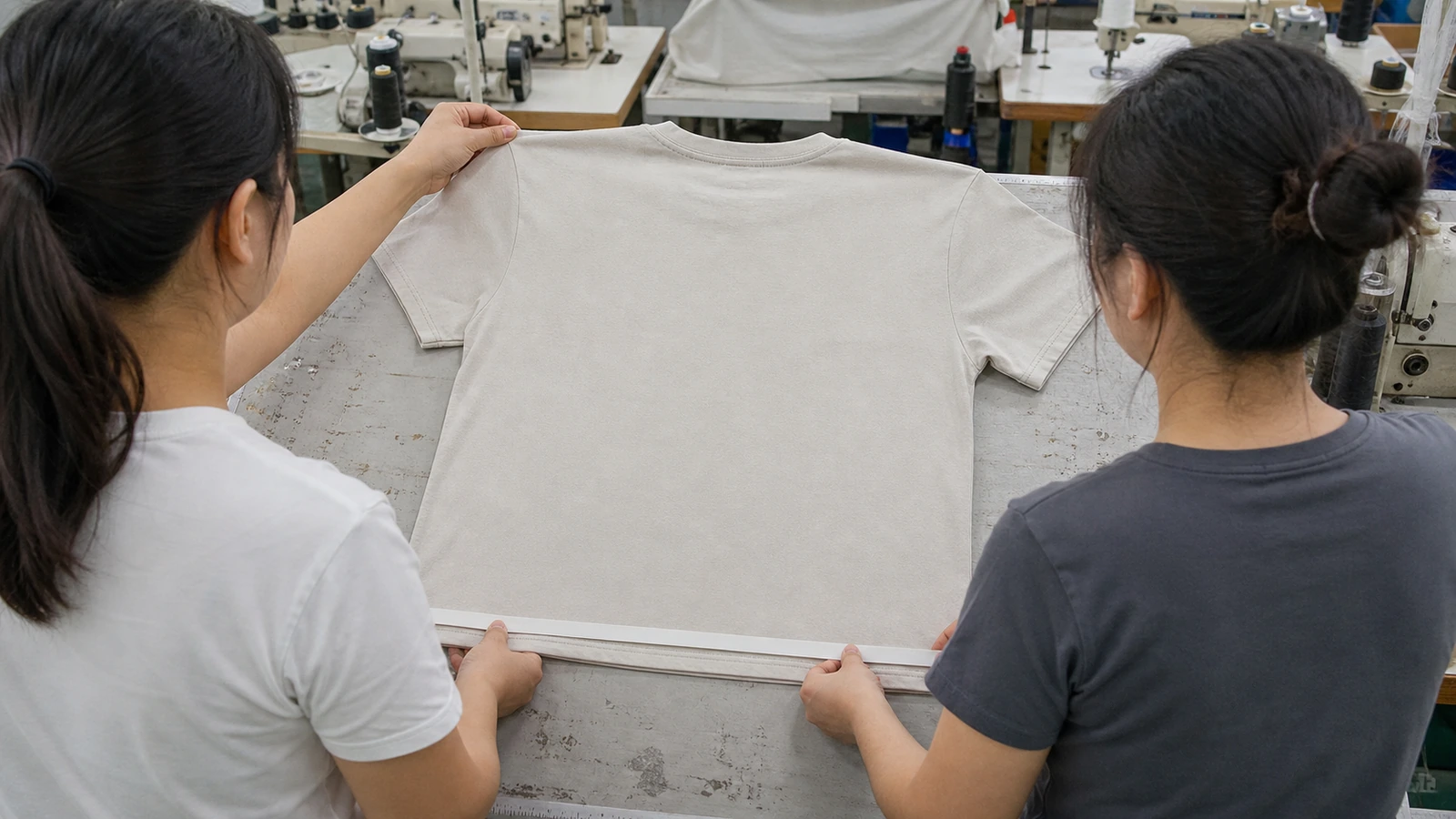
Review the sample on the intended size and fit model or dress form. Check shoulder drop, sleeve angle, side-seam hang, hem movement and neck opening. If the silhouette is wrong, determine whether the cause is the pattern, the fabric or both before changing GSM.
Choose GSM by Season, Use Case and Target Market
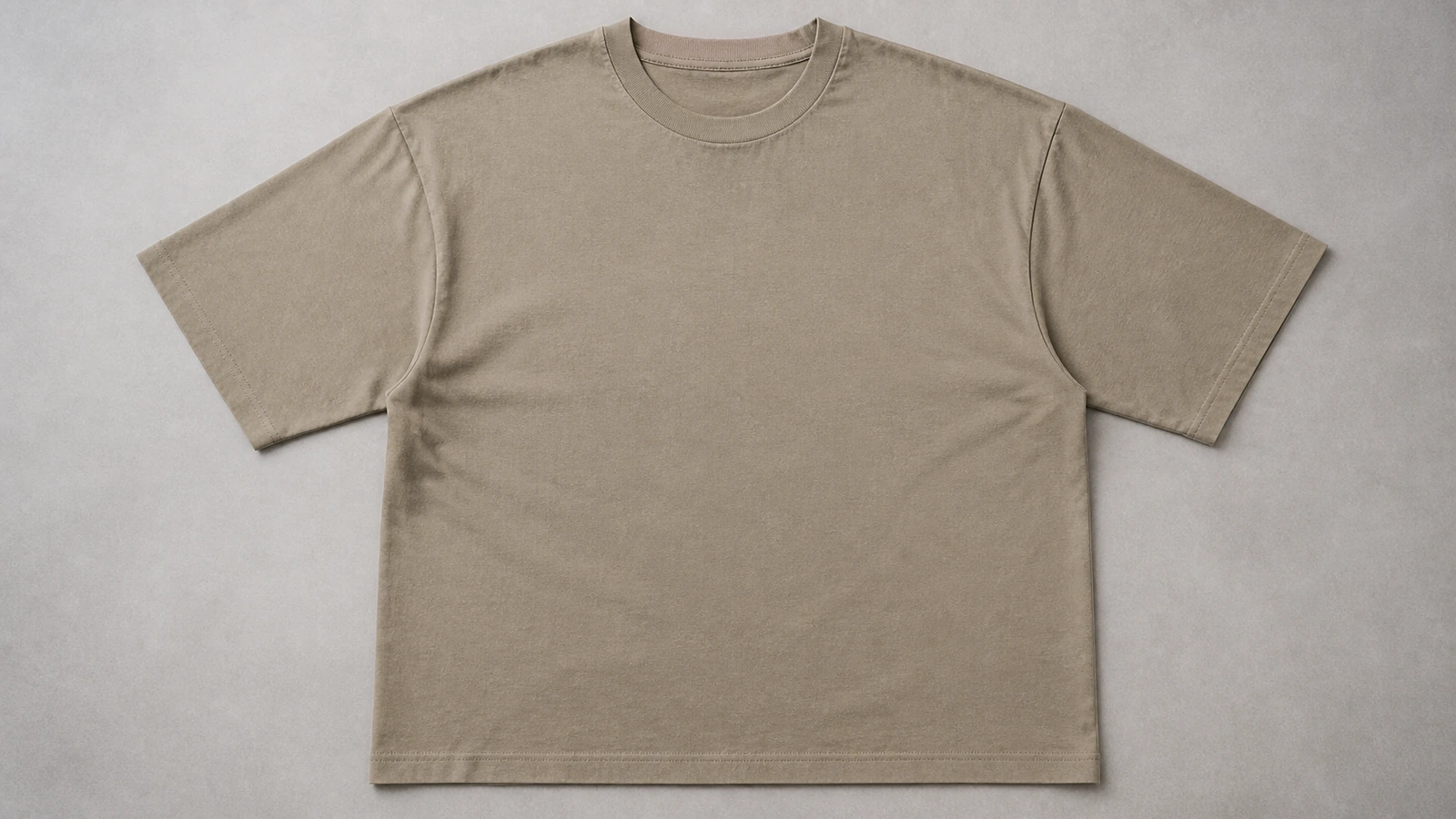
Season and use case help narrow the practical range. A lightweight T-shirt may suit warm-weather collections, layering programs or a fluid fashion direction. A midweight option may support year-round merchandising. A heavier option may fit a substantial streetwear concept or a cooler-season drop. These are design directions, not geographic rules.
Target-market research should focus on the brand’s own customer expectations. Review the weight and hand feel of approved reference garments, the expected retail positioning, the styling in the collection and how the T-shirt will be worn. A brand selling across the United States or Europe may need different fabric options for different releases rather than one GSM for every market.
Use case also changes the decision. A promotional layer, a premium standalone tee and a graphic streetwear piece can require different opacity, drape and surface characteristics. Define which outcome matters before asking a manufacturer for swatches.
Consider Printing, Embroidery and Garment Finishing
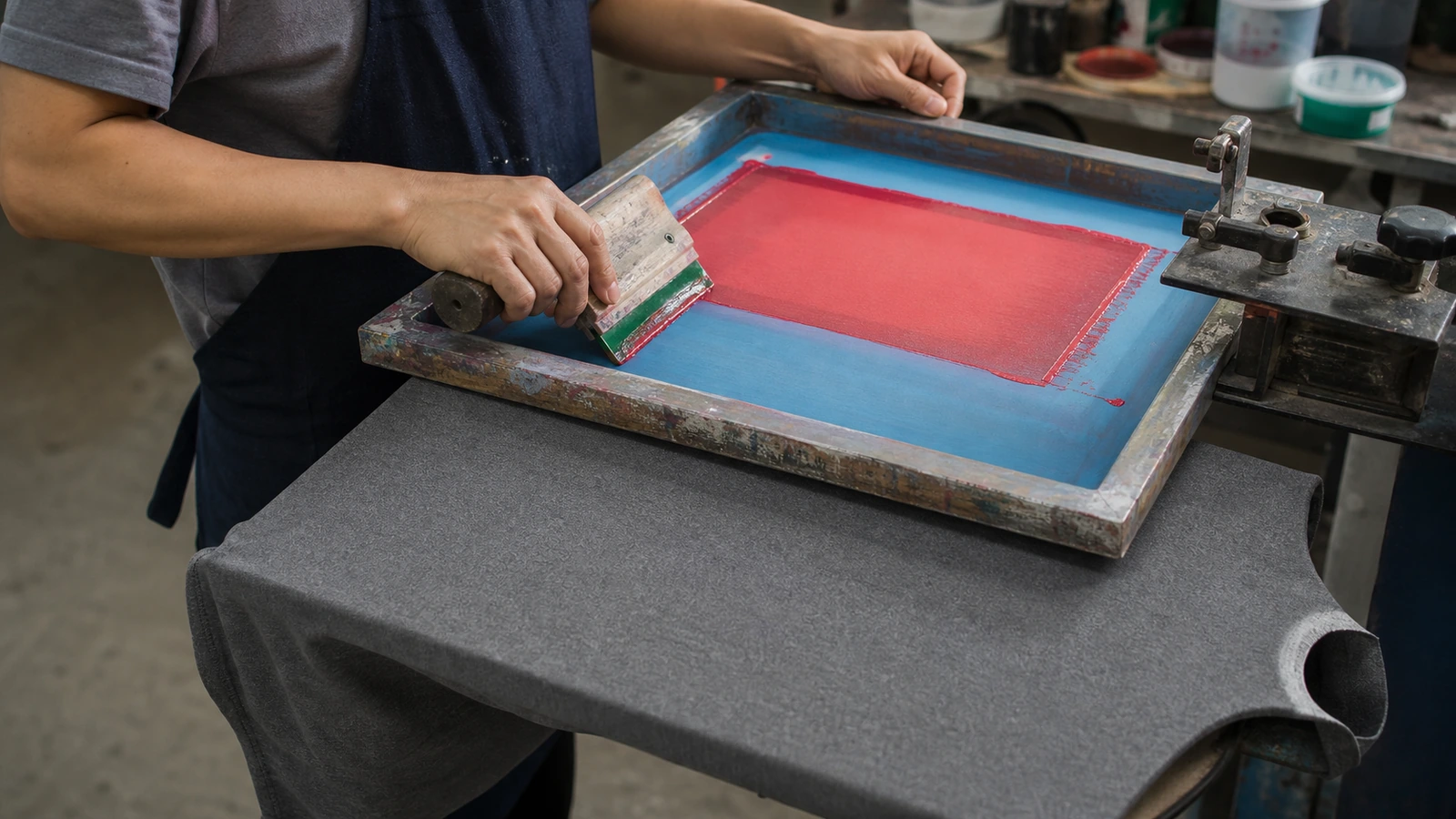
Decoration should be planned before fabric approval because the process can change the required surface and support. A detailed print needs a surface that can reproduce the design cleanly. A large ink area may change the hand and flexibility of the finished garment. Embroidery adds thread and local stiffness, so its size, stitch density and placement should be reviewed on the actual fabric.
Do not assume that heavier automatically means better for every decoration. A lighter knit may work for an appropriate print, while a very dense or heavy fabric may require changes to ink, curing or artwork. The supplier responsible for the selected decoration should review the artwork and fabric together.
Washing treatments and other finishing processes may also change hand feel, dimensions, color appearance or surface character. When a finish is part of the design, evaluate the final finished sample rather than approving only unfinished fabric. Record decoration placement, dimensions, color references and finishing expectations for sample review.
Look Beyond GSM at Fabric Construction
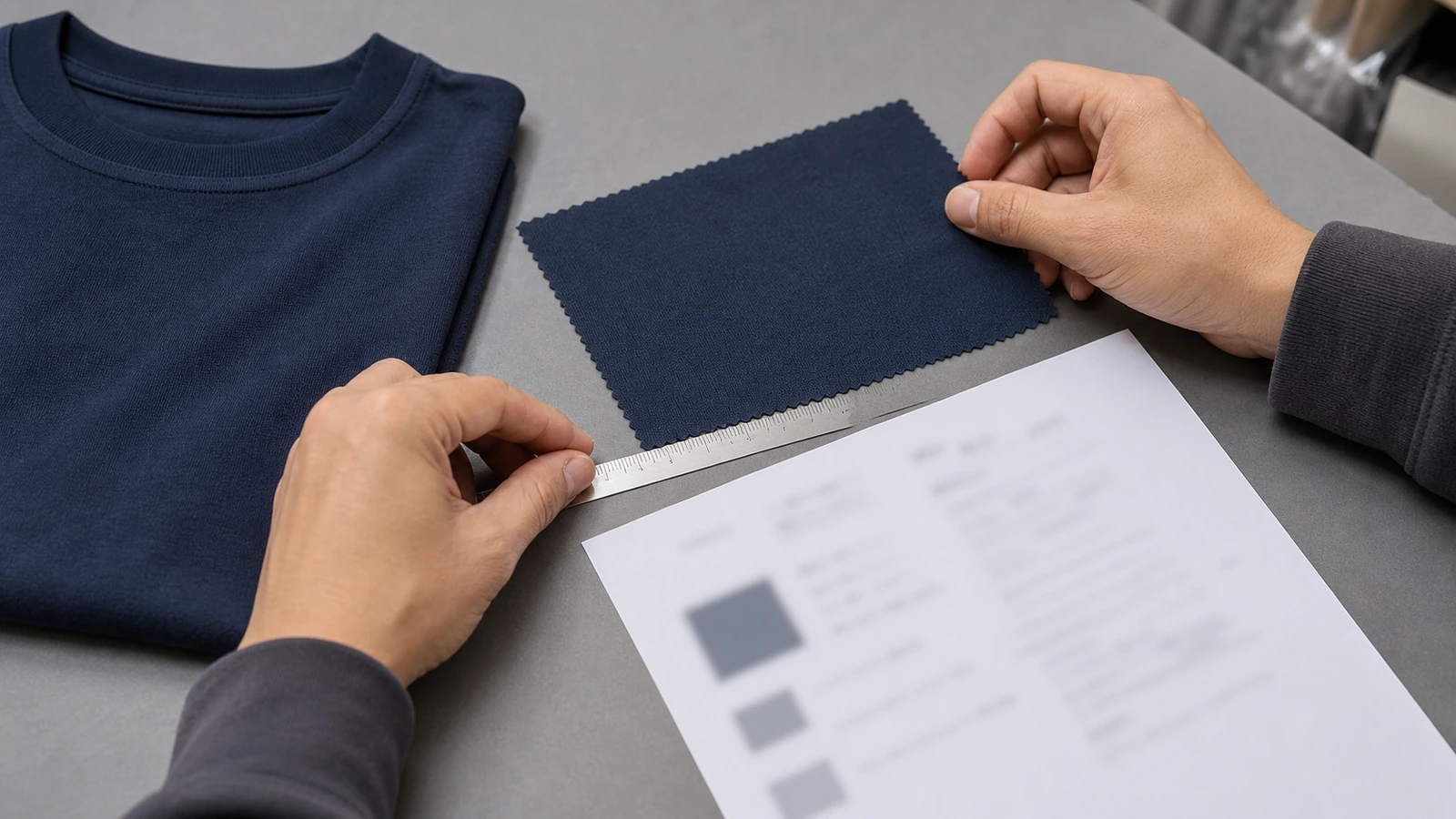
Fabric construction explains why equal-GSM options can feel different. Single jersey is widely used for T-shirts, but its weight and drape can vary with yarn and knitting choices. Other knit structures can create a different level of stability, surface texture or thickness even when the reported mass per area is similar.
For a useful comparison, request swatches that identify the agreed GSM and construction. Then assess:
- Surface smoothness and visual texture
- Drape and recovery
- Stretch in the relevant directions
- Opacity under normal use
- Edge curling during development
- Compatibility with the planned neck rib
- Behavior after the agreed finishing and care review
The goal is not to find the highest number. It is to select a fabric system that supports the design, decoration and finished-garment requirements.
Practical T-Shirt Fabric Weight Checklist
Before approving a T-shirt fabric, confirm:
- The intended fit and silhouette are defined.
- The target season and use case are clear.
- The target market and brand positioning have been considered.
- The GSM is stated as a target or agreed specification, not as a quality guarantee.
- The knit construction and yarn specification are documented.
- The desired hand feel and surface are described using a physical reference where possible.
- Opacity and drape have been reviewed.
- Printing or embroidery has been tested on the proposed fabric when relevant.
- Any washing treatment or finishing effect is shown on the final sample.
- Neck rib, seams and measurements work with the fabric weight.
- Care and dimensional-performance expectations are agreed.
- The sample is approved before bulk production.
Manufacturing Considerations Before Bulk Production
A fabric swatch is useful for narrowing options, but the finished sample is the more meaningful approval point. Sample development can show whether the fabric weight works with the pattern, stitching, neck rib, print, embroidery, labels and finishing. Review garment measurements and workmanship together with the fabric result.
When comparing swatches, use consistent lighting and handling. If dimensional change or garment twist is important to the project, discuss an appropriate care-test method and acceptance criteria before testing. Standards such as AATCC TM135 and TM150 provide defined approaches for evaluating dimensional changes in fabrics and garments, but the project requirements still need to be agreed.
After sample approval, record the accepted fabric specification and the physical reference used for confirmation. Pre-production confirmation may include the fabric, color, measurements, decoration, labels and packaging relevant to the design. Quality control during production can then check the agreed details rather than relying on a GSM label alone.
YECHENG APPAREL’s OEM/ODM apparel services can support fabric selection, sample development, printing, embroidery, labels, packaging, quality control and bulk production according to project requirements.
Frequently Asked Questions
What is a good GSM for a custom T-shirt?
There is no single good GSM for every T-shirt. The suitable weight depends on fit, season, use case, target-market expectations, knit construction, hand feel and decoration. Use an approximate range to select swatches, then approve the decision through a finished sample.
Is a higher GSM T-shirt always better quality?
No. Higher GSM indicates more fabric mass per unit area, not automatically better yarn, knitting, finishing or workmanship. Quality should be evaluated through the complete fabric specification, surface, consistency, sample construction and agreed performance checks.
What is the difference between lightweight and heavyweight T-shirts?
Lightweight T-shirts generally feel lighter and may drape more easily, while heavyweight T-shirts often create a fuller hand and stronger silhouette. The actual result still depends on construction, yarn and finishing, so compare physical samples rather than relying only on the category name.
How does GSM affect T-shirt printing?
GSM can influence the support and feel of the printed area, but surface texture, stretch, ink system, artwork and curing are also important. Test the planned decoration on the proposed fabric, especially for large prints, detailed artwork or special effects.
Should oversized T-shirts always use heavyweight fabric?
Not always. A heavier fabric can support a boxy or structured silhouette, but an oversized style may also be designed for softer drape. The pattern, shoulder shape, sleeve proportions and desired movement should determine the choice together with GSM.
When should a brand approve the final fabric weight?
Approve it after reviewing the relevant swatch and a finished sample that reflects the intended construction, decoration and finishing. If revisions change the fabric or process, review the updated result before bulk production.
Conclusion
The right custom T-shirt fabric weight is the one that supports the intended silhouette, season, use case, decoration, hand feel and target market. GSM provides a useful starting point, but it cannot replace a complete fabric specification or physical approval. Compare swatches, test the relevant decoration and finish, and review a finished sample before bulk production.
Discuss Your Custom T-Shirt Project
If your brand is developing a custom T-shirt, YECHENG APPAREL can support fabric selection, sampling and related customization based on the design requirements. Discuss your custom T-shirt project and share the intended fit, target weight, artwork and finishing direction for review.