Choosing a decoration method is a product-development decision, not a final artwork export step. The same graphic can look flat and crisp in screen print, raised in puff ink, detailed in DTG, or dimensional in embroidery. On a custom hoodie, the fabric face, garment construction and logo position can change the result as much as the artwork itself. This guide compares custom hoodie printing methods so streetwear and private label brands can plan a sample around appearance, hand feel and production practicality.
Quick Answer
Choose a custom hoodie decoration method by matching the artwork style, number of colors, required detail, fabric surface, placement and desired hand feel. Screen printing suits many bold graphics; puff adds controlled height; DTG supports tonal detail; embroidery adds stitched texture; and appliqué or chenille creates a more dimensional look. Confirm the choice on the actual hoodie fabric and sample before bulk production.
Why Printing Method Matters for Custom Hoodies
The decoration method determines more than how a logo is applied. It affects color build, edge definition, surface texture, flexibility and how the graphic sits on the garment.
Brands should therefore develop the decoration together with the hoodie rather than treating it as a separate purchase. The pattern, fabric and construction should be known before final artwork size and placement are approved. This is especially important in custom hoodie manufacturing, where pullover and zip-up styles create different printable areas.
No method is automatically the best printing method for hoodies. The better option is the one that produces the intended visual effect on the selected fabric while remaining practical for the artwork, position and project requirements.
Screen Printing for Custom Hoodies
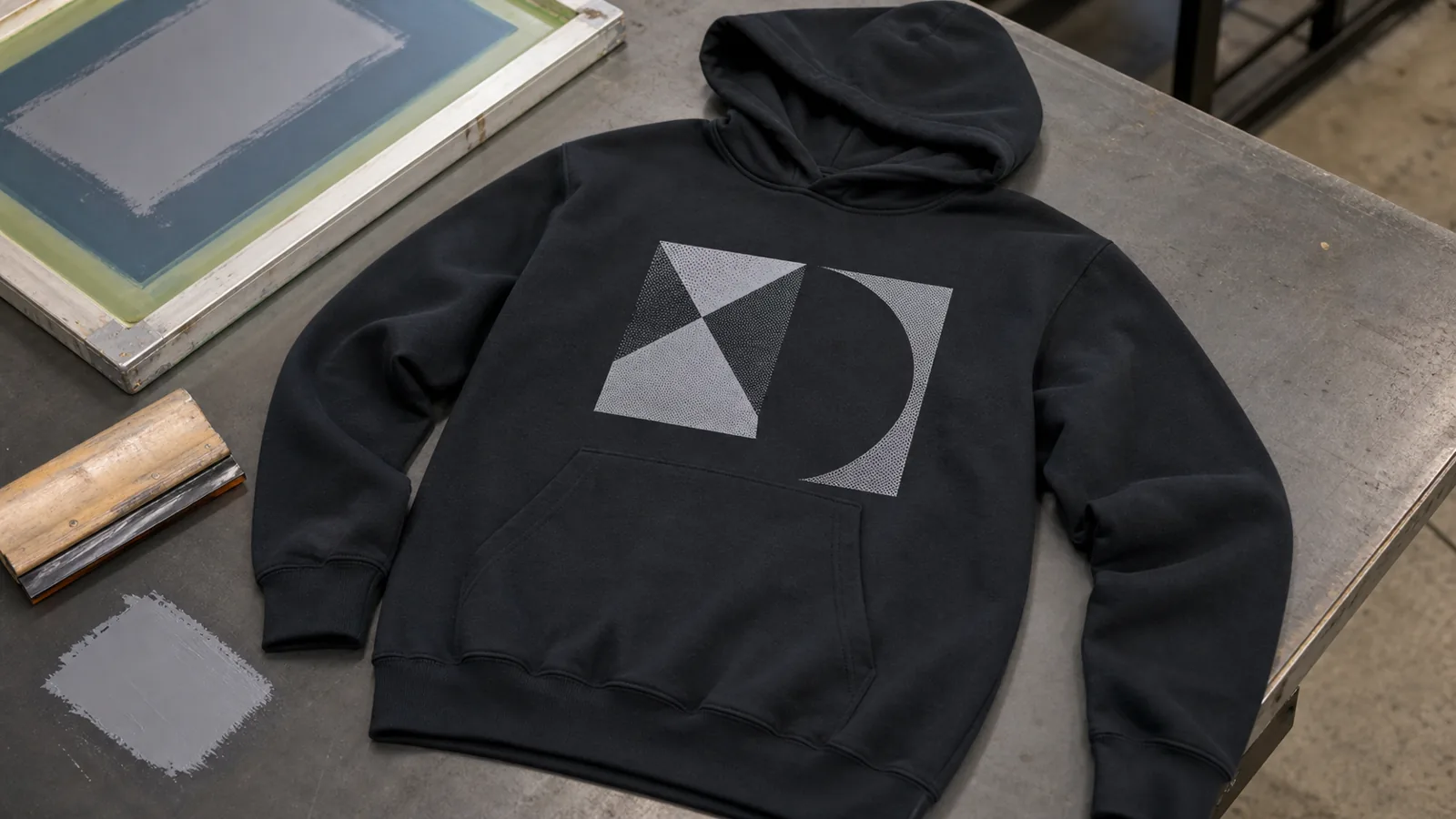
Screen printing is a strong starting point for bold artwork, solid color areas and graphics that need clear edges. Each color normally requires its own separation and production setup, so the artwork structure and color plan should be reviewed before sampling.
The printed hand feel depends on ink system, coverage, underbase and artwork size. Fine lines, halftones and distressed effects also need artwork preparation that matches the intended screen and fabric.
For screen printing hoodies, check how the fabric surface receives ink. A smoother outer face generally gives a cleaner printing surface than a highly textured, washed or uneven face. The print should be sampled on the intended fabric rather than approved from a digital mockup alone.
Puff Printing for Raised Graphics
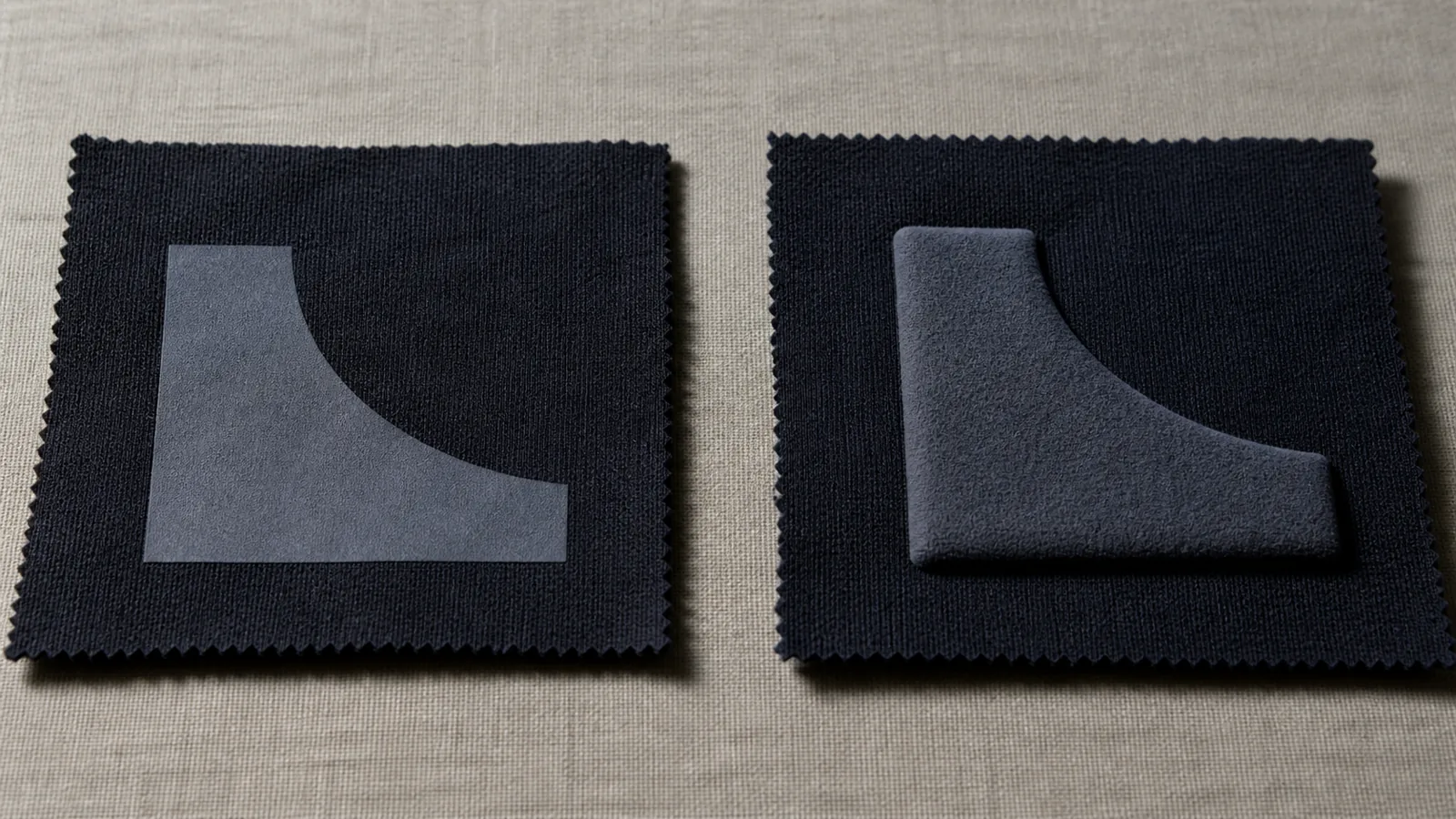
Puff printing uses a specialty screen-print ink system designed to expand during curing and create a raised surface. It can give lettering, outlines and selected graphic areas a tactile streetwear effect, but the amount of expansion and edge definition must be tested.
Puff should be treated as a material effect, not a universal upgrade to standard screen print. Very small gaps, delicate lines or large solid areas may respond differently from bold, controlled shapes.
When developing puff print hoodies, approve the actual sample for expansion, surface consistency, edge shape and hand feel. Confirm whether puff is used for the entire graphic or only selected layers. Combining flat and raised areas can create hierarchy without making every part of the design equally thick.
DTG Printing for Detailed Artwork
Direct-to-garment printing applies digital ink to the garment and can support artwork with gradients, tonal transitions and many small color changes. It can be useful when the visual concept depends on detail that would require complex color separation in another process.
DTG hoodie printing is sensitive to the garment surface and preparation. Pretreatment, ink settings and curing need to be matched to the fabric and equipment. A brushed, washed or irregular face may not reproduce fine artwork the same way as a smooth surface. Thick seams, pockets and zippers can also prevent the print area from sitting flat.
Brands should review detail, color appearance, surface feel and the effect of the garment color on the printed result.
Embroidery for Logos and Premium Branding
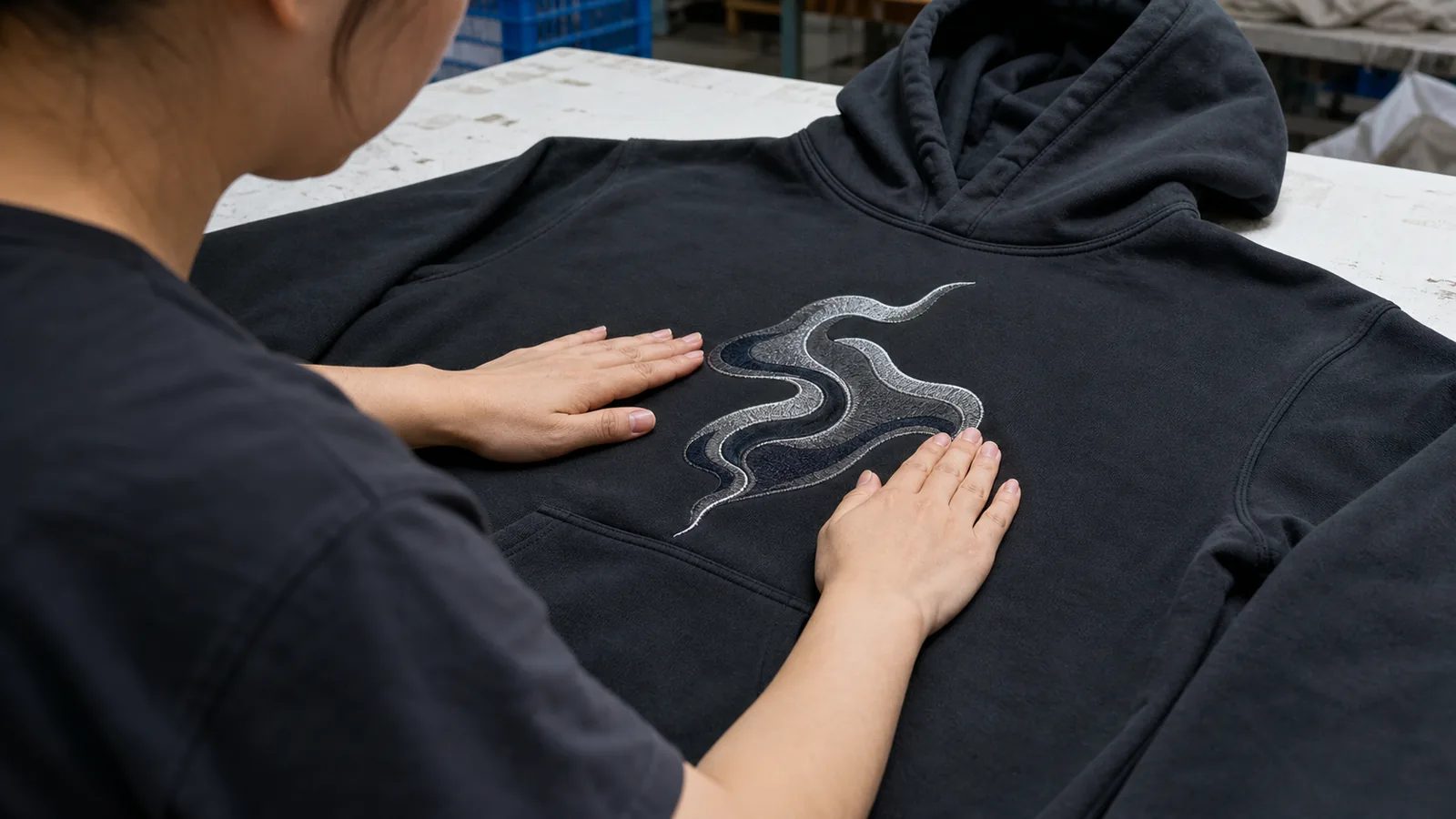
Embroidery builds a graphic with thread, giving logos and marks a distinct stitched surface. It is often considered for left-chest branding, sleeve details, small front marks and other positions where texture and edge definition support the brand direction.
The artwork must be digitized for the fabric, size and stitch path. Very small lettering, tight gaps and fine illustrated detail may need simplification. Stitch density, backing, thread direction and underlay all influence how the hoodie fabric behaves during sewing.
Large embroidered hoodie graphics can become heavy or stiff, so size alone should not determine impact. Review puckering, fabric distortion, reverse-side comfort and how the embroidered area moves with the garment.
Appliqué, Chenille and Towel Embroidery
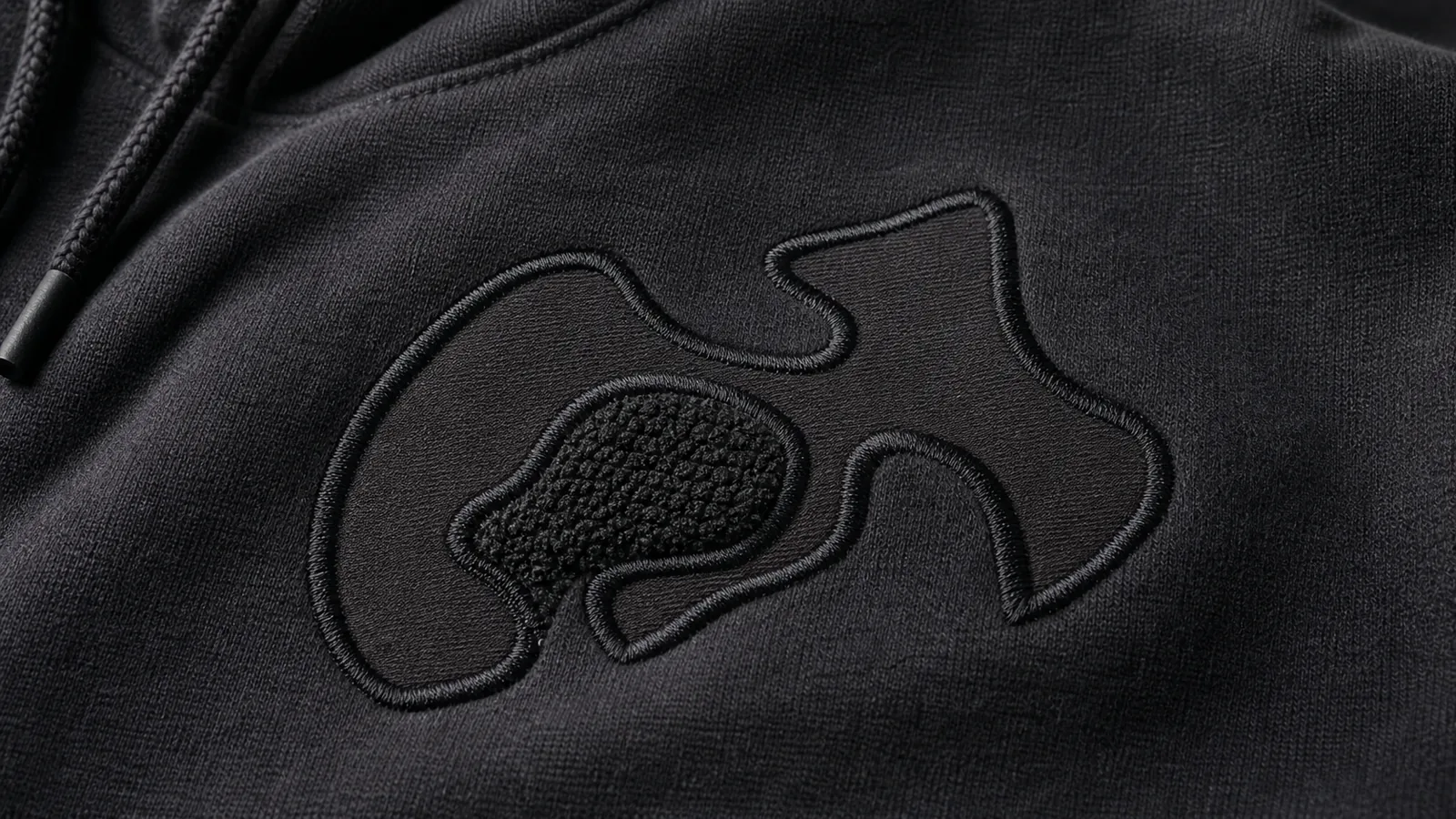
Appliqué uses a separate material piece secured to the garment, often with an embroidered edge. It can create larger shapes with less full-area stitching than a completely filled embroidery design, while introducing another fabric, edge and construction decision.
Chenille or towel embroidery creates a soft, raised texture associated with varsity and heritage-inspired graphics. Chenille can combine loop and chain stitches, while towel-style effects use textured stitching to build a plush surface. These methods suit bold shapes and lettering better than tiny photographic detail.
For appliqué and textured embroidery, review edge security, material compatibility, pile direction, thickness and how the design sits after finishing. The sample should also confirm that the chosen placement does not interfere with seams, pocket openings or hood construction.
How Hoodie Fabric Affects Decoration
Fabric surface is a central part of decoration development. A smooth cotton jersey face can support cleaner printed edges, while brushed fleece, loopback fleece and heavyweight hoodie fabric may behave differently depending on knit texture and surface finish. Washed or distressed surfaces can introduce deliberate variation, and stretch or blended fabrics may require different ink, thread or support decisions.
Fabric weight alone does not predict the result. Knit density, outer-face smoothness, stretch recovery and finishing can all matter. The existing fleece hoodie fabric and GSM guide provides broader fabric context, but decoration approval should still use the exact fabric selected for the project.
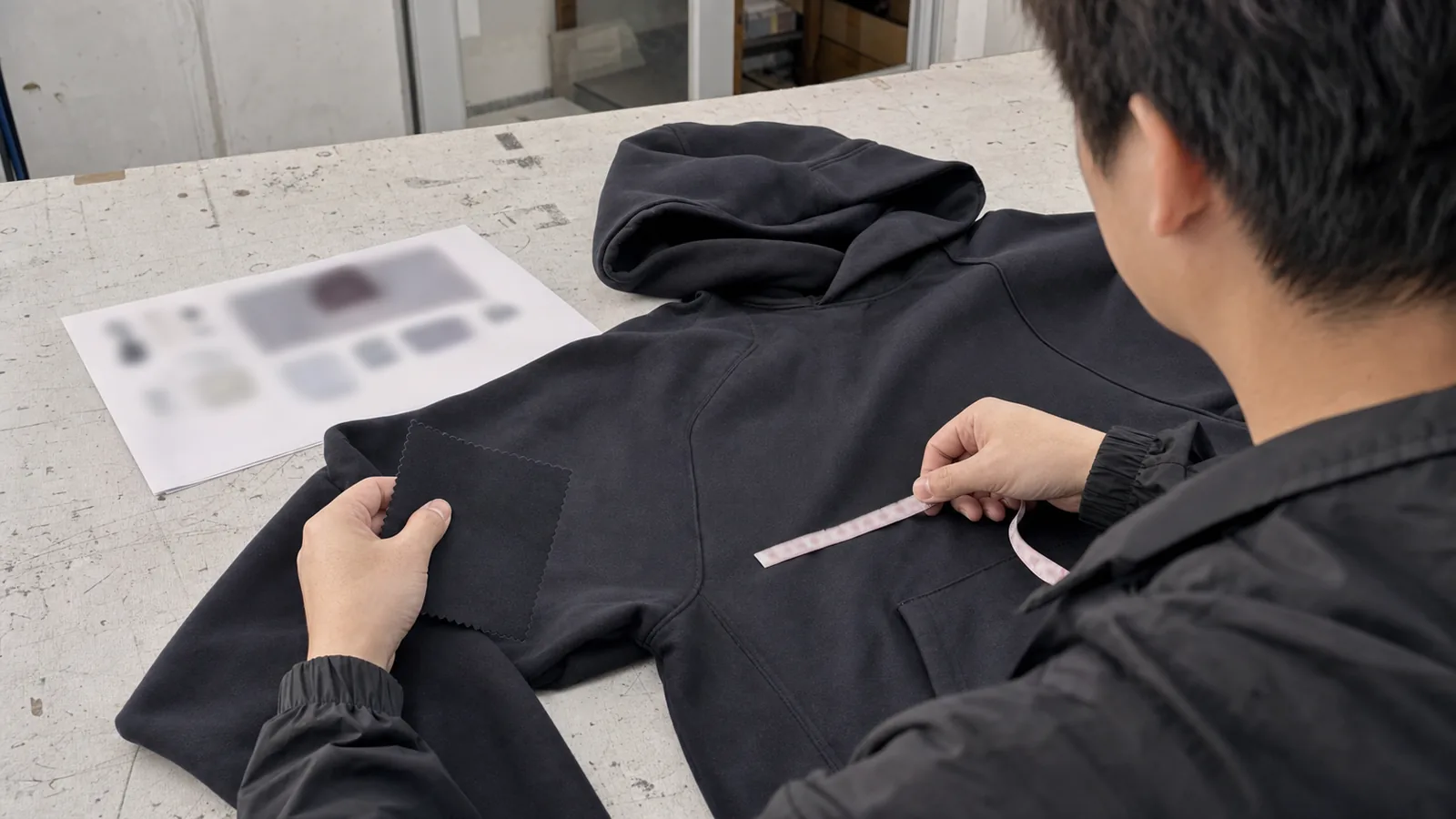
Before finalizing the method, place the print or embroidery on a fabric swatch or garment sample. Check whether the surface absorbs ink evenly, whether stitches remain stable and whether finishing changes the appearance.
How to Choose by Artwork Style
Start with the visual structure of the artwork. Bold spot-color graphics often align naturally with screen printing. A raised wordmark or selected outline may suit puff. Tonal artwork, gradients and complex color transitions may lead to a DTG test. Compact logos and monograms can work with embroidery, while varsity-style letters and large dimensional shapes may suit appliqué or chenille.
Then simplify the question: which visual information must remain? If tiny lines are essential, confirm whether the method can reproduce them on the chosen fabric. If texture is the priority, accept that some fine detail may need to be adjusted. If the design combines methods, define the registration and layer order during sample development.
Artwork file quality matters in every process. Supply clean vector elements where appropriate, high-resolution raster artwork for tonal printing, defined colors and a placement mockup with dimensions.
How to Choose by Print Placement
Placement affects artwork size, visibility and production access. Center chest and left chest positions can avoid major construction details. Full-front and back prints provide more visual area but may interact with pockets, seams or hood overlap. Sleeve, hood and pocket-area decoration often requires smaller artwork and careful alignment.
Pullover Hoodie Placement
A pullover hoodie usually offers a continuous front area, but the kangaroo pocket limits how low a full-front design can sit. Check the distance from neckline to artwork, the pocket seam, body width and how the graphic appears when the hoodie is worn rather than laid flat.
Zip-Up Hoodie Placement
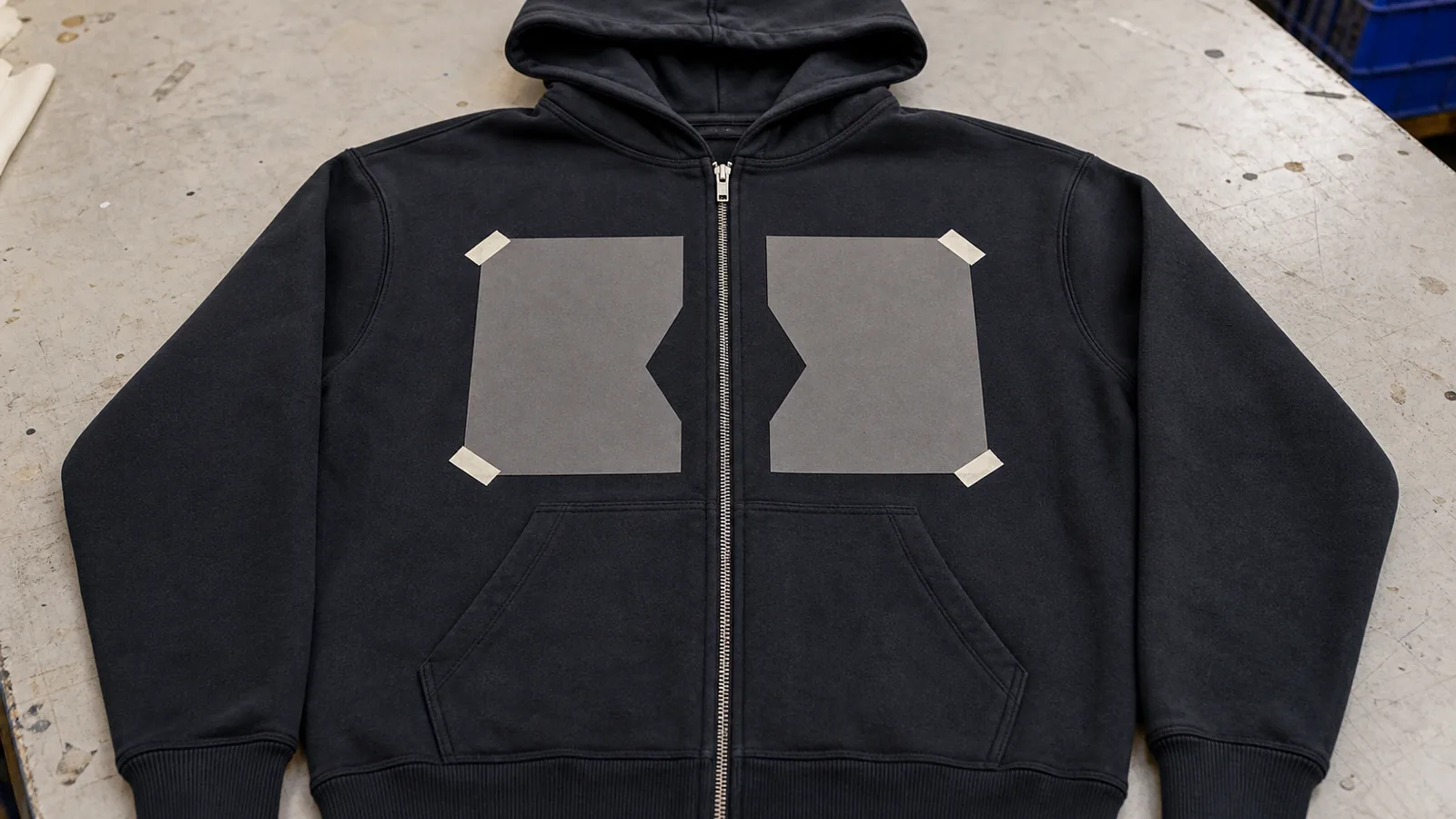
A zip-up hoodie divides the front with a zipper. A centered graphic may need to be split, moved or redesigned so important details do not disappear into the zipper line. The zipper tape and raised hardware can also affect printing access. Left and right chest elements should be checked as a pair for balance.
For sleeves, hoods and pocket areas, confirm seams, ribbing, curves and usable equipment area. A placement that looks correct on a flat technical sketch can distort when wrapped around the body or hood.
Custom Hoodie Decoration Method Comparison
| Method | Suitable Artwork | Surface Feel | Detail Level | Fabric Considerations | Important Development Check |
|---|---|---|---|---|---|
| Screen printing | Bold graphics, spot colors, line art | Flat to noticeable, depending on coverage | Moderate to high with suitable separation | Smoothness, absorbency and garment color affect setup | Color separation, underbase, coverage and curing |
| Puff printing | Bold lettering, outlines, selected raised areas | Raised and tactile | Best for controlled shapes rather than tiny detail | Expansion must be tested on the actual face | Height, edge shape, consistency and hand feel |
| DTG printing | Gradients, tonal art, complex color changes | Usually integrated with the surface | High when fabric and preparation support it | Pretreatment and surface texture are important | Detail, color appearance, pretreatment and curing |
| Embroidery | Logos, monograms, compact graphic marks | Stitched and dimensional | Depends on size and digitizing | Fabric stability and backing affect distortion | Stitch density, underlay, puckering and reverse side |
| Appliqué embroidery | Large shapes, letters, layered graphics | Fabric layer with stitched edge | Moderate; strong for defined silhouettes | Appliqué material and hoodie fabric must work together | Edge security, registration, bulk and placement |
| Chenille or towel embroidery | Varsity lettering and bold textured forms | Soft, raised and plush | Better for bold shapes than fine illustration | Surface and support must control movement | Pile consistency, edge definition and thickness |
The table is a development guide, not a universal ranking. Final selection still depends on the specific artwork, hoodie fabric, placement and approved sample.
Pre-Production Testing Checklist
Before approving a hoodie decoration for bulk production, review:
- Artwork size: Record the final width and height for each garment size or size group.
- Artwork file quality: Supply production-ready vector or high-resolution raster files as required.
- Color separation: Confirm spot colors, tonal layers, underbase and any combined techniques.
- Placement: Measure from stable garment reference points and review the worn appearance.
- Fabric surface: Test the selected process on the actual fabric and finish.
- Test sample: Approve a physical decorated sample rather than only a digital mockup.
- Hand feel: Review print coverage, raised effects and embroidered stiffness.
- Stitch density or print coverage: Check whether the surface remains stable and the artwork stays clear.
- Zipper and pocket interference: Confirm printable or stitchable space on pullover and zip-up hoodies.
- Wash-test or finishing review: Evaluate the sample after the project’s intended finishing or care review without assuming a fixed universal result.
Document the approved method, artwork version, colors, measurements and placement in the project specifications. Clear approval records support more consistent sampling and bulk production through an OEM/ODM apparel development process.
Frequently Asked Questions
What is the best printing method for custom hoodies?
There is no single best method. Choose according to artwork style, number of colors, fabric surface, placement, desired hand feel and brand positioning. Compare the result on the actual hoodie sample before bulk approval.
Is screen printing suitable for heavyweight hoodies?
It can be suitable, but heavyweight fabric is not enough information on its own. Surface smoothness, knit structure, garment color, ink system and artwork coverage should be tested together on the selected fabric.
What is the difference between puff print and standard screen print?
Standard screen print generally creates a flatter ink layer, while puff uses a specialty ink system that expands during curing to create height. Puff requires sample control because line thickness, shape and curing affect the raised result.
Is embroidery suitable for large hoodie graphics?
Embroidery can create large graphics, but more size and stitch coverage may add weight, stiffness and fabric stress. Appliqué or a mixed technique may provide a dimensional look with a different construction. Review a physical sample before choosing.
Can DTG printing be used on fleece hoodies?
DTG may be used on some fleece hoodie surfaces, but the outcome depends on fiber content, outer-face smoothness, pretreatment, ink setup and curing. A sample on the actual production fabric is necessary to judge detail and color.
How should brands choose hoodie logo placement?
Choose placement by considering artwork size, seams, pockets, zippers, ribbing and the graphic’s appearance when worn. Pullover fronts offer a continuous area, while zip-up fronts may require a split or offset design.
Conclusion
Custom hoodie decoration should connect the artwork to the garment, not force one method onto every design. Screen printing, puff, DTG, embroidery, appliqué and chenille each create a different balance of detail, texture and hand feel. The practical choice comes from reviewing artwork structure, fabric surface, placement and construction together, then confirming the result through a documented sample.
Discuss Your Custom Hoodie Project
To plan a hoodie sample, prepare the hoodie style, fabric preference, artwork, preferred decoration method, logo placement and sample requirements. You can contact YECHENG APPAREL to discuss your custom hoodie project and review the development details before bulk production.