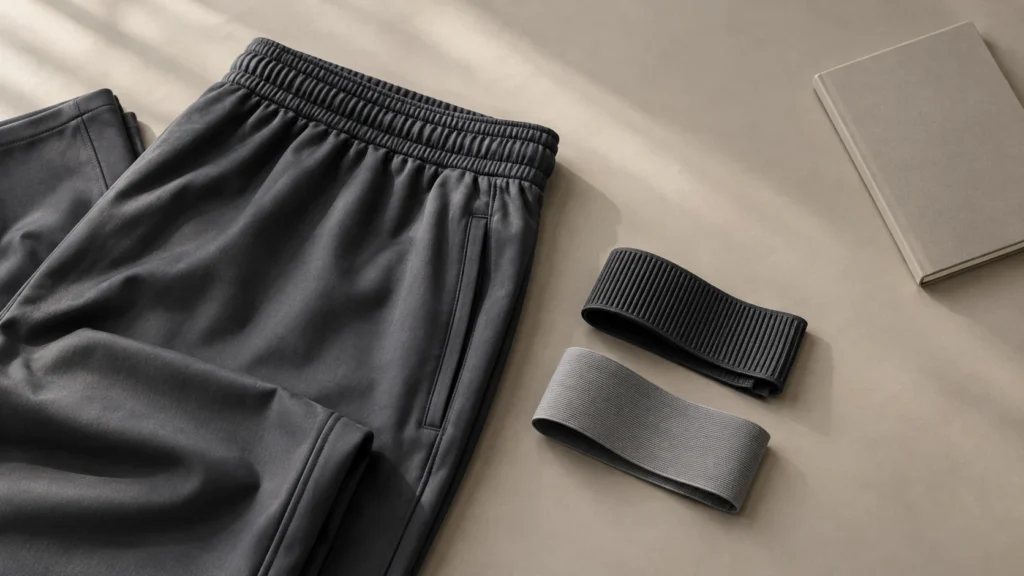
A waistband can feel secure on one fit model and uncomfortable on another. For a sportswear brand ordering custom tracksuit pants, “firm elastic” is therefore too vague to approve. The useful specification connects the intended body-waist range, the elastic’s measured response to stretch, and the feel of the finished waistband in each size. Set those checks before comparing supplier samples.
Start with the fit range the waistband must serve
Record the body-waist range intended for each pants size and the finished, relaxed waistband circumference. Keep body measurements separate from garment measurements: a relaxed garment circumference is not the same as the waist measurement of the person wearing it. Also record how far the waistband must open for dressing, especially if the pants must pass over the hips without a side opening.
Choose fit models near the lower and upper ends of the intended range, as well as one near the middle. The lower end can reveal slipping; the upper end can reveal pressure, rolling, or difficulty pulling the pants on. Review the pants during standing, walking, sitting, and a squat or similar movement relevant to the product. These are proposed brand approval checks, not standardized comfort tests.
Specify the waistband as a construction, not simply a roll of elastic. Note its width, relaxed cut length, joining method, whether it sits inside a casing or is exposed, the number and position of stitch lines, and whether there is a drawcord. A drawcord may let a wearer adjust the fit, but the brand should decide whether the pants must remain secure with the cord untied. The surrounding shell fabric and casing can change how the same elastic feels once sewn.
Compare elastic at the same extension
Ask for candidate elastics in the proposed production width and construction. Record each supplier’s material identification, composition if provided, width, thickness or hand-feel description, and lot or sample reference. A label such as “high stretch” does not say how much force the material applies at the extension your waistband needs.
For a controlled comparison, ask a qualified lab or material supplier to measure tension at agreed extension points relevant to the design. ASTM D4964 covers tension and elongation of wide or narrow elastic fabrics using a constant-rate-of-extension machine. For this purchase decision, ask testers to use the same agreed extension points and record the test conditions, force units, and specimen identification alongside the results.
An extension point can be selected from the proposed waistband geometry. For example, if an elastic loop is 70 cm at rest and is stretched to 84 cm, its extension relative to its resting length is 20%. Those lengths illustrate the calculation; they are not a recommended tracksuit waistband size or target tension. The actual extension points should reflect the brand’s graded waistband and intended body range. Ask the tester to use the same agreed points for every candidate.
ISO 20932-3 is another relevant reference for narrow fabrics; its public abstract identifies methods for product quality assurance and for performance in use. Agree on one method and its reporting conditions before comparing offers. A number from one test arrangement should not be ranked against a number from a different arrangement as though the methods were interchangeable.
Read the result alongside the sewn sample
A useful comparison might show that elastic A applies more force than elastic B at the same extension. That does not, by itself, prove A will hold better or feel worse in the completed pants. The casing, fabric friction, seam bulk, waistband width, pants weight, and drawcord all affect the wearer’s experience. Use the material data to narrow the choices, then sew each finalist into otherwise comparable samples.
On each sample, measure the relaxed waistband circumference using one agreed method. Check the waistband’s opening circumference under the brand’s agreed handling method, without pulling until damage. Inspect for twisting inside the casing, uneven gathers, a bulky join, stitch restriction, and rolling during movement. Compare the sample on the selected fit models and record specific observations: “slides down after walking,” “pressure at seated waist,” or “rolls at front,” rather than “fit is bad.”
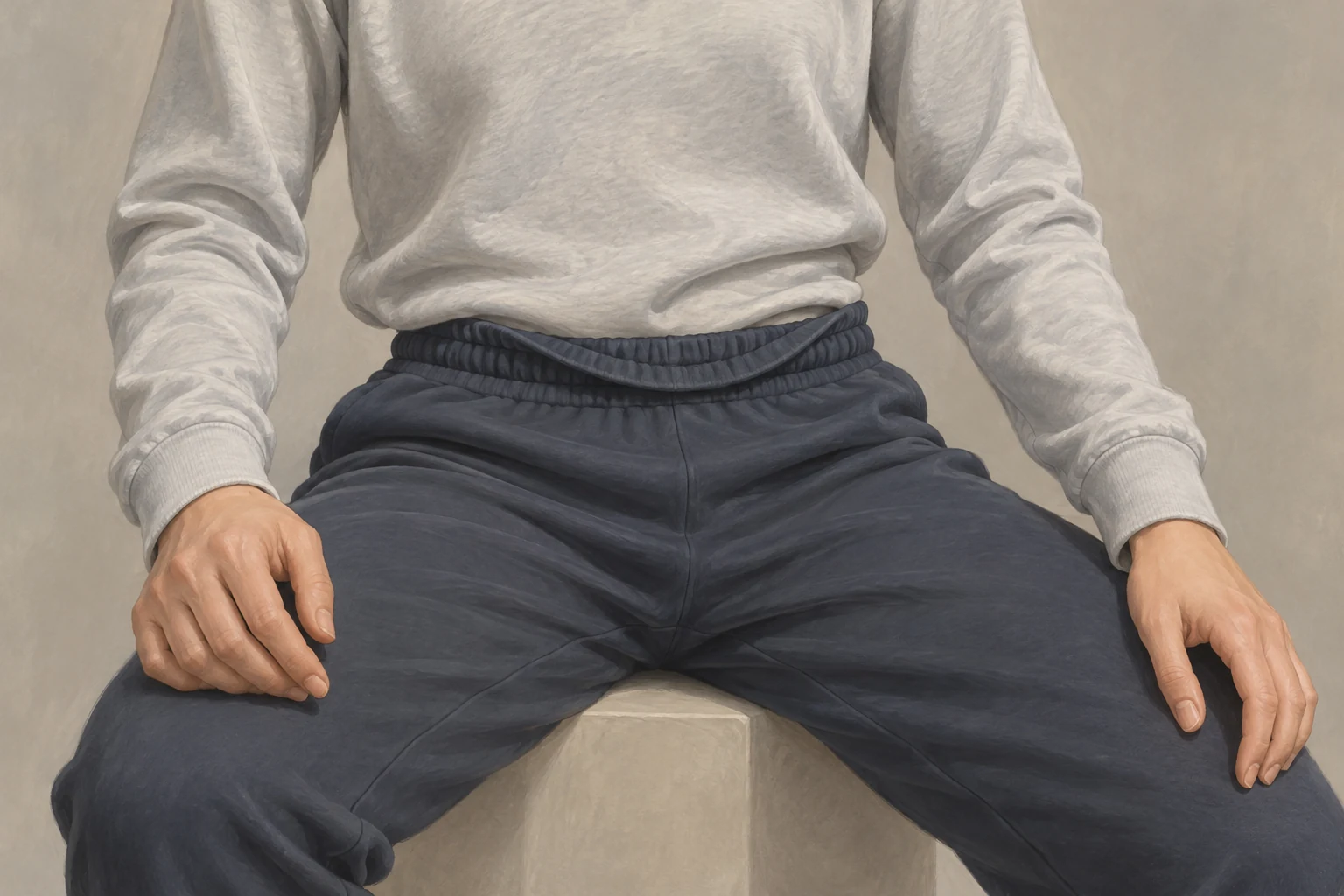
Test after the care process the brand expects customers to use. ASTM D4964’s public scope says laundering temperature and the number of wash and dry cycles require mutual agreement when laundering is part of that test. Set those conditions in the project brief and record results before and after care. For the finished pants, remeasure the relaxed waistband and repeat the wear review; a material report alone cannot approve the sewn construction.
Write acceptance criteria that can be checked again
A purchase specification can separate material approval from garment approval:
- Material identity: approved elastic supplier and reference, width, composition or construction description, and permitted substitution process.
- Comparable test report: chosen method and edition, specimen and machine conditions, extension points, tension results with units, and the agreed before- or after-care state.
- Construction: elastic cut length by size, joining method, casing dimensions, stitching, drawcord arrangement, and an approved physical sample.
- Finished measurements: relaxed waistband circumference and the measurement method for each size, with buyer-approved tolerances.
- Functional review: fit-model range, movements, dressing check, cord condition, and observable reasons for acceptance or revision.
- Care review: agreed wash and dry conditions, measurement change, appearance, and repeat fit observations.
Set numerical limits only after reviewing samples and data from the intended design. For example, a brand might approve a force range at two extension points and a circumference tolerance for each size, but those limits should come from its own fit trials and production capability discussion. Neither ASTM D4964 nor the cited ISO abstract establishes a universal “comfortable tracksuit” force value.
Before approving a production sample, confirm that its elastic reference, sewn construction, size measurements, and care result match the written specification. If a different elastic is proposed later, request comparable data and a revised finished sample before accepting the substitution. This gives the buyer a repeatable decision: the material can be compared objectively, while comfort and hold are approved on the garment the customer will wear.
The supplied custom tracksuits page provides product-category navigation. Use the request-a-quote page to send an inquiry about your project-specific sample and specification.