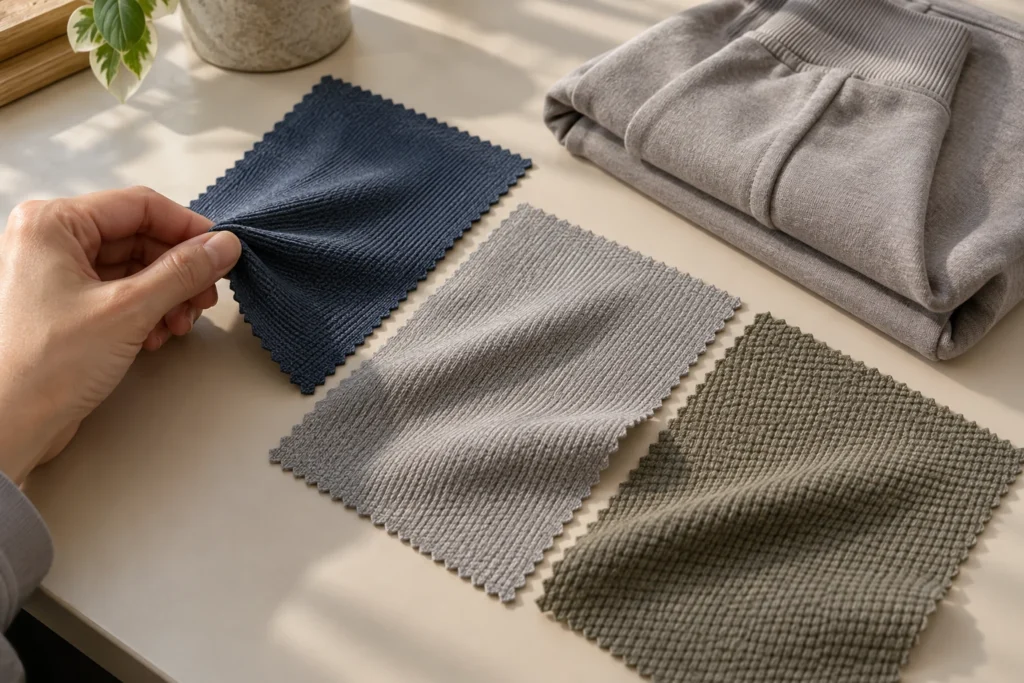
A knit tracksuit fabric can feel comfortably stretchy in a swatch and still leave baggy knees, elbows, or a loose waistband in a finished garment. For a sportswear brand, the buying decision is therefore two-part: does the fabric extend enough for the intended movement and fit, and how much shape does it retain after that extension is released? Compare those questions on identified fabric samples before approving a production material.
Separate stretch from growth
Stretch describes how far a specimen extends under a defined test condition. Fabric growth describes the length that remains after an extension is removed and the specimen has had the specified time to recover. ASTM D2594/D2594M measures stretch under a known load and growth after a known extension is applied and removed. Its scope concerns fabrics with high stretch and good recovery from low tension. ASTM D2594/D2594M
A high stretch figure alone does not answer whether the knees of a slim track pant will keep their shape. Nor does a low stretch figure automatically mean the fabric is better: it may restrict the movement the design requires. Set the desired fit and movement first, then compare both extension and residual growth. Check the fabric in each direction relevant to the pattern, because a tracksuit panel may be cut or stressed differently across its width and length.
A simple illustration helps when reading a report. If a marked section begins at 100 mm, reaches 125 mm during an agreed extension, and measures 103 mm after the agreed recovery period, the observed extension is 25% of the starting length and the residual increase is 3%. This is an arithmetic example, not a pass limit or a substitute for the calculations and procedure in the selected test standard. Ask the laboratory which result it reports, how it defines recovery, and when it takes the final reading.
Choose a method that fits the fabric
For a comfort-stretch knit, ask the supplier or laboratory whether ASTM D2594/D2594M suits the actual fabric and the decision being made. The standard allows its stretch and growth procedures to be used together or individually. Its public description also points to other methods for fabrics intended for support or other applications, so a close-fitting, high-tension design deserves a method review rather than an automatic D2594 instruction. ASTM D2594/D2594M
ISO 20932-1 is another reference to discuss with the laboratory. Its scope describes tests using straight fabric strips or loops to measure elasticity and related properties of fabrics, excluding narrow fabrics. ISO 20932-1 As a buyer, identify the edition, applicable procedure, specimen direction, and report outputs you want before asking suppliers to submit figures.
Also be careful with reports from different laboratories. ASTM says D2594/D2594M is not recommended for commercial-shipment acceptance testing because its between-laboratory precision is poor. If conflicting laboratory results matter to the purchase, arrange a controlled comparison using samples as homogeneous as possible, drawn from the material behind the differing results, and obtain competent statistical help, as ASTM advises. ASTM D2594/D2594M
Run a fair comparison of candidate fabrics
Request identifiable swatches from the intended material supply, then give the testing team one written comparison plan. Record the supplier and fabric code, fiber composition, knit construction, finish, color, and whether the specimen came from development yardage or a production lot. A fabric name such as “stretch polyester knit” is too broad to trace a result back to the material you intend to buy.
Ask the laboratory to document these conditions for every candidate:
- The test method, edition, selected procedure, and laboratory.
- Specimen direction, number of specimens, and where they were cut from the fabric.
- Starting dimensions, specified load or extension, and how long the extension is held.
- Recovery time before the final reading and the reported stretch and growth results.
- Fabric identity, lot, finish state, and any conditioning or care treatment before testing.
The brand and its testing partner should agree on the exact settings and any acceptance range for the intended design. Keep those settings the same across candidates. Compare the individual results as well as the average: a promising mean can conceal substantial variation between specimens. If results differ between lots, investigate the source before treating one attractive swatch as representative of repeat supply.
Check where the garment may lose shape
Fabric testing narrows the options; a sewn sample shows whether the selected material works with the pattern and trims. Make a representative jacket and pant in the proposed fabric. Measure and photograph areas that matter to the style, such as pant knees, seat, waistband, cuffs, elbows, and jacket hem. Have the wearer perform the movements the design is meant to accommodate, then review those areas after the agreed wear and rest periods. Record observations against the same sample and measurement points each time.
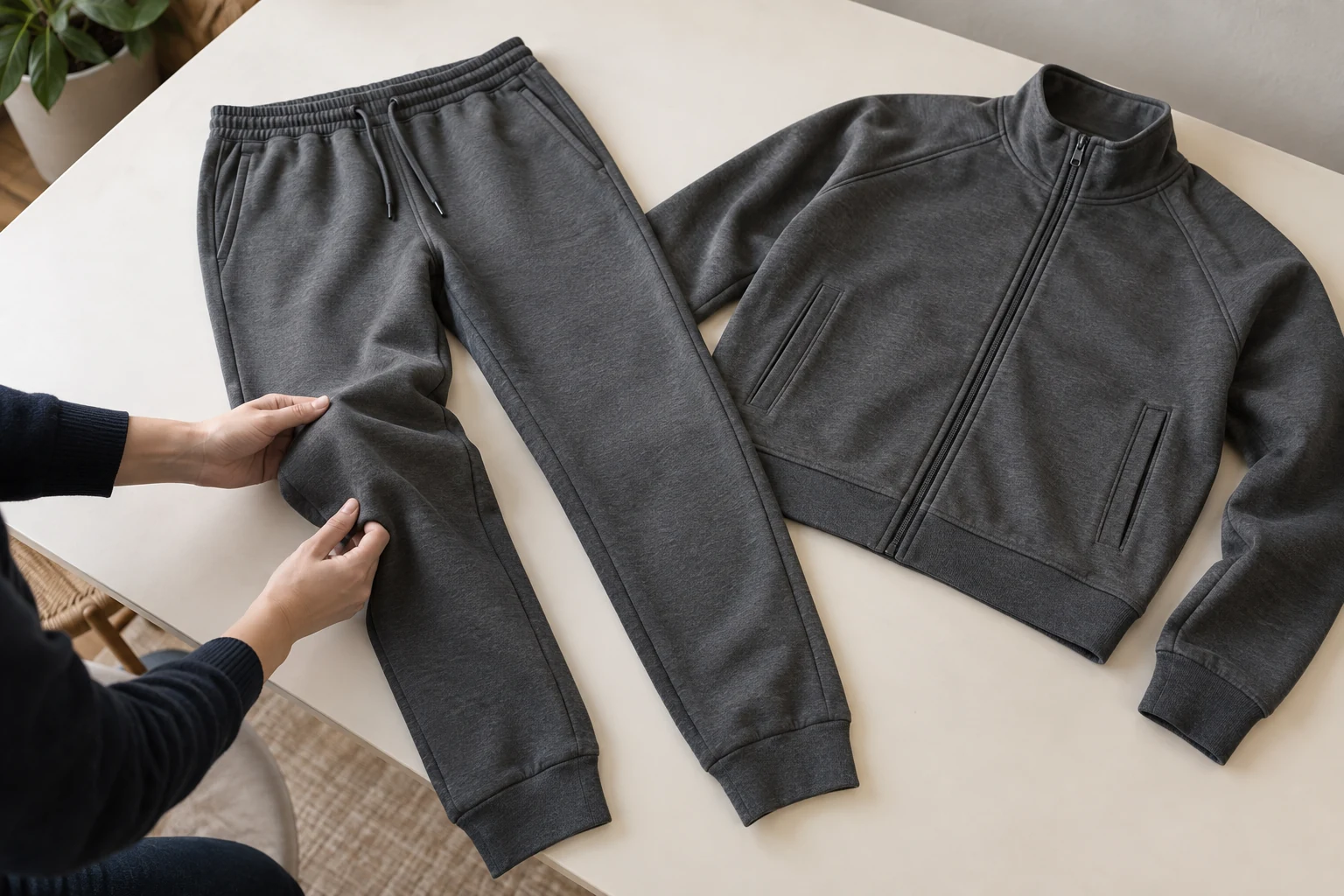
Judge the result in context. A relaxed pant may tolerate a change that would look poor in a close-fitting leg. Rib at a cuff or waistband can behave differently from the main body knit, so identify and assess those components separately. Seams, panel orientation, and pattern ease also affect whether a garment looks stretched out. A fabric report should inform this review, not replace it.
Shape after laundering is a related but distinct question. AATCC TM150 addresses garment length and width changes after home laundering; its public scope warns that it may not apply to garments made of certain stretch fabrics. Discuss an appropriate care test with the laboratory, and avoid presenting a wash-shrinkage result as a measurement of recovery after wear. AATCC TM150
Write an approval specification the supplier can repeat
Before choosing a fabric, keep the approved swatch and finished sample alongside the test report. The purchase specification should identify the exact fabric and finish, the agreed stretch-and-growth method and conditions, the directions tested, and the result range the brand accepts for this tracksuit. State how production-lot material will be sampled and what happens if a later result or garment review falls outside that range. Those thresholds are project decisions; none of the cited public summaries supplies a universal pass number for all tracksuits.
Use this final decision check:
- Does the fabric give the jacket and pant enough movement for the intended silhouette?
- Is residual growth acceptable at the garment areas most likely to distort?
- Were the competing fabrics tested under the same documented conditions?
- Does a finished sample retain the intended shape after the agreed movement, rest, and care review?
- Can the chosen material and approval evidence be traced to the fabric intended for the order?
If the answers are clear, the brand can select a fabric on more than hand feel or a single stretch percentage. To discuss a custom tracksuit project, send the fit reference, candidate fabric details, intended use, proposed test conditions, and the garment areas where shape retention matters most. Ask for a sample and a quote tied to that brief.