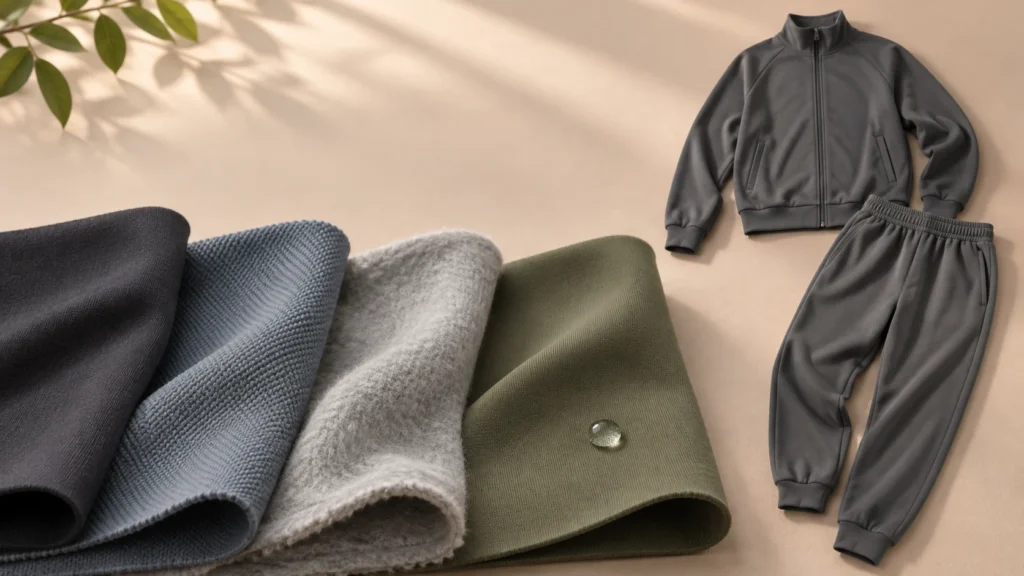
Two knit fabrics can look equally suitable for a training tracksuit while giving a buyer little evidence about how they handle liquid moisture. A smooth face, a soft inside and a supplier’s “moisture wicking” description are starting points for a sample review, not a purchase specification. To choose between fabrics, a training apparel brand needs identified samples, a clear test question and results obtained under comparable conditions.
The practical goal is to select a fabric for the intended jacket and pants, then record what the approved sample represents. The checks below help turn a broad performance claim into a decision that a supplier and testing laboratory can discuss.
Define what the tracksuit must do
Start with the use case. Is the set intended for warm ups, active training, travel between sessions or a combination? Identify the climate, the layer likely to sit beneath the jacket and which garment areas are most likely to become damp. These choices tell the team what to observe in wear trials and which laboratory questions matter most.
Write the desired outcome in ordinary language before choosing a test: for example, “compare how these finished knits handle liquid applied to the side intended to face the wearer.” Keep separate notes for how quickly the fabric feels wet, how the liquid spreads and how long a damp sample takes to dry. Those are different questions; one favorable result should not be treated as an answer to all of them.
Compare the same kind of sample
Ask for a swatch of each proposed fabric in its intended production state. Record the supplier’s fabric code, composition, knit construction, weight, color, finish and intended garment side. If a jacket and pants would use different materials, identify both. If a finish or wash is planned, compare samples after that process as well as before it, and label them clearly.
This record matters because a result attached only to a trade name is hard to connect to the fabric eventually ordered. AATCC’s summary of TM195, Liquid Moisture Management Properties of Textile Fabrics, says results depend on the fabric’s water resistance, repellency and absorption characteristics, including structure and the wicking characteristics of fibers and yarns. That scope supports testing the proposed material rather than assuming that a fiber label or surface appearance predicts its result.
For a fair comparison, give the laboratory the actual candidate swatches and ask it to identify each specimen and its orientation in the report. Request the same method and reporting format for every candidate. Record whether a result came from an unfinished development swatch, a finished fabric or material taken from a garment. These are buyer controls for comparing evidence, not extra steps attributed to TM195.
Choose tests for the questions you need answered
Liquid moisture management: AATCC says TM195 measures, evaluates and classifies liquid moisture management properties of knitted, woven and nonwoven fabrics. It is a relevant starting point when the question is how the proposed knit handles liquid moisture. Ask the laboratory which reported outputs it will provide, how it will identify the wearer facing side and how to compare the candidate results. The publicly available AATCC page is a scope summary; it does not provide the full procedure or a universal passing value for tracksuits.
Vertical movement: If movement along a hanging fabric is important to the design question, consider AATCC TM197, Vertical Wicking Rate of Textiles to Specified Distances. AATCC describes it as evaluating the ability of vertically aligned specimens to transport liquid along or through them; its stated scope includes knits. Ask for the measured result and test conditions rather than accepting “wicking” as a complete report. This test addresses a defined vertical wicking question and should not be presented as a substitute for every moisture management measure.
Drying: If the brand’s concern is how long a damp fabric remains wet, specify a drying test separately. AATCC TM201, Drying Rate of Fabrics: Heated Plate Method, determines drying rate for fabric given a prescribed volume of water while it contacts a heated plate set at 37 °C. AATCC says the method can be applied to knits and to fabric taken from finished items. Its heated plate conditions should be named when comparing results; the summary does not establish how fast a particular tracksuit will dry during actual use.
The laboratory can help select the method and report format for the project. Before commissioning work, agree which question each test answers. Avoid putting results from different methods into one informal “moisture score.”
Read the results as a comparison, not a slogan
Set out the candidates side by side in a review sheet, even if the final article or supplier brief uses no table. For each, record the sample identity, finish state, tested side, method, reported values and any laboratory classification. Note missing information instead of filling it in from a sales description. If two suppliers provide reports using different methods or different material states, ask for a comparable test before ranking the fabrics.
Then judge results against the product brief. A candidate may suit one program even if another performs better on a single reported measure. A training set also needs the intended feel, drape, fit and finish. The buyer should decide which results matter most for its stated use and agree any acceptance limits with the supplier before bulk approval. No AATCC scope summary cited here supplies a tracksuit specific pass threshold.
Review a representative jacket and pants sample after the planned care process. Observe damp feel during the intended activity, how the fabric sits against the body and whether the set still has the approved appearance and fit. Record the conditions and observations so the wear trial informs the purchase decision without being described as a standardized laboratory result.
Put the approved choice into the specification
A useful purchase brief identifies the approved fabric code and physical reference, intended wearer facing side, composition, construction, weight, color and finish. It also states which test method and report version are being used, which material state was tested and which agreed results must be maintained. Include a process for reviewing a proposed fabric or finish substitution. If the jacket and pants differ, specify them separately.
Before placing an order, ask the supplier to connect the tested material, garment sample and proposed production fabric by their codes and finish descriptions. Use those codes and finish descriptions to review whether a later swatch matches the approved reference; assess any remaining differences before approval. If a new finish is proposed, decide whether the earlier evidence still answers the original question or whether a fresh test is needed.
For a custom program, the verified Custom Tracksuits page is the relevant product starting point. Send the intended use, candidate fabric details, sample references and requested test evidence through Request A Quote. Ask for a proposal tied to those requirements; treat any test scope, acceptance limit and commercial term as something to confirm for the specific project.