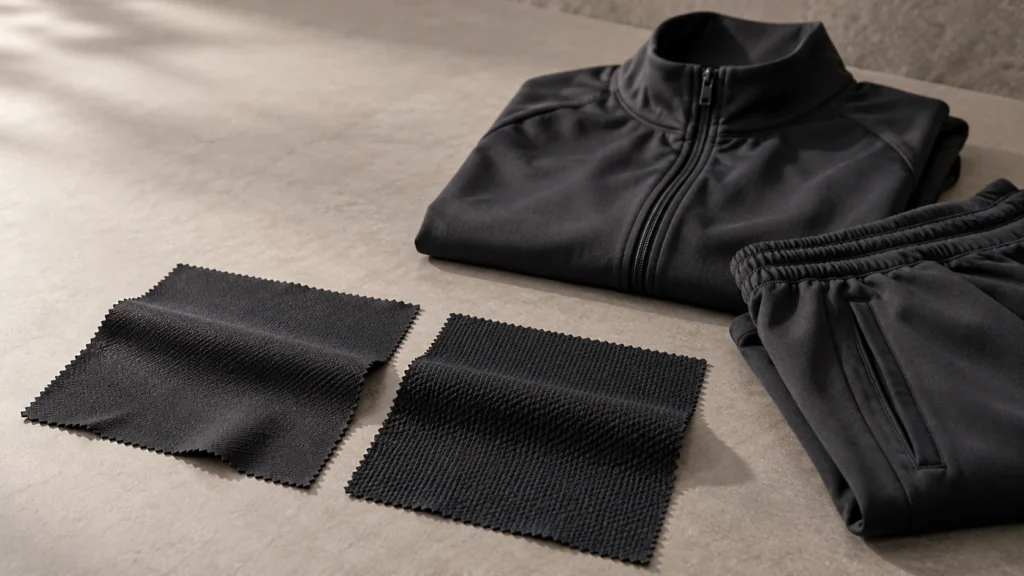
Two tracksuit fabrics can have a similar color, weight and hand in a small swatch, yet develop different-looking surfaces where a sleeve brushes the body or pants rub during movement. For a sportswear brand choosing between them, the useful question is specific: what changed on each fabric, under which test conditions, and is that change acceptable for this tracksuit?
A number of abrasion cycles alone cannot answer it. Start with the garment’s intended use, request comparable reports, and examine the tested material alongside a finished sample.
Define the surface problem first
Identify the areas likely to receive repeated contact: inner thighs, seat, elbows, cuffs, pocket edges or a jacket panel touched by a bag. These are review locations, not a claim that every wearer will stress them equally. Decide which outcomes matter to the design. A smooth technical face might need to retain a clean appearance; a brushed casual fabric may be judged against a different approved surface.
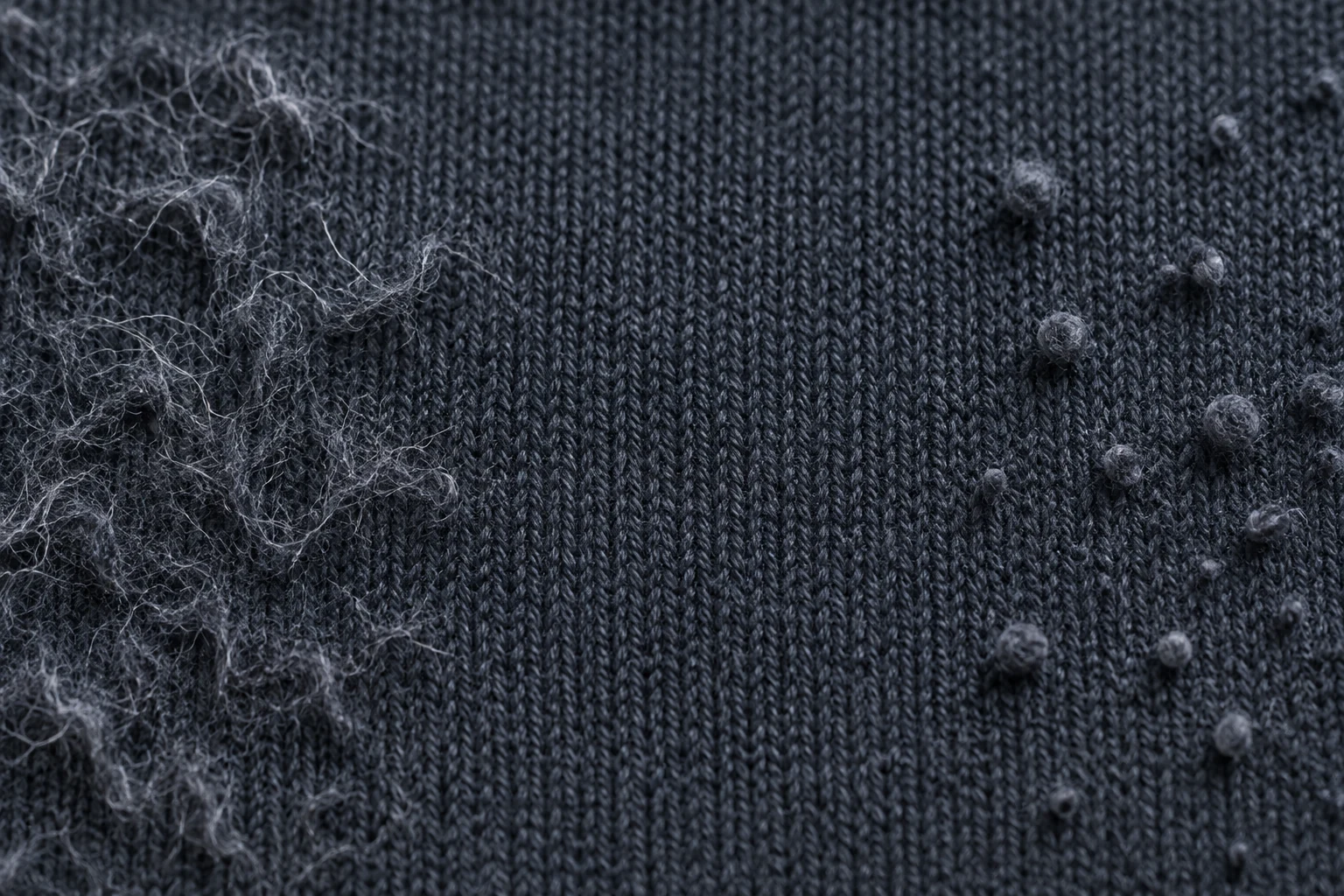
Separate the changes you care about. A fabric can lose fibers, thin, change color, become fuzzy, form pills or eventually break down. A report covering one outcome should not be presented as proof of all the others. Write the priority into the fabric brief before asking a supplier to recommend a test.
Check what the reported test actually measures
ASTM D4966-22(2026) covers abrasion resistance using a Martindale tester and is generally applicable to knit and woven fabrics, subject to specimen-holder limits for thickness. ASTM says the result is affected by factors including the abradant, specimen tension and pressure. Ask the laboratory for the exact method and edition, test conditions, specimen identity and the criterion used to judge the result. “Martindale tested” is too vague for a purchasing comparison.
Pilling is a related but distinct surface question. ASTM D4970/D4970M-22(2026) uses a Martindale tester to evaluate resistance to pills and other surface changes. Its page notes that pills may appear alongside fuzz, loss of cover or color change. If a supplier provides a pilling grade, ask for the method, the tested fabric state and photos or specimens showing the overall surface. Do not convert a pilling grade into an abrasion-breakdown result.
Make the two fabric reports comparable
Put each candidate on the same comparison sheet. Record its supplier reference, fiber composition, knit or weave, measured weight, face finish, color and intended position in the tracksuit. Then capture the method and edition, laboratory, report date, sample identification, preparation or laundering state, test conditions, inspection point and stated endpoint. Keep the original reports attached.
Compare results directly only when those details align closely enough to support the comparison. If one report evaluates an unwashed fabric and another evaluates material after laundering, first decide which state reflects the product you intend to sell. If the methods or endpoints differ, request matched testing on identified specimens. A higher cycle number under a different setup is not automatically stronger evidence.
ASTM D4966 cautions that results can vary substantially between and within laboratories. It says that when the difference in abrasion resistance among materials is large, test results may indicate relative end-use performance. Small differences in laboratory findings should not be relied on; the method is also not considered satisfactory for acceptance testing of commercial fabric shipments. Treat a narrow numerical lead as a reason to investigate the specimens and repeatability, not as a decisive ranking. Agree separately on how any production-lot disagreement will be examined. ASTM explains these limits in its significance-and-use notes.
Look at the tested surface and the complete set
Request before-and-after photos under consistent lighting, and inspect physical tested specimens when the decision is consequential. Note whether the change is thinning, broken yarns, fuzz, pills, color shift or another visible effect. Compare both candidates against the appearance the brand is willing to approve, rather than against an unexplained claim that one fabric “passed.”
Next, make a sample top and pants from the leading candidate. Review them together in the intended color and finish. Where the design uses different fabrics on the two pieces, assess each exposed face separately. Check high-contact panels after the proposed care process and a use trial relevant to the product. This step is a buyer recommendation: ASTM notes that laboratory abrasion is only one contributor to actual wear and that a laboratory result should not be used to predict a specific wear life without evidence connecting the test to that end use. See ASTM D4966’s discussion of laboratory and end-use performance.
A use trial need not pretend to reproduce every customer’s habits. Its purpose is to catch visible issues that a flat swatch report may miss, such as a finish changing after care or a high-contact area looking inconsistent with the rest of the set. Record the trial conditions and observations so the team can interpret them later.
Set an approval rule for this project
Choose an acceptance approach that names the test and the appearance you expect. For example, the brand might specify an agreed method and inspection point, retain a tested specimen, and approve the candidate only if its surface remains within a photographed reference range. That is an example of a project rule, not an industry-wide cycle threshold or a YECHENG policy.
Keep the approved fabric reference and finished set linked to the report’s sample identity. If the mill, yarn, construction, finish or color changes, ask whether the earlier evidence still represents the proposed material. For repeat production, identify the lot and decide in advance which checks will compare it with the approved reference. Because ASTM D4966 flags limits for commercial-shipment acceptance, discuss an appropriate lot-check process with the supplier and laboratory instead of assuming the development test settles every later delivery.
Use this shortlist before choosing between two similar swatches:
- Are the fabric identity, construction, finish and intended tracksuit use documented?
- Do the reports use the same named method, edition, relevant conditions and endpoint?
- Were the specimens tested in the same preparation or laundering state?
- Do photos or retained specimens show how each surface changed?
- Is a small numerical difference being treated with appropriate caution?
- Does a finished top-and-pants sample remain acceptable after relevant care and use review?
- Is the approved reference linked to a clear plan for handling material changes and later lots?
For a custom tracksuit inquiry, send the candidate swatches or references, the test reports, your intended use and care route, and photos of the surface you want to retain. The Custom Tracksuits page provides product context, and the Request A Quote page is the inquiry route. Ask for a fabric proposal and sample plan tied to your own approval criteria.