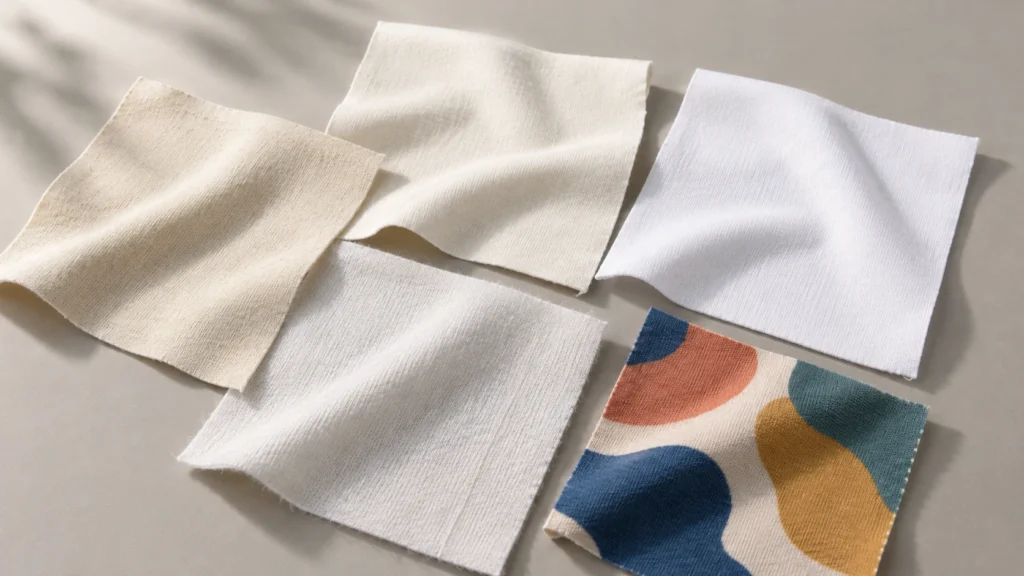
An all-over print can make small differences in a cotton T-shirt fabric conspicuous. A slightly uneven base shade may show through pale artwork; a fuzzy surface may soften fine edges; inconsistent wetting may change how a particular print system behaves. Before approving fabric, a graphic apparel brand needs evidence that the proposed material can produce the intended appearance repeatedly.
Start with the print design and the planned production route. “All-over printing” can mean printing fabric before cutting and sewing, or decorating a finished garment. Those routes expose different areas and create different risks at seams, folds and panel edges. Ask the printer which route, colorant system and fabric condition the trial will use. CottonWorks explains that fabric construction and fiber content affect preparation and print choices, while pigments and cotton dyes use different means of attaching color to fabric. CottonWorks: Cotton Textile Printing Basics
Compare the fabric you will actually buy
Request a specification for each candidate: fiber composition, knit construction, weight, base color, surface finish, intended printing face and preparation steps. Ask whether the print trial swatch comes from the proposed production material and whether later lots will follow the same specification. A generic “100% cotton” description cannot establish that two jerseys will present the same surface or shade.
Compare swatches under the same lighting, laid flat and then held against the same backing. Look across the full width for bands, specks, streaks, uneven whiteness, visible contamination and changes in texture. Turn each swatch over to identify the intended print face. A very light or sheer fabric may be part of the desired T-shirt, but it needs its own print trial: CottonWorks notes that thin or sheer fabrics can present more printing problems than thicker fabrics of the same fiber content. CottonWorks: Cotton Textile Printing Basics
For a useful comparison, place the same artwork on every candidate. Include the palest area, a solid color, a fine edge and a repeat that crosses the planned panel boundary. Judge the result at normal viewing distance and close up. This is a buyer’s comparison exercise, not a substitute for the printer’s process controls.
Check what “prepared for printing” means
Ask the fabric supplier or printer to identify the preparation stage and who performed it. CottonWorks calls goods prepared for printing “PFP” and describes possible operations including scouring, bleaching, rinsing and open-width drying. It explains that scouring removes dirt, oil and grease that interfere with uniform water absorption; bleaching can provide a uniform white base for bright, reproducible color. Preparation varies with the fiber, yarn and construction. CottonWorks: Cotton Textile Printing Basics
For each candidate, request a short process record rather than accepting “print ready” as the entire specification. Record whether the fabric was scoured, bleached, rinsed and given any later finish; identify the supplier’s lot reference. Ask whether a softener, coating or other finish was applied after preparation, and have the printer assess that exact finished surface. CottonWorks says rinsing removes residual matter after preparation and that process variation can lead to print defects. Its dyeing guidance also names absorbency, pH and whiteness index among properties that can be checked during preparation control. CottonWorks: Cotton Textile Printing Basics CottonWorks: Dyeing Preparation
A brighter white is useful only when it matches the design brief. If the intended shirt has a natural or muted ground, compare the actual ground shade with the printed colors rather than specifying maximum whiteness by habit. Approve a range with physical references that the buyer and printer can both recognize.
Examine absorbency and surface consistency
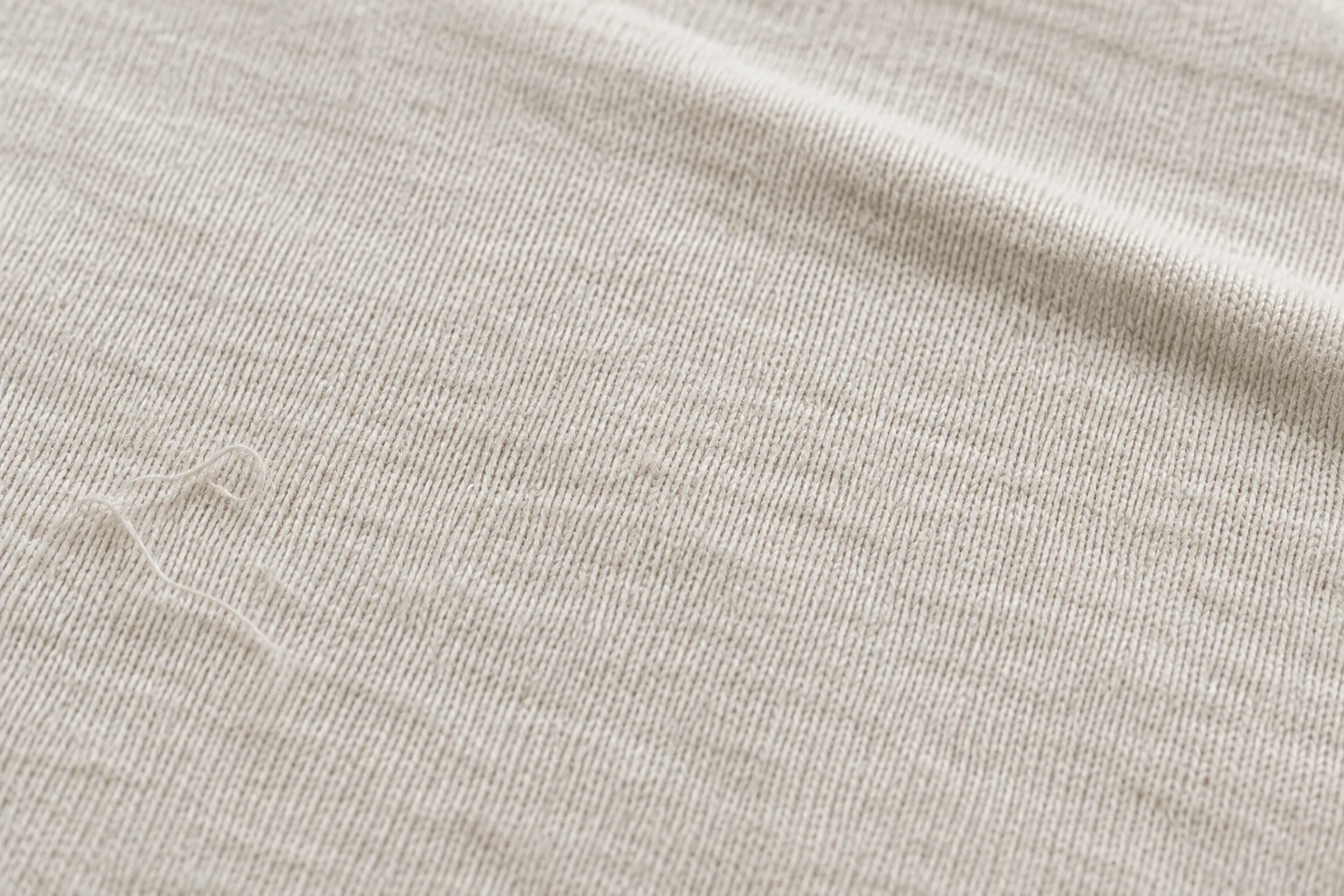
CottonWorks identifies three basic conditions for fabric printing: the material should be absorbent and clean, with a flat, smooth surface and uniform width free of construction distortion. It also explains that yarn hairiness and luster can change the apparent brightness and depth of a print. These are reasons to inspect several positions across a roll, not merely one attractive swatch. CottonWorks: Cotton Textile Printing Basics
Ask the printer which incoming-material checks suit its chosen process. A simple side-by-side wetting observation may reveal a difference worth investigating, but it should not be presented as a standardized pass result. If measured absorbency is important to the approval, AATCC TM79 is a method for determining water absorbency in yarns, fabrics and garments, including knits. Agree on the method, sampling positions and acceptance range with the testing party before treating a result as a purchasing criterion. AATCC TM79: Absorbency of Textiles
Inspect the print face for fuzz, lint, oil marks, creases and irregular texture. Ask for a trial using the same handling and cleaning planned for production. A clean-looking swatch can still print differently if it came from a different finishing lot. Keep the lot identity with each trial sample so a successful print can be traced to the fabric that produced it.
Approve the printed result after processing and care
Review a production-intent print trial on the selected fabric, not artwork shown only on a screen. Assess color over light and dark design areas, edge definition, unwanted show-through, hand feel and whether the print changes where the knit stretches. For fabric printed before cutting, compare repeated panels and confirm how motifs meet at the intended seam locations. For a finished-garment route, inspect folds, side areas and other hard-to-reach zones on a complete sample. These observations should become written approval criteria tied to the chosen design.
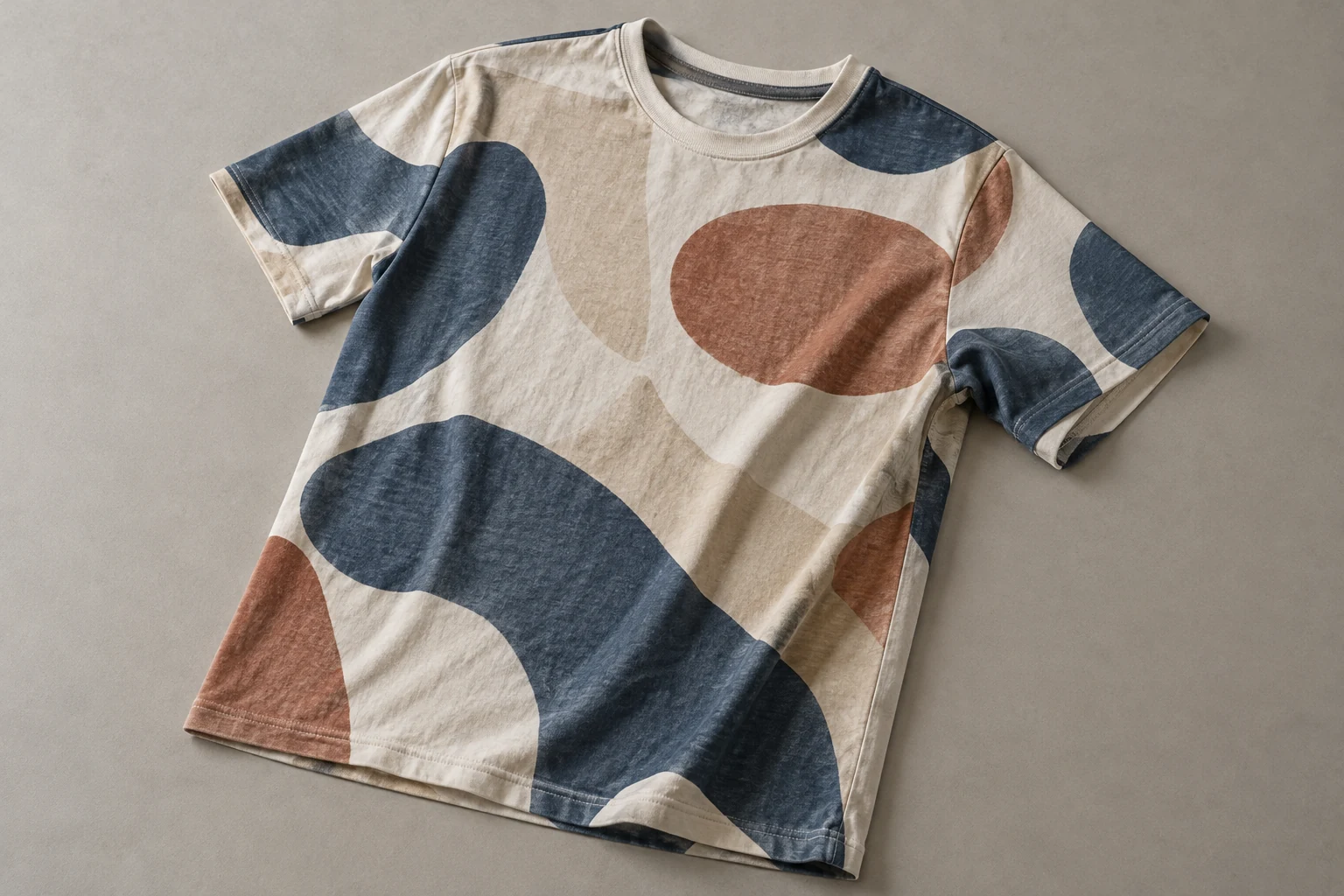
Then examine the result after the printer’s full processing sequence and the planned care evaluation. CottonWorks distinguishes dye printing, which includes fixation and afterwashing, from pigment printing, which uses a binder and curing; those differences matter when choosing what final sample to approve. CottonWorks: Printing Process If the project needs formal checks, AATCC TM61 addresses accelerated laundering colorfastness, while AATCC TM135 determines fabric length and width change after home laundering. Neither public method description supplies a universal pass number for this T-shirt. Set an agreed criterion for the artwork, garment and market. AATCC TM61: Colorfastness to Laundering AATCC TM135: Dimensional Changes of Fabrics
A practical fabric-approval checklist
Before placing the order, confirm that the approval record contains:
- The exact fabric specification, print face, base shade and finish, linked to a supplier lot.
- Preparation steps and any later applied finish, with responsibility for each stage identified.
- Swatches from more than one position, inspected for shade, cleanliness, texture and distortion.
- The agreed absorbency or other incoming checks, with sampling method and project-specific limits where needed.
- A print trial using the intended artwork, print route and processing sequence.
- A physical printed reference showing the acceptable range for color, edge clarity, coverage and hand feel.
- A complete T-shirt sample reviewed at seams and difficult print areas, plus relevant post-care results.
- A plan for checking whether production fabric matches the approved lot and sample.
If one candidate looks good unprinted but its trial shows uneven color or poor detail, investigate preparation and surface consistency before changing the artwork. If two candidates both print acceptably, choose against the complete garment brief: opacity, drape, feel and final appearance still matter. For broader material selection, see What Is the Best Fabric for T-Shirts? and the custom T-shirt fabric-weight guide.
A clear inquiry makes the comparison easier. Share the artwork, target base shade, garment shape, fabric reference and intended print route when discussing a custom T-shirt project. Ask for the proposed fabric specification and a physical print sample before approving the appearance standard.