There is no single fabric that is best for every T-shirt. A soft cotton jersey may be an excellent choice for an everyday crew neck, while a technical polyester knit may serve an active top better. A structured streetwear tee, a fitted fashion style, and a lightweight summer layer can all require different materials.
The decision should account for comfort, softness, breathability, durability, moisture behavior, structure, drape, printing method, garment fit, and end use. Fiber content matters, but it is only one part of the specification. Yarn preparation, spinning method, knit construction, density, finishing, and fabric weight can change how two fabrics with the same fiber label feel and perform.
For many everyday and fashion products, 100% cotton single jersey is a versatile starting point because it can provide a familiar hand feel and a practical decoration surface. It is not automatically the best option for performance wear, stretch fits, easy-care products, or every brand identity. The useful question is not simply “Which fiber is best?” but “Which complete fabric specification supports this T-shirt?”
Quick Answer
For a versatile everyday T-shirt, a well-developed cotton jersey is often the best starting point. Brands that need easier care or a balance of cotton hand feel and synthetic-fiber properties may prefer a cotton-polyester blend. Engineered polyester fabrics can be more appropriate for active applications, cotton-elastane blends can support fitted silhouettes, and modal or lyocell blends can provide a softer, more fluid direction.
Choose the fabric by matching its fiber, yarn, knit, weight, finish, color, and decoration compatibility to the intended product. A sample made with the actual material is more useful than selecting from a fiber name alone.
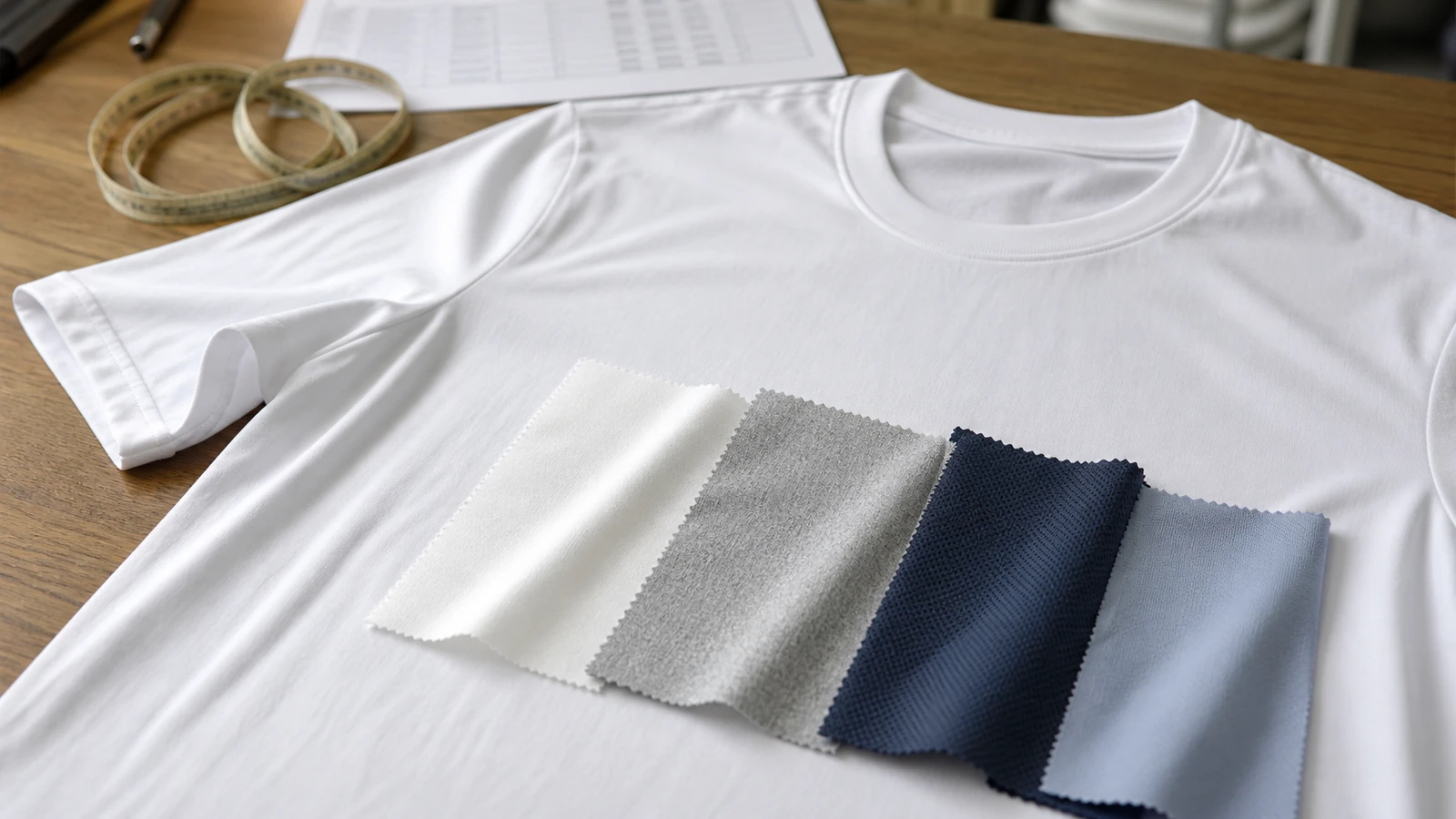
1. 100% Cotton Jersey — Best All-Around Choice for Many T-Shirts
Cotton single jersey is widely used for casual and fashion T-shirts because it can offer a comfortable hand, useful breathability, and a familiar matte surface. It works across regular, relaxed, and oversized silhouettes, and its technical face can provide a suitable base for many print processes. For a brand developing a core tee, it is often the most straightforward fabric direction to evaluate first.
However, “100% cotton” is not a complete quality specification. Two cotton jerseys may differ substantially because of fiber selection, yarn count, spinning system, knit density, finishing, shrinkage control, and weight. Before approval, compare the surface, opacity, recovery, twisting, dimensional change, hand feel, and appearance after the intended care process.
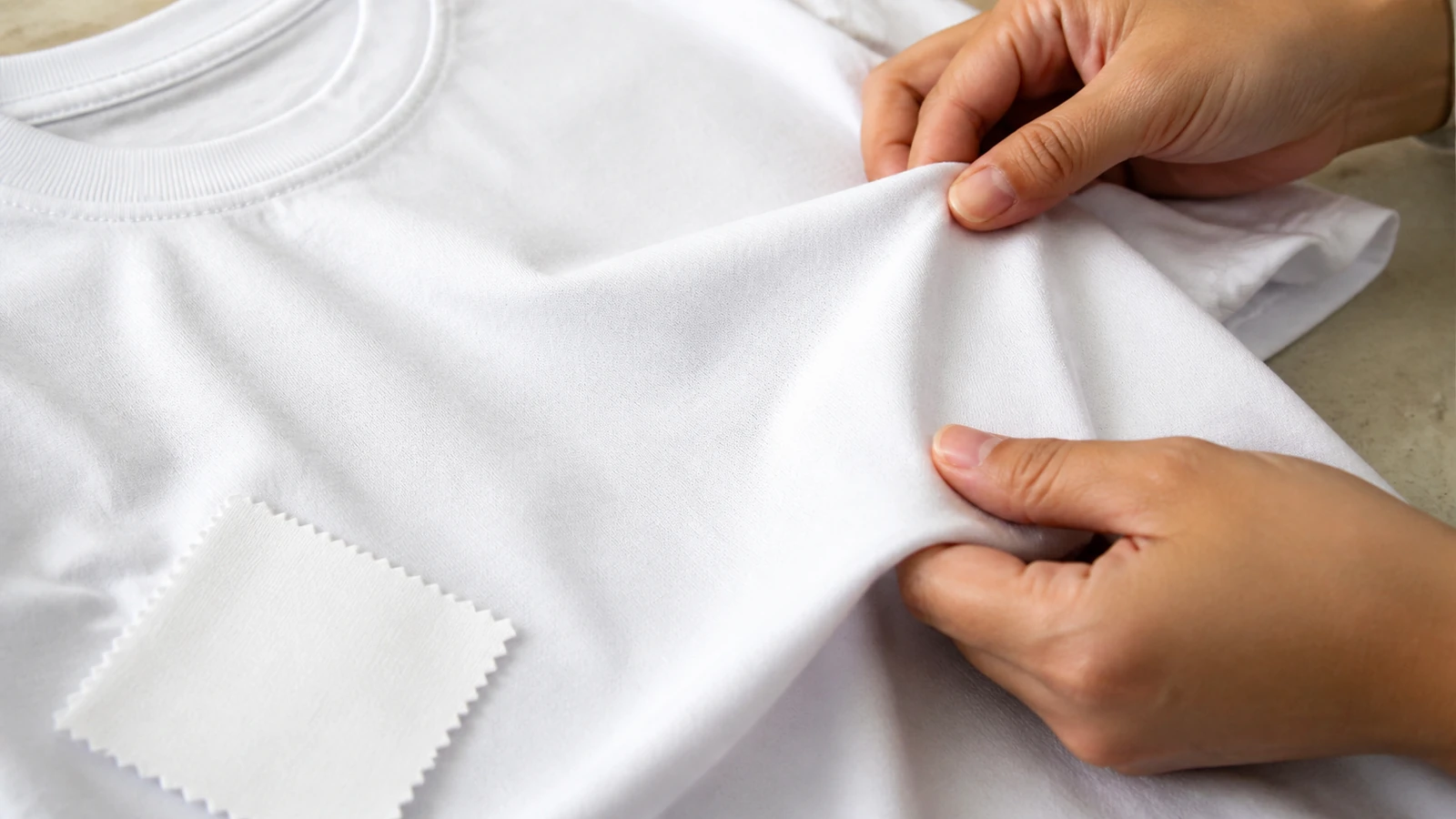
2. Combed Cotton — Better When a Cleaner and Softer Surface Is Needed
Combed cotton describes fiber preparation, not a separate cotton species. During preparation, combing removes fibers that are not adequately held and helps produce a more uniform fiber arrangement. CottonWorks explains cotton fiber preparation and notes that the process can support finer yarns and improvements in hand, drape, luster, and strength.
For T-shirts, those characteristics can contribute to a smoother, cleaner surface and a more refined appearance. That can be useful for premium basics, detailed decoration, and products where surface consistency is visible. Combed cotton still needs an appropriate yarn, knit, weight, and finish; the word “combed” alone does not guarantee softness, durability, or print quality.
3. Ring-Spun Cotton — Why Yarn Construction Matters
Ring-spun refers to the method used to make yarn. It should not be confused with combing, which happens during fiber preparation. A cotton yarn can be carded ring-spun or combed ring-spun, so the two terms describe different decisions that may appear together in a fabric specification.
CottonWorks' overview of yarn spinning explains how ring spinning drafts, twists, and winds fiber into yarn. The method can produce yarns across a wide count range, and the resulting yarn structure affects the fabric's surface and hand. In a T-shirt, a ring-spun cotton jersey is often selected when a smoother or softer direction is desired.
4. Cotton-Polyester Blends — Best When Balance Matters
Cotton-polyester blends combine two fibers within one fabric. Cotton can support a familiar natural-fiber hand, while polyester can contribute dimensional stability, durability, and easier-care characteristics in an appropriately engineered knit. This balance can suit uniforms, promotional apparel, everyday basics, and fashion products that need a particular combination of comfort and performance.
Common market ratios such as 50/50, 60/40, or 65/35 are examples rather than universal standards. The better ratio depends on the desired hand, color, print process, care expectations, and product positioning. Even fabrics with the same blend ratio may differ because of yarn construction, whether fibers are intimately blended or used in separate yarns, knit density, and finishing.
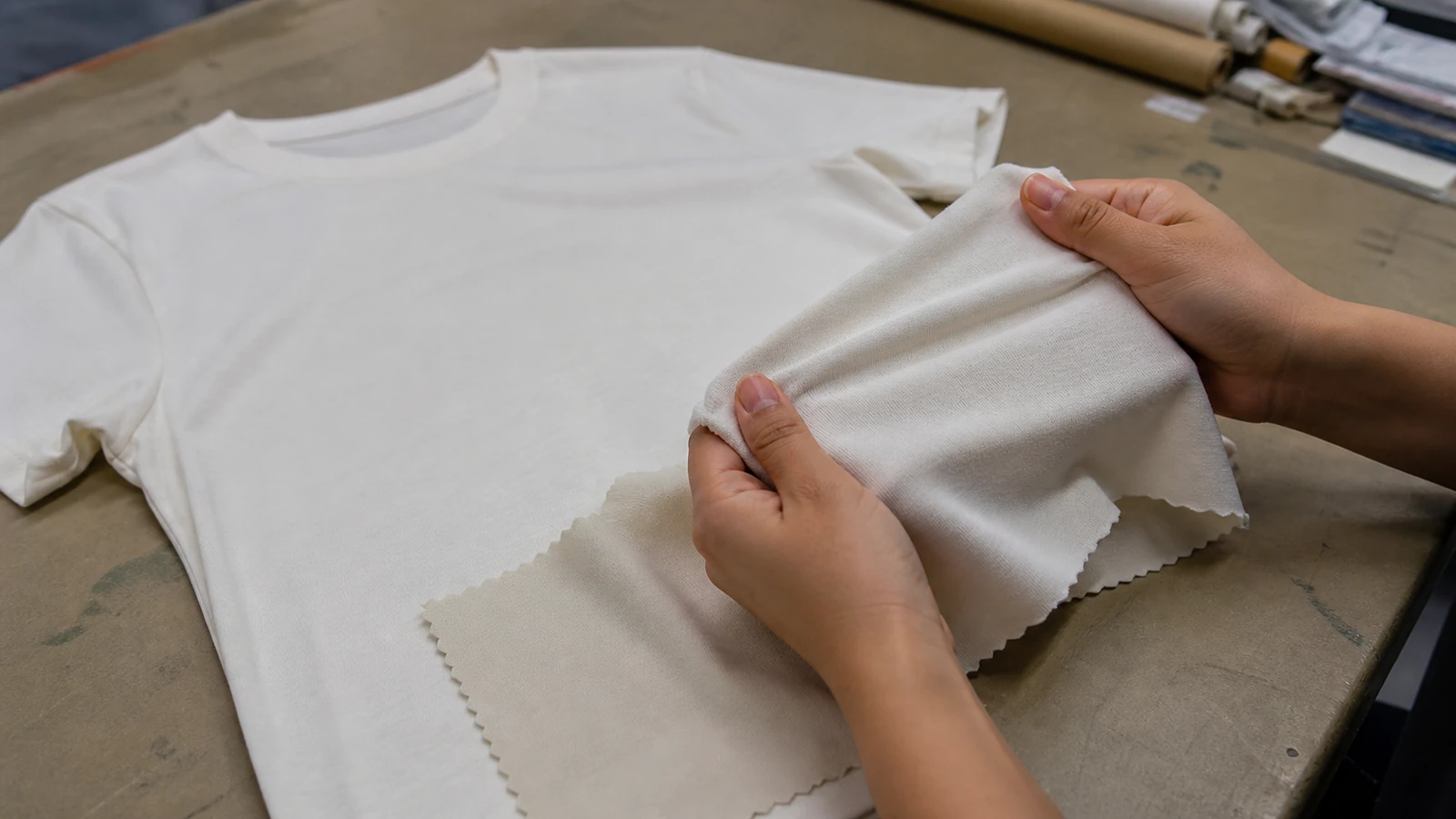
5. Polyester — Best for Performance and Active Applications
Polyester is a practical direction for sportswear, training tops, and other applications that prioritize low moisture regain, quick-drying potential, durability, or engineered moisture transport. Its performance does not come from the fiber name alone. Yarn type, filament structure, knit geometry, surface treatment, and finishing determine whether a polyester fabric actually delivers the intended behavior.
For example, a fabric marketed for moisture management should be evaluated as a system. AATCC TM195 measures liquid moisture-management properties and recognizes the roles of fabric structure, yarn, and fiber. This is why a brand should not promise that every polyester T-shirt is “moisture-wicking” without a relevant specification and test basis.
6. Cotton-Elastane Blends — Useful When Stretch and Recovery Matter
Adding elastane, also called spandex in some markets, can give a cotton-based jersey greater stretch and recovery. This is useful for fitted tees, body-conscious silhouettes, womenswear, and products that need to follow movement while returning toward their intended shape.
There is no universal best elastane percentage. The required amount depends on the knit, yarn arrangement, fit, desired compression, fabric weight, and recovery target. A fabric with more stretch is not automatically more comfortable or higher quality; excessive growth, curling, or poor recovery can still occur if the structure and finishing are unsuitable.
7. Modal and Lyocell Blends — Best When Drape and Soft Hand Feel Are Priorities
Modal and lyocell are both regenerated cellulose fibers, but they are not interchangeable names. Lenzing presents TENCEL Modal fibers as a distinct product family associated with softness, while TENCEL Lyocell fibers use a different production route and offer their own moisture and hand-feel characteristics.
In T-shirts, modal or lyocell is often blended with cotton or another fiber to create a softer, more fluid fabric. These directions can suit lightweight fashion tees, draped silhouettes, and products where a smooth hand is more important than rigid structure. The result still depends on blend ratio, yarn, knit, weight, finishing, and care.
8. Tri-Blends — Useful for a Softer Vintage-Style Hand Feel
A tri-blend commonly combines cotton, polyester, and a third cellulose-based fiber such as rayon, modal, or another specified material. The concept is associated with soft, lightweight T-shirts and a heathered or vintage-inspired appearance, but “tri-blend” is not one standardized construction.
Suppliers may use different fibers, percentages, yarn systems, knit densities, and finishes. Those differences affect hand feel, drape, opacity, stretch, print appearance, and care. A light tri-blend can feel soft and relaxed yet may not provide the substantial body needed for a structured oversized tee.
9. Jersey Knit — Why Fabric Construction Matters as Much as Fiber Content
A fiber label describes what the material contains; it does not describe how the fabric is built. Most classic T-shirts use single jersey, a knit with a relatively smooth technical face and a different back appearance. CottonWorks' Knit Basics explains that knitted fabrics are formed from intermeshing yarn loops, and changes in stitch length and structure influence fabric properties.
Single jersey, interlock, and rib behave differently even when made from similar fibers. The CottonWorks guide to single and double knits distinguishes these constructions: single jersey is common for T-shirts, interlock can provide a fuller and more stable double-knit structure, and rib offers pronounced stretch and recovery for areas such as collars or fitted garments.
Brands should specify the knit construction, density, yarn count, surface, stretch, and recovery—not just “cotton fabric.” These variables determine drape, opacity, edge curling, stability, decoration support, and the final silhouette.
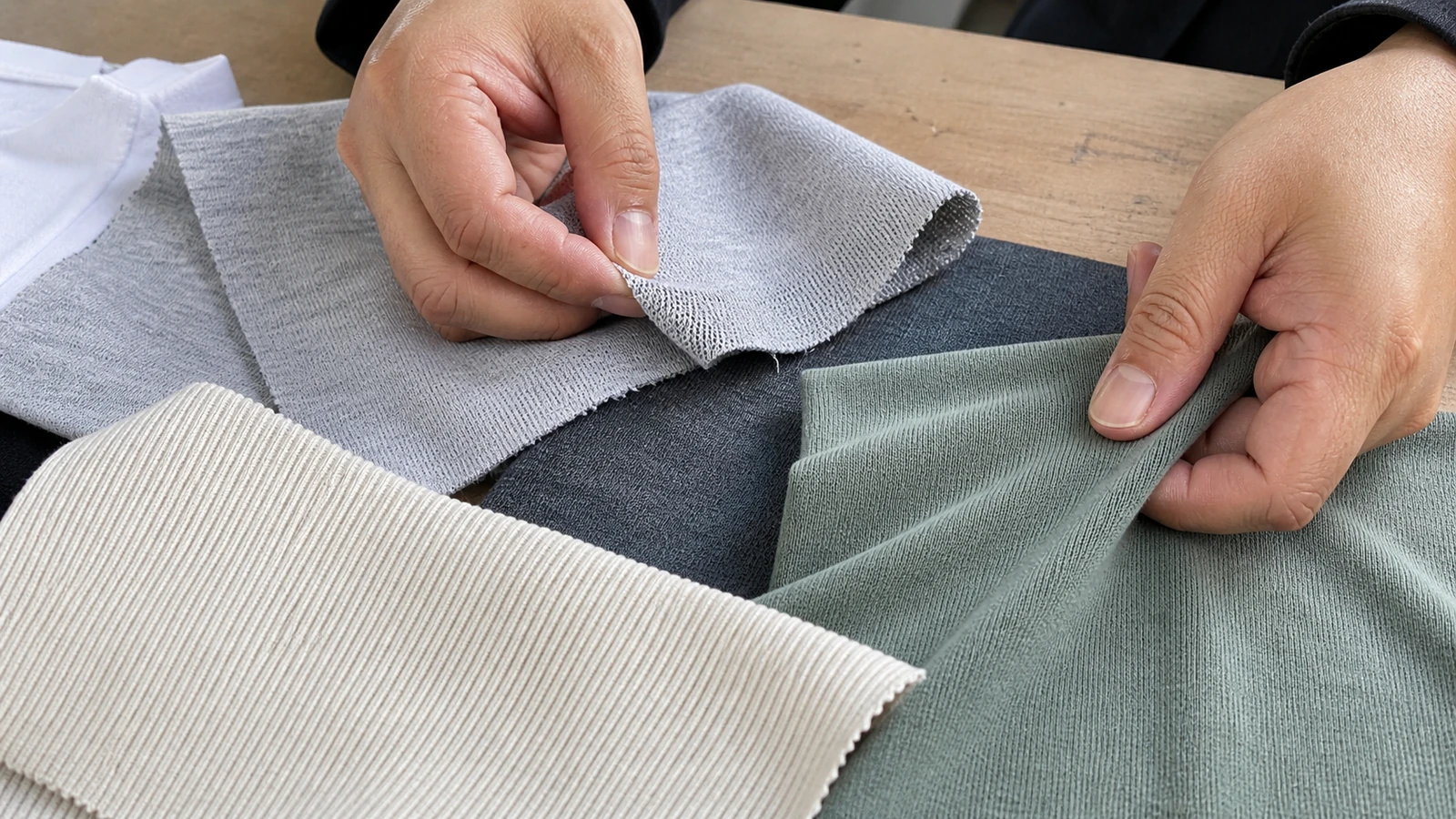
10. Lightweight vs Heavyweight Fabric — Which Is Better?
Lightweight jersey can provide soft drape, easier layering, and comfort in warm conditions. Heavyweight jersey can create a more substantial hand, greater opacity, and the structure often associated with boxy or oversized streetwear. Neither weight category is automatically better.
GSM means mass per unit area. The ASTM D3776 fabric-mass test method provides standardized ways to determine fabric mass, but GSM does not by itself describe yarn quality, knit density, thickness, finishing, or durability. Two fabrics at a similar GSM can look and feel different.
For a deeper weight decision, use the custom T-shirt fabric weight guide. In this article, the key point is to choose weight after defining the fiber, construction, fit, season, and intended use.
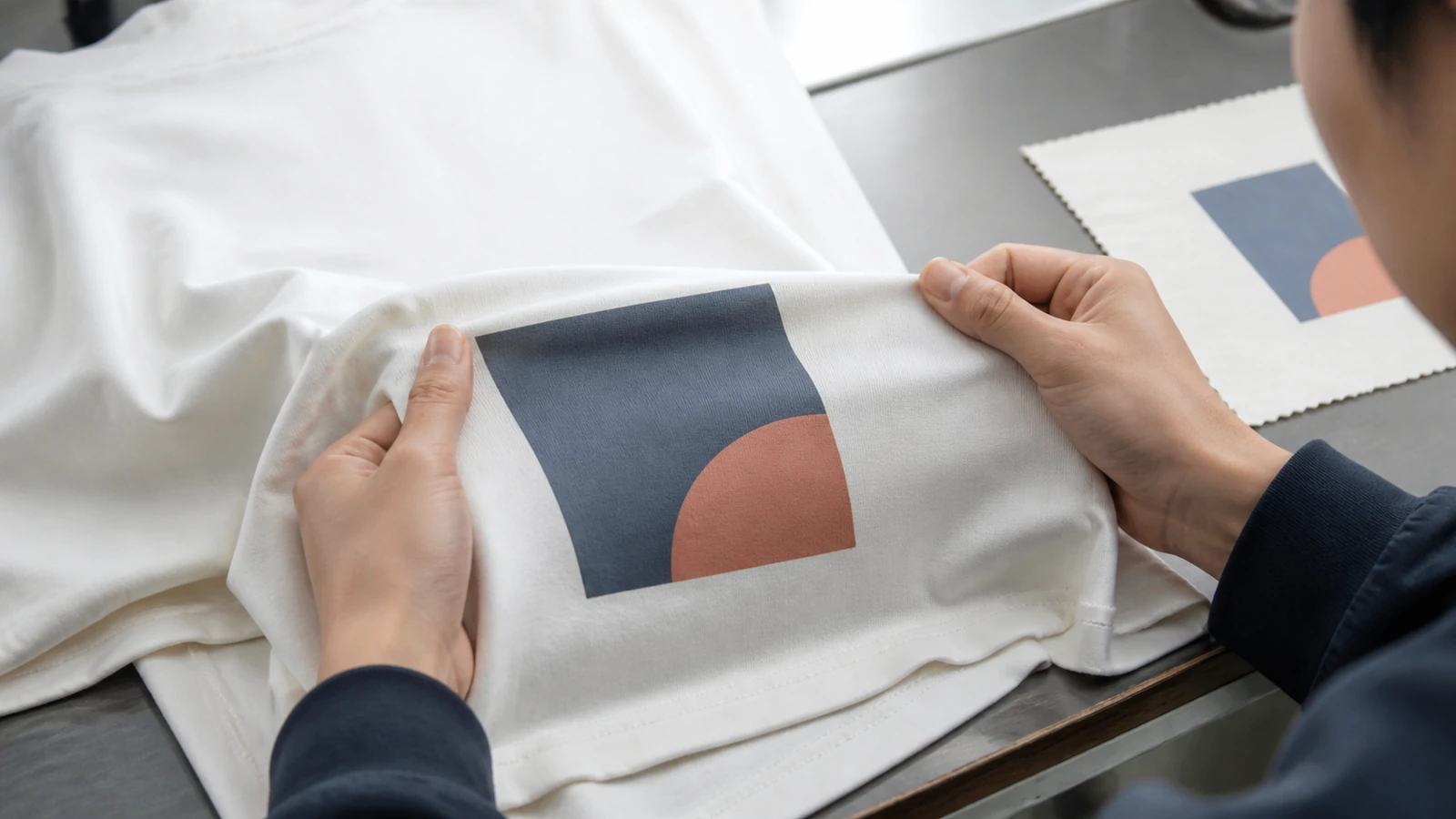
11. Best Fabric for Screen Printing
Screen printing can work on cotton, polyester, and blends. The best fabric is usually the one that provides an appropriate printing face, sufficient stability, and compatibility with the selected ink and curing system. Surface smoothness can help fine detail, while fuzz, stretch, coatings, garment washes, and uneven texture can influence the result.
The PRINTING United Alliance technical paper on water-based inks discusses printing on cotton, polyester, and blends and shows why ink choice and process conditions must be matched to the substrate. It does not support a universal claim that one fiber always prints best.
12. Best Fabric for DTF Printing
DTF can be applied to multiple fabric types because the artwork is printed to film, combined with adhesive, and then transferred to the garment. Epson's DTFilm guidance describes broad textile compatibility, but that does not make every fabric equally easy to process.
Cotton, polyester, and blends can each work, while fabric finish, heat sensitivity, color, dye migration, adhesive system, pressure, and supplier settings affect the outcome. The DTF cotton-versus-polyester guide explains these substrate risks in depth. For fabric selection, retain the product's required performance first and validate the proposed transfer on that exact material.
13. Best Fabric for Embroidery
Embroidery needs enough stability to support thread and repeated needle penetration without excessive distortion. Fiber content matters less than the combined effects of fabric weight, knit density, stretch, recovery, backing, hooping, stitch density, and design size.
A stable heavyweight jersey or interlock may support some embroidery more easily than a very light, fluid knit, but this is not a universal rule. Appropriate backing and digitizing can expand the workable options, while a large dense design can still overwhelm an otherwise suitable fabric.
Develop the embroidery sample on the production fabric. Inspect puckering, stretch loss, reverse-side comfort, placement, and wash appearance. The custom T-shirt development options provide a useful context for aligning material and branding decisions.
14. Best Fabric for Oversized and Streetwear T-Shirts
Oversized and streetwear T-shirts often depend on structure as much as softness. A heavier cotton jersey is frequently selected for a boxy body, broad shoulder line, substantial sleeve, and clean graphic surface. The additional body can help the garment hold its intended silhouette rather than collapsing into a fluid drape.
That does not make heavyweight cotton mandatory. A brand may want a washed vintage tee, a fluid oversized layer, a technical sportswear influence, or a blend with easier-care characteristics. Shoulder construction, body width, length, rib, wash finish, and pattern balance all change how the material behaves.
Choose fabric and pattern together. Approve the shoulder shape, sleeve volume, hem behavior, drape, and decoration on a complete sample instead of selecting a heavyweight label and assuming the fit will follow.
15. Best Fabric for Summer T-Shirts
Summer comfort depends on more than choosing cotton. Fabric weight, knit openness, yarn, moisture behavior, garment fit, color, and air movement all contribute. A lightweight cotton jersey may feel familiar and breathable for casual wear, while an engineered polyester knit may be more appropriate where moisture transport and faster drying are defined performance needs.
Open or light fabrics can also become sheer, unstable, or vulnerable to distortion. Very close fits may reduce perceived ventilation, and heavy decoration can change the hand and breathability of the printed area. Balance comfort with opacity, recovery, care, and product use.
16. Best Fabric for Premium Fashion T-Shirts
Premium quality is not created by one phrase such as “high GSM,” “100% cotton,” or “organic.” It comes from a coordinated specification: appropriate fiber, consistent yarn, suitable knit construction, controlled surface finish, accurate pattern, clean stitching, stable color, and repeatable garment finishing.
The right premium fabric may be combed ring-spun cotton for a smooth core tee, a modal or lyocell blend for fluid drape, a dense jersey for structure, or a carefully developed blend for a specific hand and care profile. The choice should express the brand's product identity rather than follow a material label for marketing value alone.
17. How to Choose the Best T-Shirt Fabric for Your Brand
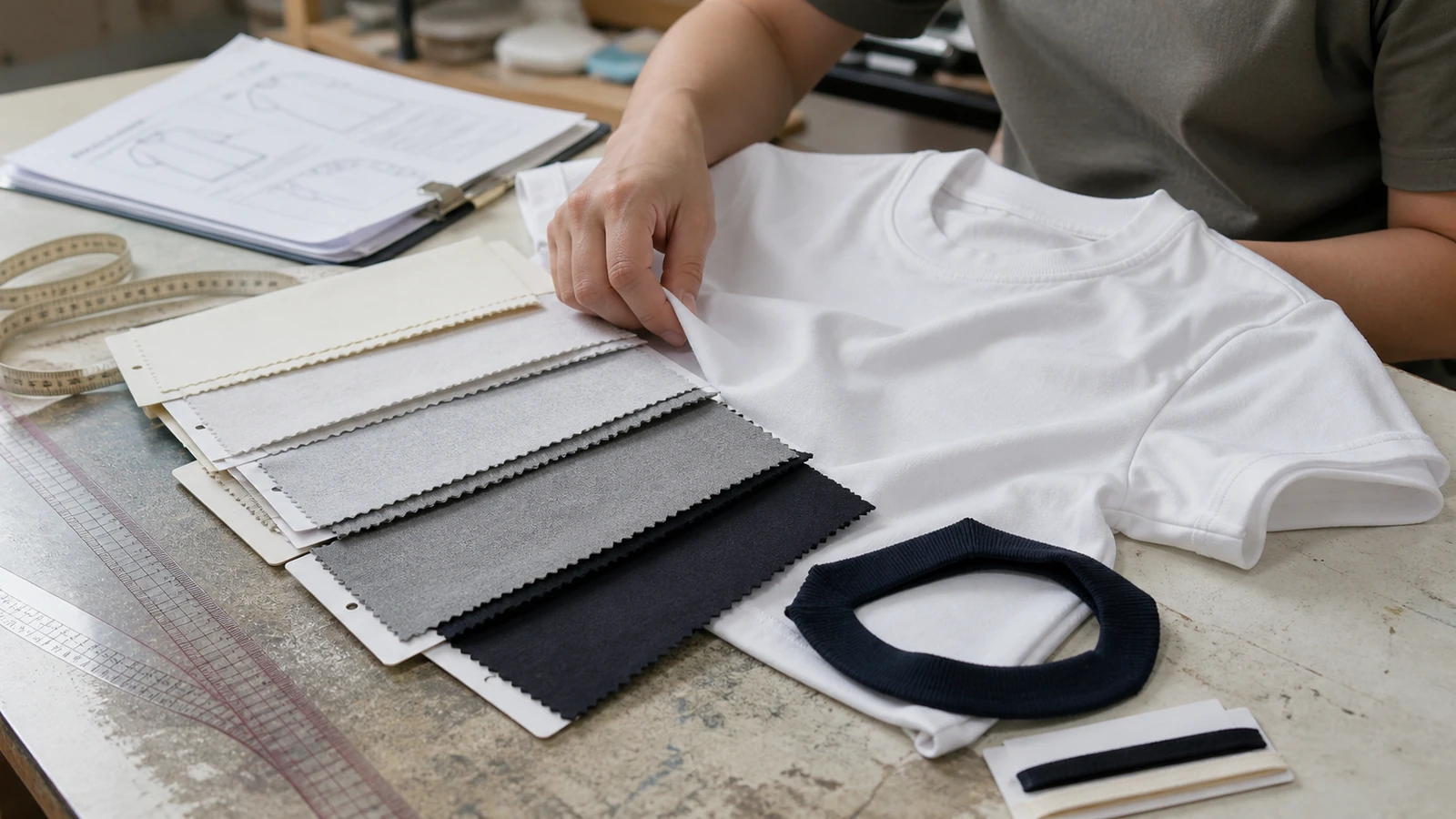
Use a decision sequence that connects material choices to the finished product:
- Define the intended use. Decide whether the T-shirt is a daily basic, fashion piece, streetwear style, uniform, active top, or promotional garment.
- Set the silhouette. Confirm regular, slim, relaxed, boxy, oversized, cropped, or another fit direction before selecting drape and structure.
- Describe the hand feel. Use physical references and clear terms such as smooth, dry, soft, substantial, crisp, or fluid.
- Select the fiber direction. Compare cotton, polyester, blends, stretch fibers, and regenerated cellulose options against the product requirements.
- Specify the knit construction. Confirm single jersey, interlock, rib, or another structure, plus the required density, stretch, and recovery.
- Choose the fabric weight. Treat GSM as one measured variable, not a standalone quality grade.
- Confirm decoration compatibility. Test screen printing, DTF, embroidery, or other processes on the actual fabric and color.
- Review color and finishing. Dyeing, washing, brushing, compacting, and surface treatments may change hand, dimensions, and decoration behavior.
- Develop a complete sample. Evaluate fabric together with pattern, collar, seams, artwork, labels, and finishing.
- Test before bulk production. Select dimensional, color, appearance, and performance checks according to the product and market requirements.
For brands coordinating these variables, an OEM/ODM apparel development process can turn a fabric direction into a sample specification. The clearer the intended use and approval criteria, the easier it is to compare materials without relying on vague terms such as “premium cotton.”
So, What Is the Best Fabric for T-Shirts?
The best choice changes with the product:
- Best all-around starting point: A well-developed cotton jersey for versatile everyday and fashion T-shirts.
- Best for a cleaner, softer cotton direction: Combed and/or ring-spun cotton constructions, subject to the full fabric specification.
- Best for balanced comfort and easy care: A cotton-polyester blend developed for the intended color, finish, and decoration.
- Best for active applications: An engineered polyester fabric whose moisture and wear performance is supported by specifications and testing.
- Best for stretch silhouettes: A cotton-elastane or other suitable stretch blend with verified recovery.
- Best for soft drape: A modal or lyocell blend matched to the garment structure and care needs.
- Best for structured streetwear: A suitable dense or heavyweight jersey developed with the oversized pattern.
- Best overall for a brand: The fabric that matches the intended fit, use, decoration, finishing, testing, and approved sample.
Cotton jersey is often the most versatile place to begin, but it is not a universal winner. Compare complete fabric specifications, not isolated marketing terms, and approve the material as part of the finished garment.
Developing a Custom T-Shirt Collection?
Fabric selection works best when it is reviewed together with fit, GSM, decoration, color, finishing, labels, and sample requirements. If your brand is developing a custom collection, share the intended product use, silhouette, hand feel, artwork, and material references when you discuss your custom T-shirt project. The development process can then compare practical fabric options and confirm the chosen direction through sampling before bulk-production preparation.