A hoodie or pair of sweatpants may have a small metal piece wrapped around the end of its drawstring. What is that part actually called? The everyday answer is usually an aglet, but apparel developers and trim suppliers may use other names for the same position or for a closely related component.
That distinction matters because a cord end, cord lock, and eyelet do different jobs. This guide explains where each component sits and what a brand should confirm during sampling.
What Is the Metal Tip on a Drawstring Called?
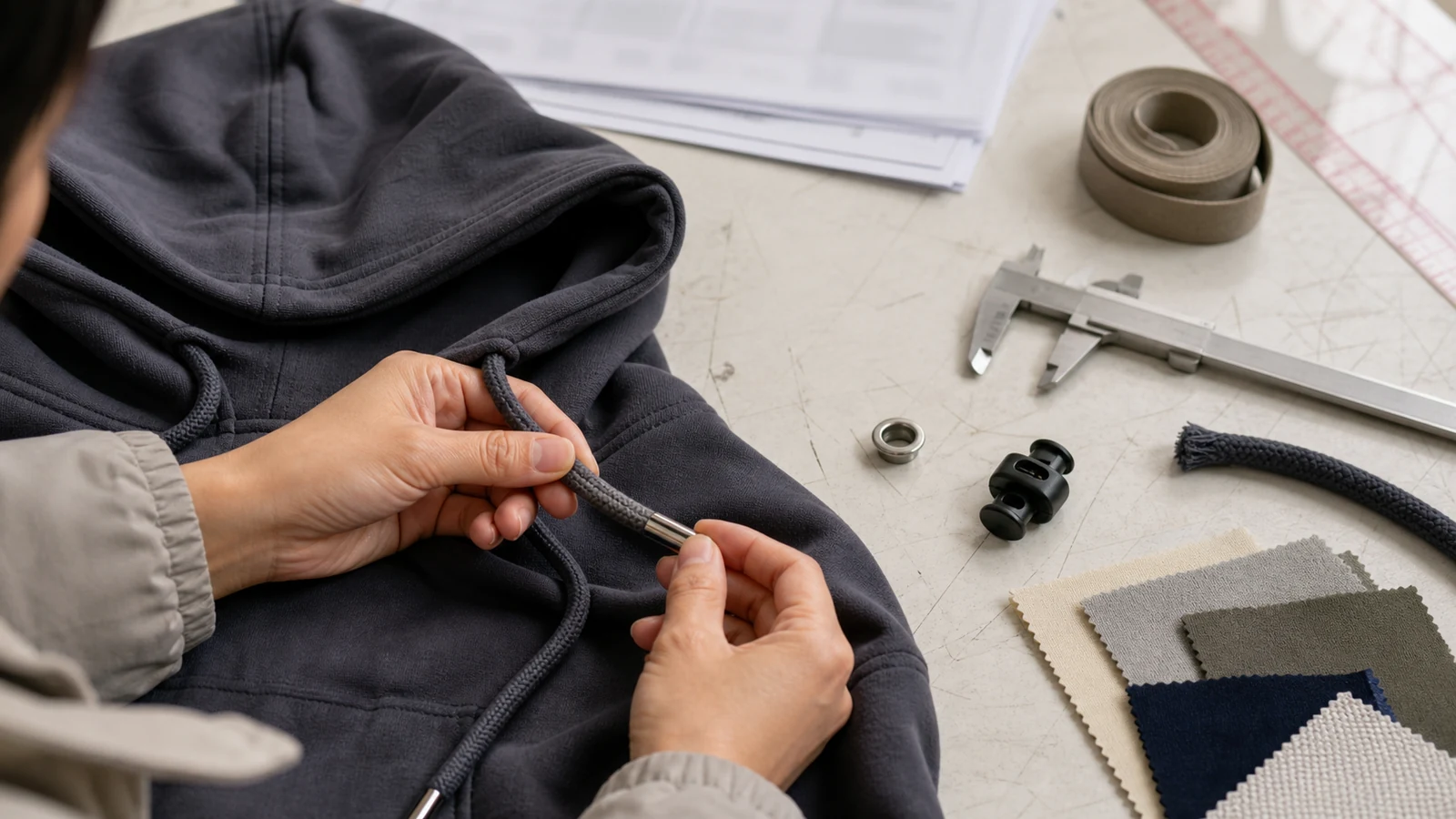
The metal or plastic tip fitted over the end of a drawstring is commonly called an aglet. Merriam-Webster defines an aglet as the tag that covers the end of a lace or point. On a hoodie, sweatpant, or tracksuit drawcord, it is the finished piece at the free end of the cord.
In apparel development, the same part may also be described as a cord end, drawcord end, or cord tip. Supplier terminology is not uniform, so “metal cord end/aglet” is often clearer than “aglet” alone when communicating with a factory.
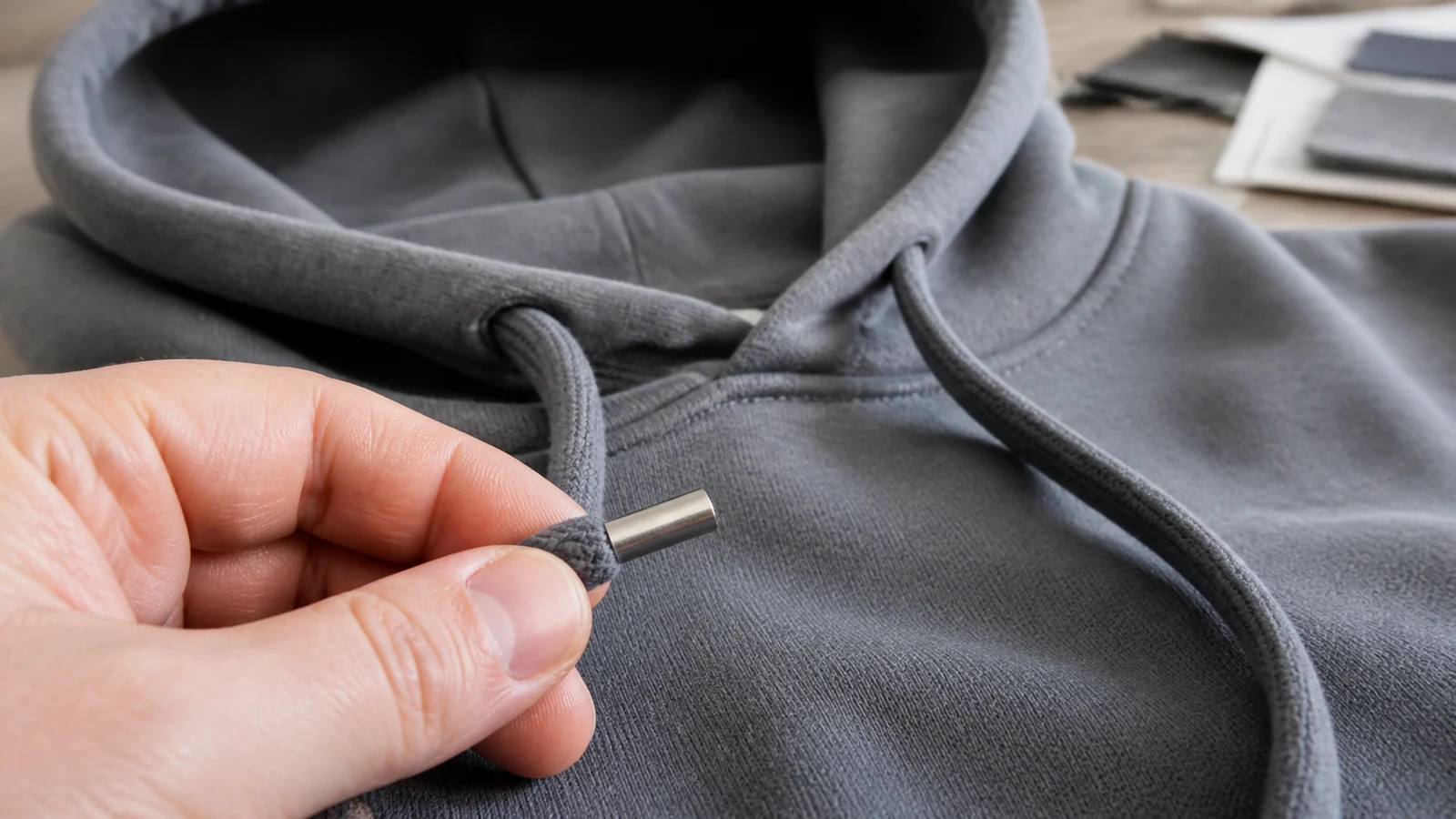
What Exactly Is an Aglet?
An aglet covers the raw end of a lace or drawcord. It can help keep the cord fibers together, make the end easier to pass through an opening, and give the garment a deliberate finish. Its form may be a narrow sleeve, a molded tip, or another end treatment suited to the cord construction.
An aglet is not necessarily metal. Plastic parts and nonmetal end treatments are also used. The attachment must suit the cord; a piece that slips off, damages the cord, or creates a rough edge is not successful.
Why Do Clothing Factories Sometimes Call It a Cord End Instead?
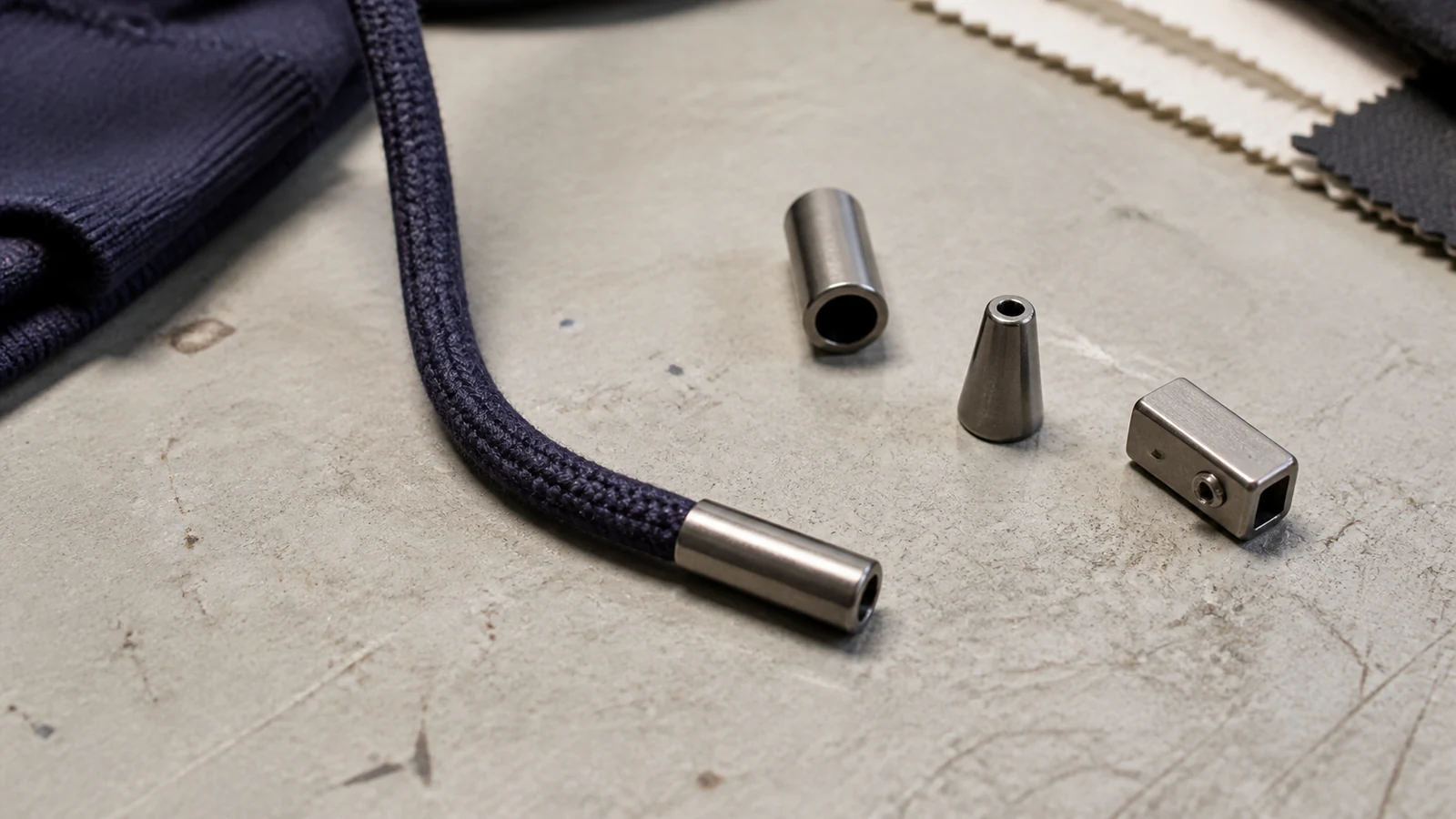
Factories and trim suppliers often name components by function and catalog category. The Prym garment-accessories catalog, for example, lists cord ends, folding and conical cord ends, and cord stoppers. That vocabulary connects a request to a supplier’s product family.
“Aglet” is a familiar dictionary term, while “cord end” is a common sourcing description. Neither is universal. A brand developing custom hoodie details should add a reference photo, dimensions, finish, cord diameter, and approved sample.
Is an Aglet the Same as a Cord End?
Often, the two terms describe a component in the same functional position: the free end of the drawstring. An aglet usually suggests a sleeve or tag covering that end. “Cord end” is broader and may include decorative, molded, folding, conical, or differently shaped parts offered by a supplier.
The words can overlap without being perfect synonyms in every catalog. A supplier may call a larger decorative terminal a cord end even though a consumer calls it the metal tip. The drawing and approved sample settle the meaning.
Is a Cord Lock or Toggle the Same Thing as an Aglet?
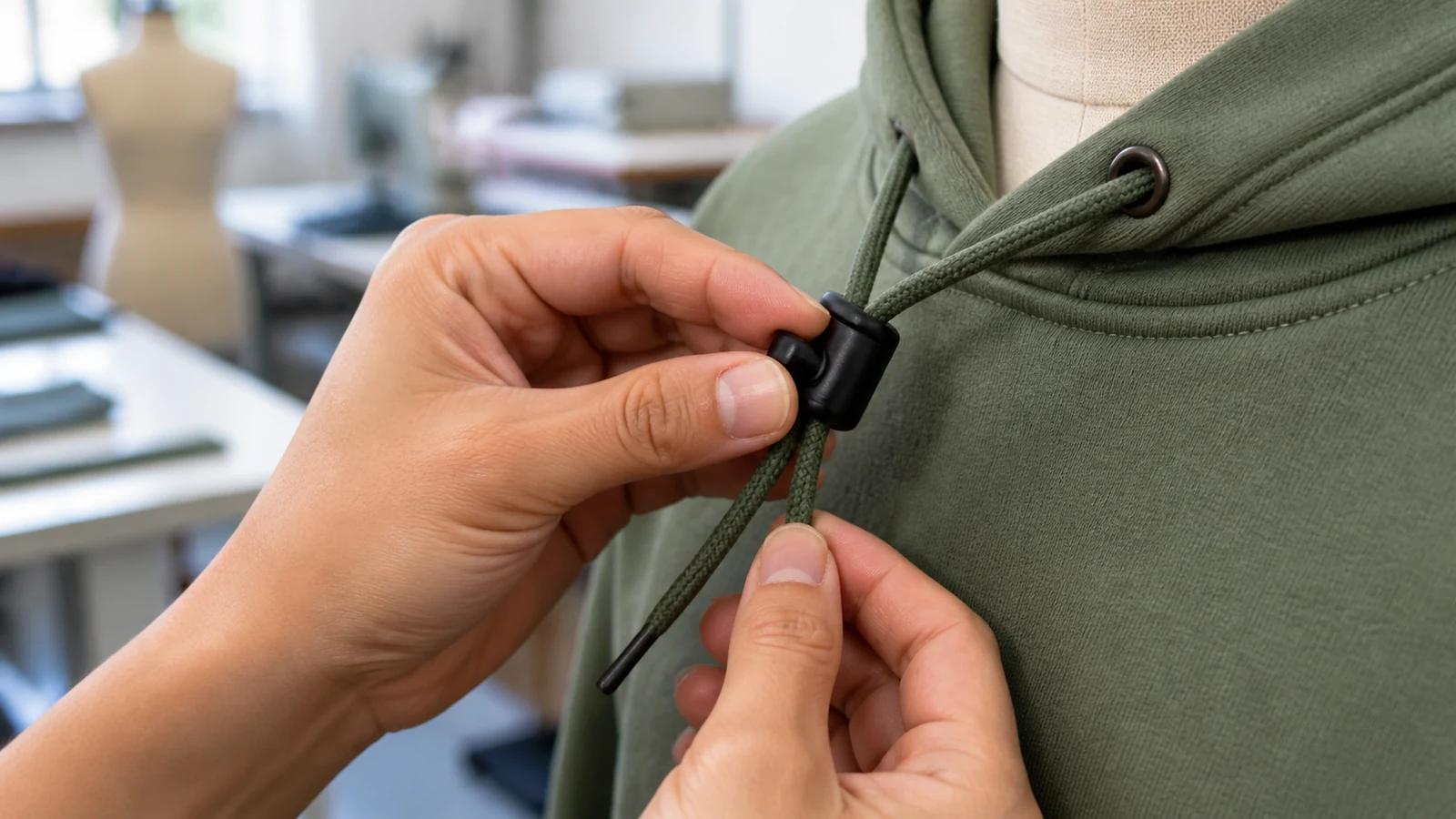
No. A cord lock, cord stopper, or toggle normally slides on the cord and holds its adjusted position. The aglet sits at the very end. A hoodie can use both: the cord passes through the lock, while a separate end piece finishes each free end.
Supplier catalogs treat these as distinct functions. A YKK cord stopper is designed for two cords around a waist or hood, while the ITW Nexus Cord Lock is a locking closure. These are supplier examples, not a universal garment design.
What Is the Metal Ring the Drawstring Passes Through?
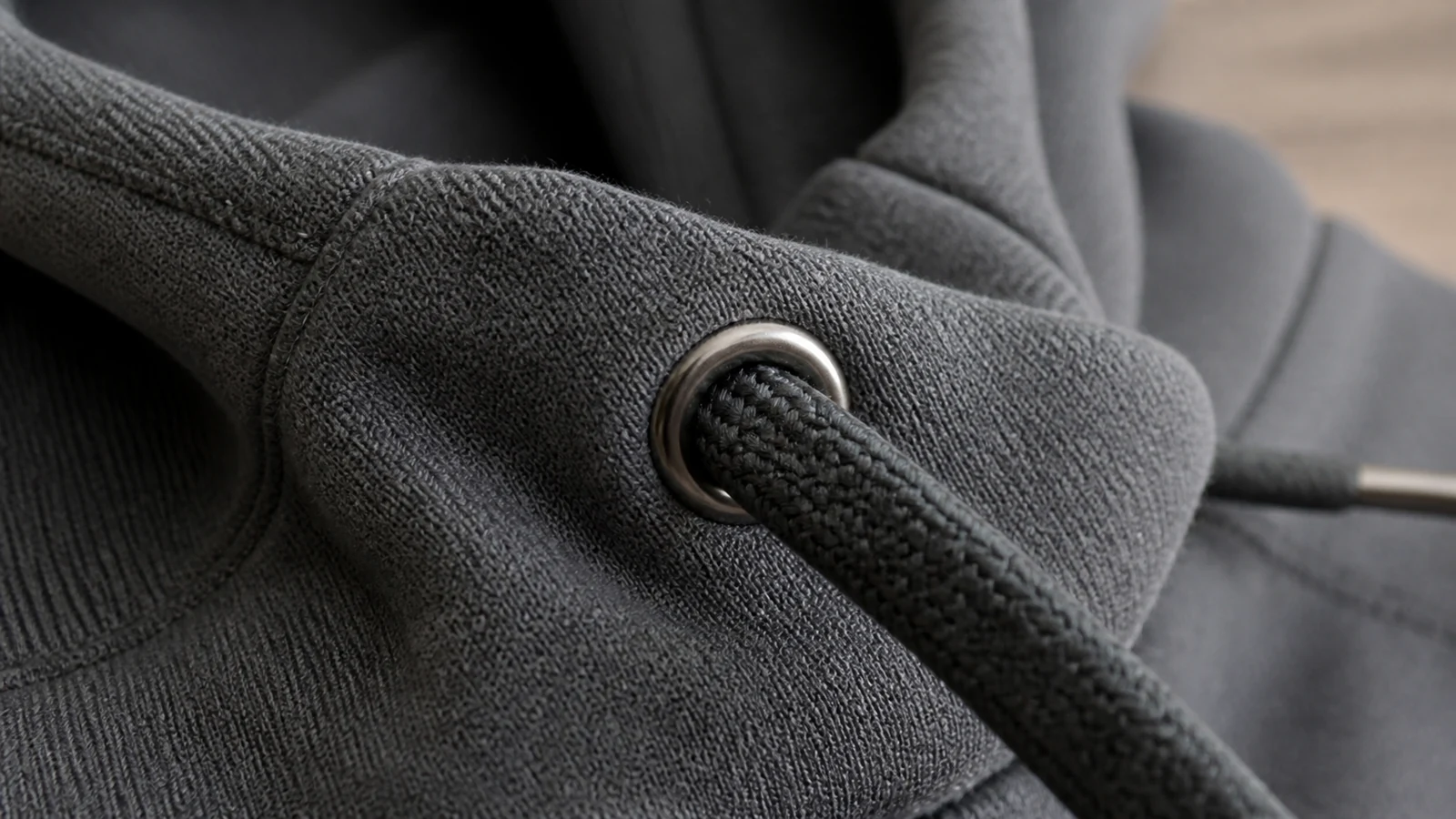
The ring fixed into the garment is usually an eyelet or grommet, not an aglet. It reinforces or finishes the opening where the drawstring exits a hood, waistband, or hem. The cord moves through it; the ring does not travel with the cord.
YKK identifies its Eyelet & Washer as a possible drawcord port. The location distinction is simple: the aglet is attached to the cord; the eyelet is attached to the garment. The eyelet must suit the fabric, backing, equipment, and care process.
Are Drawstring Ends Always Metal?
No. Cord ends and stoppers can use metal, plastic, or other constructions. Selection depends on appearance, component weight, cord compatibility, garment use, care requirements, and target cost.
A metal finish can create a sharper visual accent on custom hoodies, while a molded plastic part may support a lighter or more technical direction. Material names should come from the supplier specification rather than visual guesswork. A silver-colored surface, for example, does not by itself prove which metal or coating was used.
Why Do Hoodies Use Metal Aglets or Cord Ends?
Metal cord ends can provide a clean, noticeable trim detail. Their weight may help a cord hang neatly, and their surface can suit premium casualwear or streetwear. Similar parts appear on hoodies, sweatpants, and custom tracksuits.
Metal does not automatically mean better quality. The result depends on the base component, finish consistency, edge condition, attachment, and compatibility with the cord and garment-care process. A subtle, secure part can feel more considered than an oversized decorative piece that distracts from the product or performs poorly.
Can a Metal Cord End Be Customized?
Customization may include shape, size, finish, surface appearance, and branding, depending on the supplier and construction. A brand should not assume every stock cord end can receive a logo or special finish.
The design must also work with the cord. A shell that is too narrow, heavy, sharp, or difficult to attach can fail despite a good rendering. Confirm the actual component on the intended garment before production approval.
What Should a Brand Call This Part in a Tech Pack?
“Metal cord end / aglet” is a useful starting description because it connects common terminology with a sourcing term. The specification should then remove ambiguity by recording the material or supplier reference, finish, dimensions, compatible cord diameter, attachment method, branding requirement, placement, quantity per garment, and approved-sample reference.
When a sketch or reference image informs reference-led ODM development, confirm the trim decision and record the supplier item name or agreed custom specification in the bill of materials. The goal is traceable, production-ready information.
What Should Be Checked on a Drawstring Cord End During Sampling?
Sampling should confirm secure attachment, safe edges, finish consistency, cord fit, and alignment on both ends. The team should also review the intended care process. A loose component or damaged surface should be resolved before bulk approval.
Strength checks may be relevant, but methods and acceptance criteria depend on the product and buyer. YKK’s fastening testing methods include a cord-stopper tensile-strength example. It is an evaluation example, not a universal pass value.
Do Drawstring Ends Have Safety Requirements?
Safety requirements depend on the product, age group, market, and drawstring location. The U.S. Consumer Product Safety Commission guidance addresses hood and neck drawstrings in specified children’s sizes. It also says qualifying waist and bottom drawstrings must have no toggles, knots, or other attachments at their free ends.
ASTM F1816-18(2024) addresses drawstring hazards in children’s upper outerwear. This scope does not mean that all adult hoodies prohibit metal aglets. Children’s-product compliance must be evaluated for the garment and destination market.
Frequently Asked Questions
What is an aglet on a hoodie?
An aglet is the small fitting or finished treatment at the free end of a hoodie drawstring. It commonly covers the cord end, helps keep the fibers together, and gives the drawcord a cleaner appearance. Although many hoodie aglets are metal, the term can also apply to plastic or other end constructions.
Is the metal end of a hoodie string called an aglet?
Yes. “Aglet” is the common everyday term for the metal tip on a hoodie string. In a factory catalog, bill of materials, or tech pack, the same part may instead be called a metal cord end, drawcord end, or cord tip. Adding a component reference prevents terminology from becoming ambiguous.
What is the difference between an aglet and a cord lock?
An aglet finishes the free end of the cord. A cord lock, stopper, or toggle sits farther along the cord and is used to adjust or hold its position. A garment may use both components, so specifying only “drawstring hardware” is usually not detailed enough for product development.
What is the metal hole on a hoodie drawstring called?
The metal-rimmed hole in the hoodie fabric is normally called an eyelet or grommet. It forms the port through which the drawstring exits the hood. Unlike an aglet, it is fixed to the garment rather than attached to the free end of the cord.
Can hoodie drawstring tips be replaced?
Sometimes. Replacement depends on how the original tip was attached, the condition and diameter of the cord, and whether a compatible component is available. A repair part must cover the end securely without leaving sharp edges. For production, it is better to resolve attachment and compatibility during sampling than rely on later replacement.
The Simple Way to Name Drawstring Hardware
If a component covers the free end of the cord, call it an aglet or cord end. If it slides on the cord to adjust or hold tension, it is a cord lock, cord stopper, or toggle. If it is fixed in the garment and the cord passes through it, it is an eyelet or grommet.
For apparel development, add the supplier’s exact component name, dimensions, finish, cord compatibility, and approved reference. That information is more dependable than asking for a generic “metal piece.”
Developing Custom Hoodie Details?
Small trims such as drawcords, eyelets, cord ends, and stoppers affect both appearance and usability. They should be reviewed with the garment, cord, finish, and care requirements during sampling. Brands can discuss a custom hoodie project and define these details before approving bulk production.