If you search for a US shirt size chart, you will usually find familiar labels such as XS, S, M, L, XL, and 2XL beside chest or bust measurements. The difficulty is that those measurements are not identical across every brand. A men’s medium at one company may cover a slightly different chest range from a medium at another, even when both products are sold in the United States.
Current official charts from Nike, adidas, and Under Armour make that variation easy to see. They use comparable alpha labels, but their chest intervals and fit categories are not perfectly aligned. US sizing is therefore best understood as a brand-specific system that connects body measurements, intended fit, and sometimes finished garment dimensions.
This guide explains how men’s, women’s, and unisex shirt sizing works; why T-shirt and dress-shirt charts look different; how body measurements differ from flat garment measurements; and why international conversions are only references. It also shows how clothing brands can build an approved size specification instead of relying on the phrase “US sizing” alone.
15 Things to Know About US Shirt Sizing
1. There Is No Single Universal US Shirt Size Chart
American brands commonly use alpha sizes, but the letters are categories rather than nationally fixed measurement values. The current Nike men’s tops chart, adidas men’s shirts and tops chart, and Under Armour men’s tops guide all include S, M, L, and XL. Their chest ranges, however, begin and end at slightly different points.
This does not mean one chart is wrong. Each company develops its own customer profile, pattern blocks, grading, and fit language. A useful US shirt size chart must therefore identify the brand and product category. Treat any chart that presents exact XS-to-3XL measurements without naming its source as an illustration, not an official national standard.
2. US Casual Shirts Usually Use Alpha Sizes
T-shirts, sweatshirts, hoodies, polos, and many casual woven shirts commonly use labels such as XS, S, M, L, XL, 2XL, and 3XL. Not every brand starts at XS or offers the same upper end, and abbreviations may vary: one chart may show S, while another uses SM.
The label makes shopping and assortment planning easier, but it does not explain the fit by itself. A medium still needs a measurement range and a fit description. When selecting a casual shirt, find the chart for that product line, confirm whether it shows inches or centimeters, and check whether the product is slim, regular, relaxed, or oversized.
3. Men’s Shirt Sizing Usually Starts With Chest Measurement
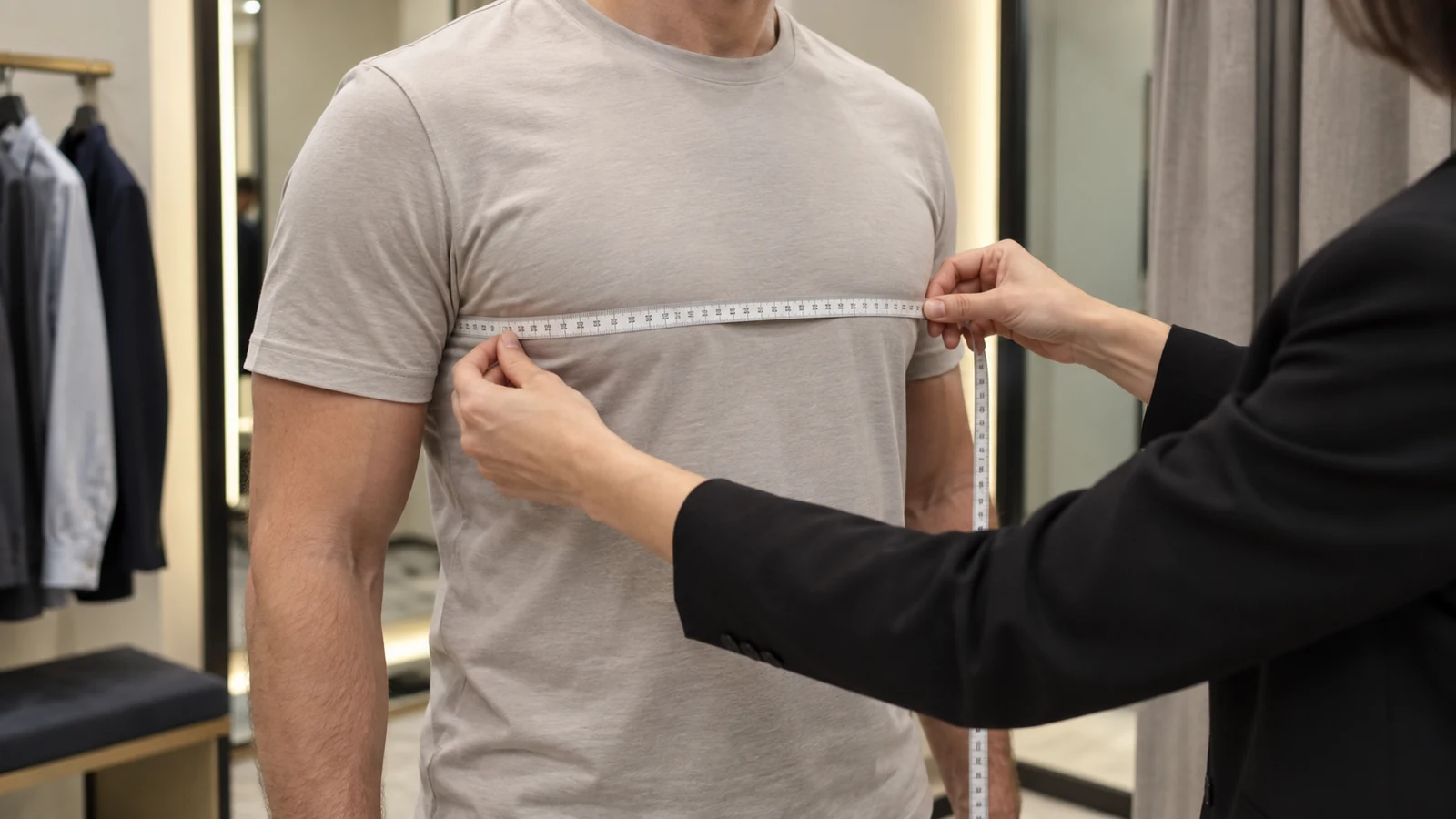
For men’s casual tops, chest circumference is usually one of the primary measurements. Nike instructs users to measure around the fullest part of the chest while keeping the tape horizontal. adidas uses chest, waist, and hip ranges, while Under Armour lists chest and waist.
Chest is important because it helps determine whether the shirt can accommodate the torso, but it does not define every dimension. Shoulder width, sleeve shape, body length, and the amount of ease added to the pattern affect the finished fit. If chest and waist point to different sizes, follow the specific brand’s guidance rather than applying a rule from another chart.
4. Women’s Shirt Sizing Usually Uses Bust Rather Than Chest
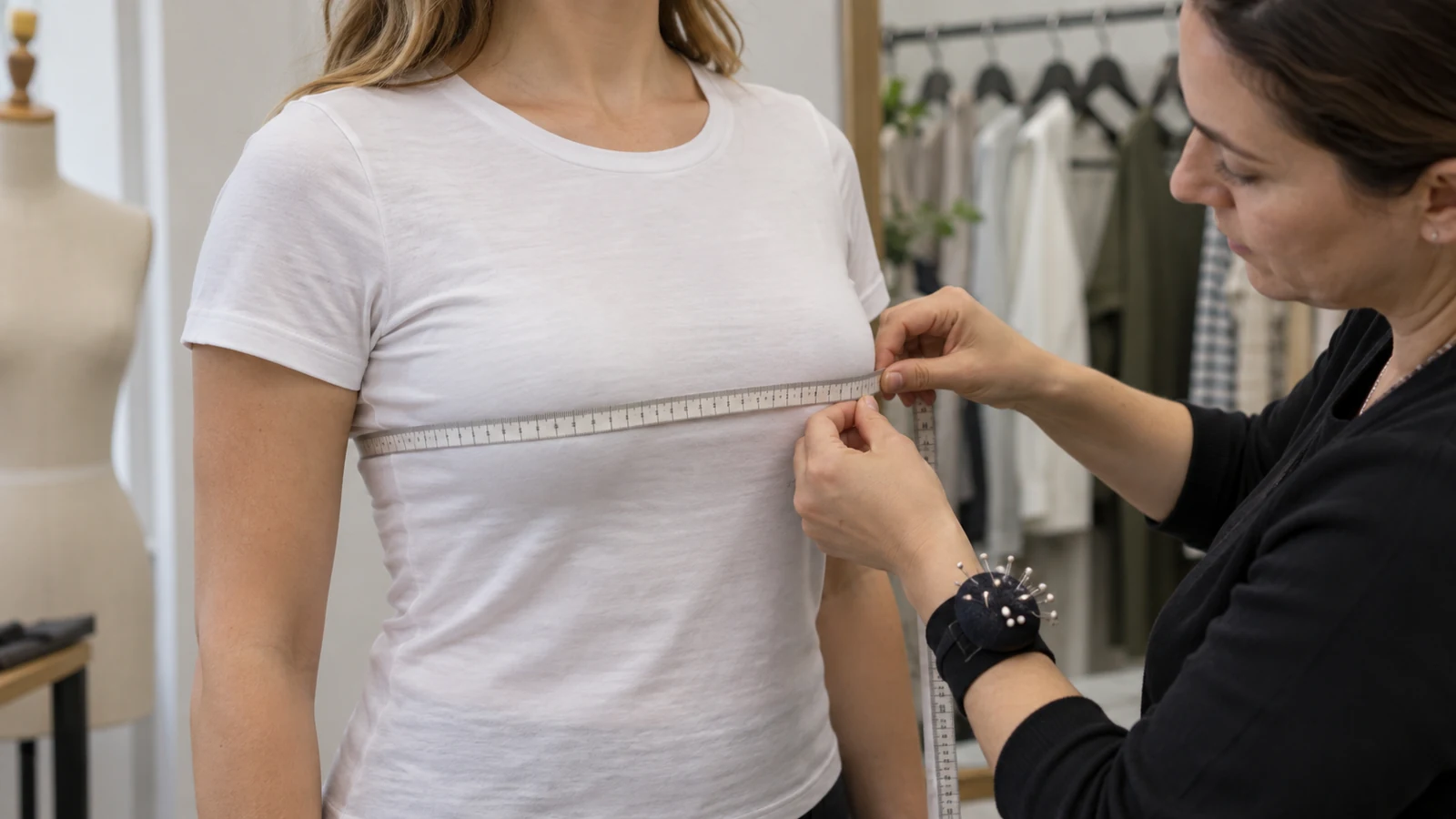
Women’s tops commonly use bust, waist, and hip measurements. The current Nike women’s tops chart explicitly states that its values are body measurements and pairs alpha sizes with US numeric sizes. On that chart, for example, S aligns with US 4–6 and M with US 8–10. Those conversions describe Nike’s own system, not a universal rule.
Other brands may group numeric sizes differently or use a separate plus-size range. The safest approach is to measure the fullest part of the bust, keep the tape level, and compare the result with the chart for the exact brand. For more on category and construction clues, see the guide to identifying men’s, women’s, and unisex T-shirts.
5. Body Measurements Are Not the Same as Garment Measurements
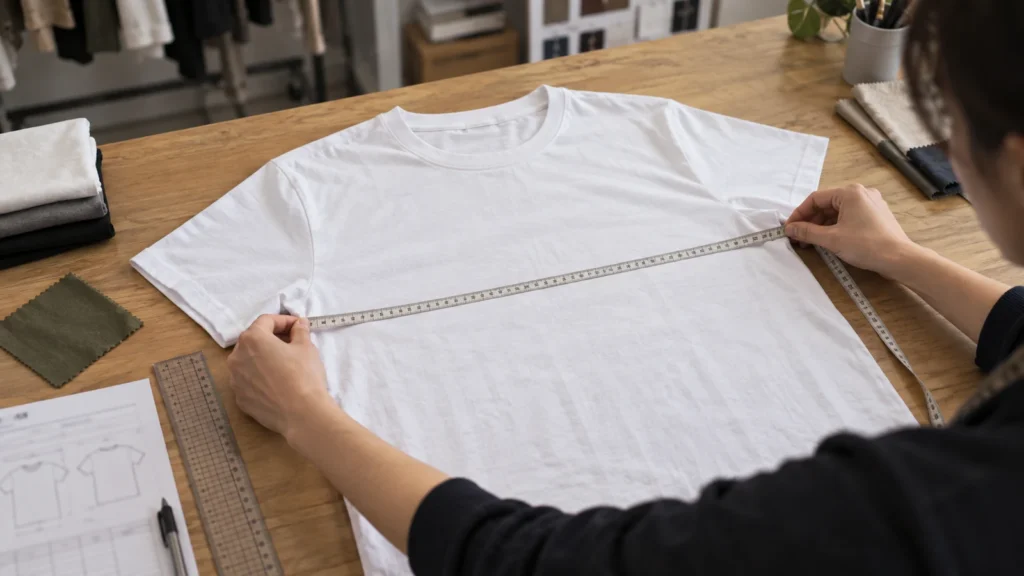
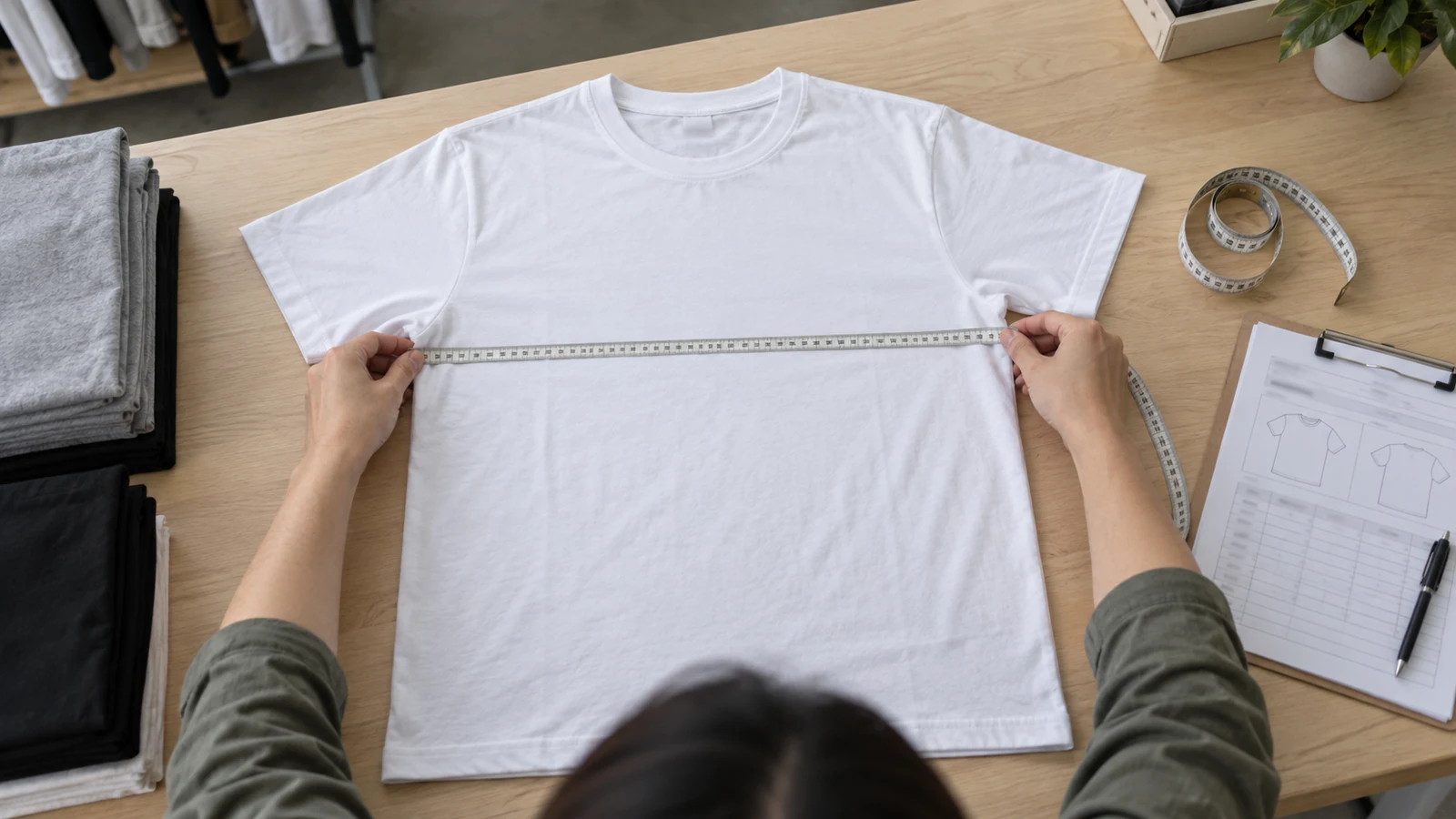
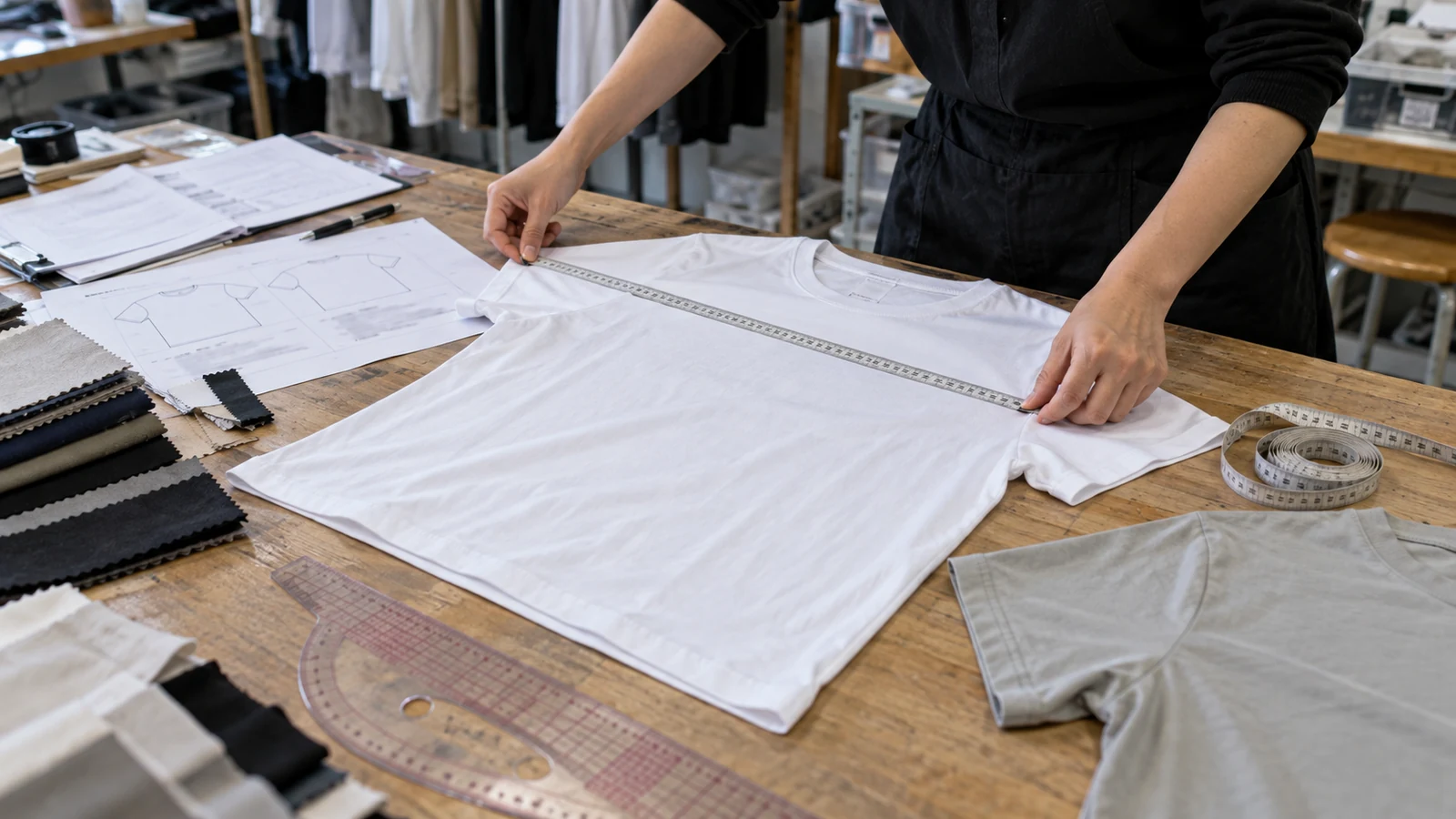
A body measurement chart describes the person. Chest or bust normally means the circumference around the torso. A garment measurement chart describes the finished shirt. It may show a flat chest width, total circumference, body length, shoulder width, or sleeve length.
These numbers cannot be compared without checking the definition. A 20-inch flat T-shirt chest is not designed for a 20-inch human chest. If the shirt is measured from armpit to armpit, that value represents half of the garment’s approximate circumference before considering seam placement, stretch, or measurement method. Always read the point-of-measurement notes and units before deciding that two charts disagree.
6. A T-Shirt Size Chart Can Show Width and Length Instead of Body Chest
Blank-apparel and manufacturing specifications often focus on finished garment dimensions. The official BELLA+CANVAS 3001 specification lists “Chest” and “Body Length From HPS” for each size. The medium shows a 20-inch chest and 29-inch body length from the high point of shoulder. In that specification, chest is a flat garment measurement, not a body-circumference recommendation.
Consumer brand charts more often give the body range intended to fit inside the garment. That is why two search results can show very different “medium chest” numbers. Before using a T-shirt size chart, identify whether the page is helping a person choose a size or helping a developer measure a finished sample.
7. Unisex Sizing Does Not Mean Men’s and Women’s Measurements Are Identical
Unisex usually means one garment block and grading system is offered to a broad customer group. It does not mean a men’s chart and a women’s chart have been mathematically averaged, and it does not create one universal unisex standard.
The BELLA+CANVAS 3001 is one specific example: the supplier describes it as a unisex, classic-fit T-shirt and provides finished garment chest and length measurements. A wearer still needs to compare those dimensions with a familiar shirt and consider the intended silhouette. A brand developing custom T-shirts should define its own unisex fit, size set, and grading rather than assuming another supplier’s chart automatically applies.
8. Fit Can Change How the Same Size Feels
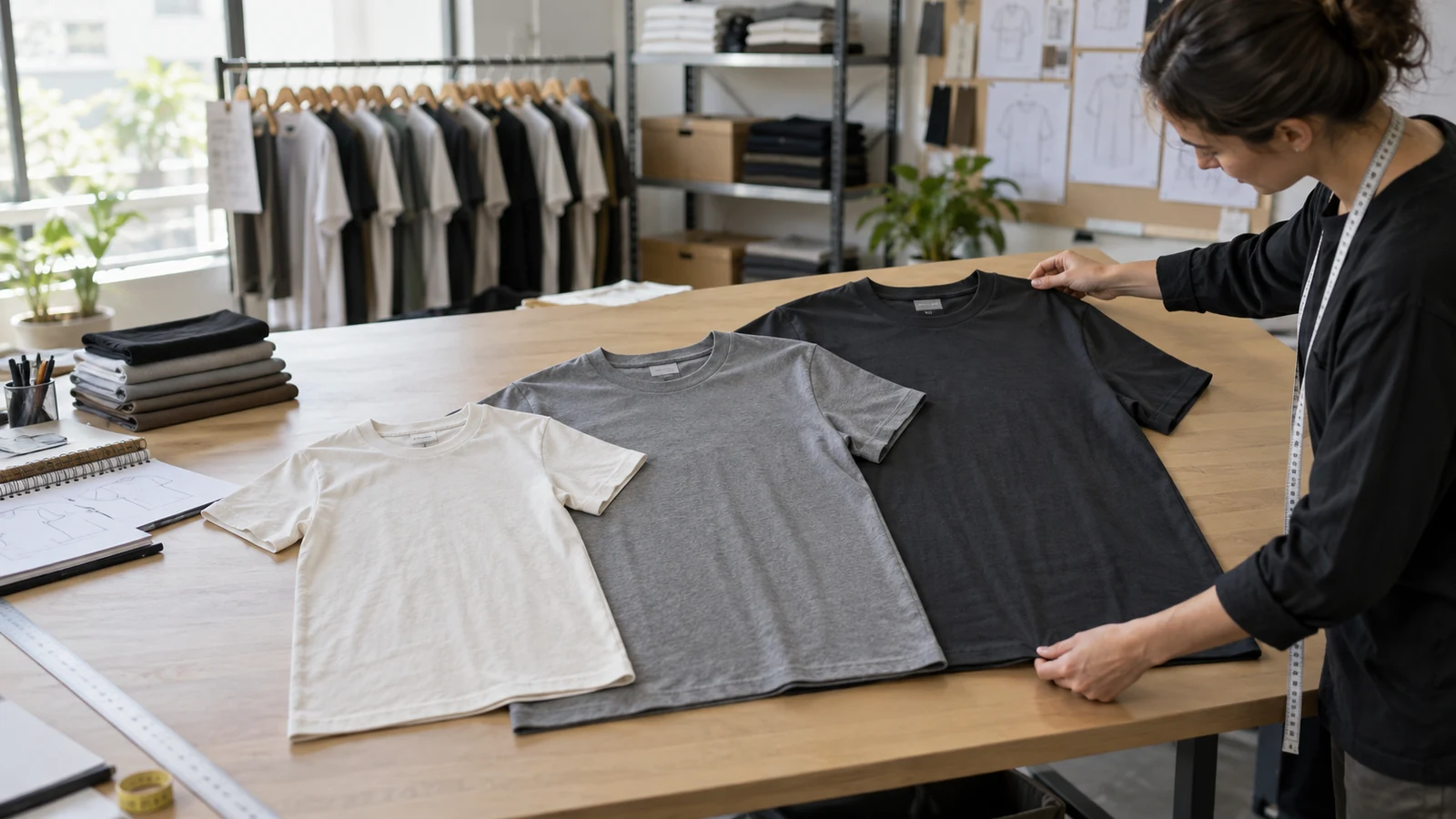
Size and fit are separate variables. A regular medium, fitted medium, relaxed medium, and oversized medium may target a similar body range while providing different ease, length, shoulder placement, and sleeve volume.
Under Armour’s current guide separates Compression, Tight, Fitted, Regular, Relaxed, and Oversized fits. That classification belongs to Under Armour, but it demonstrates the broader principle: the letter on the label cannot explain the silhouette by itself. Check the product’s fit description and, when available, the garment measurements. Buying a larger size is not always the same as choosing an intentionally oversized pattern.
9. Tall and Short Sizes Can Use the Same Chest Range but Different Proportions
Tall and short systems can adjust vertical proportions without changing the basic chest range. Nike’s current men’s chart repeats the regular chest ranges for tall options, then explains that tall tops are longer and that sleeve length is adjusted proportionately. adidas likewise presents short and tall variants alongside its regular men’s chart.
This matters because a customer may fit a medium chest but need more or less body and sleeve length. A tall label should not automatically be interpreted as a larger chest. The amount added or removed is brand-specific, and not every style is offered in every proportion. Use the exact product chart instead of applying another company’s tall-size increment.
10. Dress Shirt Sizing Works Differently From T-Shirt Sizing
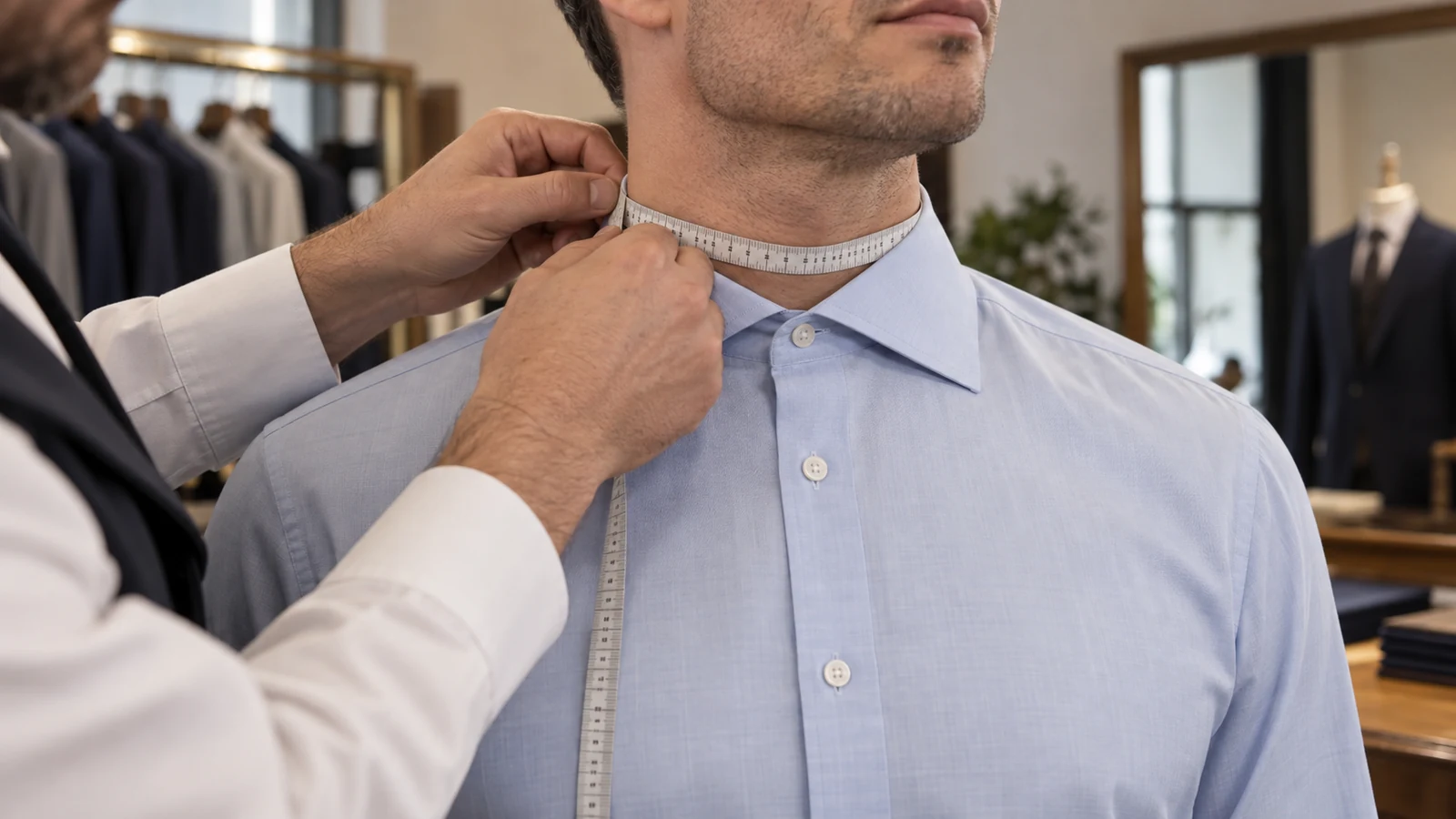
The word “shirt” can refer to a T-shirt, polo, casual woven shirt, or tailored dress shirt. Men’s dress shirts often use neck size and sleeve length rather than only S, M, and L. A label such as 15.5/34 commonly indicates a neck measurement and a sleeve option, while alpha-size charts may appear as an alternative.
The current Brooks Brothers dress-shirt guide shows neck, chest, waist, and garment measurements across several fits. It is a brand example, not the only American dress-shirt system. Keep dress-shirt measurements separate from T-shirt sizing because the garment structure, collar fit, sleeve requirement, and fit categories are different.
11. US Size Labels Do Not Convert Perfectly to EU or UK Sizes
International conversions are useful for orientation, but they do not remove brand differences. Nike’s women’s chart maps its own alpha sizes to US, UK, EU, French, and Italian numeric labels. adidas provides conversion information within its sizing system. These mappings show how a specific brand labels related products across markets.
They do not prove that every US medium equals one fixed EU or UK size. Different markets may use different numeric systems, and brands can group ranges differently. When measurements are available, compare bust or chest, waist, and product dimensions rather than relying only on a conversion label.
12. Measure Chest or Bust Before Choosing a Shirt Size
Use a soft tape and measure horizontally around the fullest part of the chest or bust. Keep the tape level across the back and close to the body without pulling it excessively tight. Wear light clothing or measure over the type of base layer intended for the shirt.
ISO 8559-1:2017 describes anthropometric measurements used for clothing size designation and product development. ISO confirmed the edition again in June 2026, so it remains current. Consumer instructions from Nike, adidas, and Under Armour translate the same general need into simpler brand guidance. Record the result in both inches and centimeters when working across markets, but do not mix units within one specification.
13. ASTM Body Measurement Standards Help Manufacturers Build Size Systems
ASTM publishes body-measurement tables that apparel developers can use as baselines. The active ASTM D6240/D6240M-24a covers adult male chest sizes 34–52 in Short, Regular, and Tall. The active ASTM D5585-21 covers adult female Misses sizes 00–20.
These standards support population-based pattern and size development. They are not mandatory consumer charts that force Nike, adidas, or another brand to assign identical measurements to S, M, and L. A manufacturer still has to decide ease, fit, fabric behavior, target customer, and grading. Standards provide a disciplined measurement vocabulary and baseline; the approved brand specification defines the product.
14. A Useful US Size Chart Should Show More Than Just S, M, L, and XL
A useful chart identifies what is being measured, which unit is used, and whether the numbers describe the body or the garment. It should also explain the fit and provide measuring instructions. When relevant, it may include length, shoulder, sleeve, tall, short, plus, or extended-size information.
For brands, the chart should match the approved production specification. For consumers, it should connect measurements to the exact product category. A bare row of letters with no definitions may look simple, but it does not provide enough information for a reliable choice. Clear terminology prevents the common mistake of comparing body circumference with flat garment width.
15. Clothing Brands Should Build Their Own Approved Size Specification
“Make US sizes S–XL” is not a complete manufacturing instruction. A clothing brand should define the target customer, body-measurement reference, finished garment measurements, intended fit, ease, length, shoulder, sleeve, grading rules, tolerances, and approved sample.
The process can start with market and competitor research, but the final chart must reflect the brand’s own product. During an OEM/ODM apparel development process, the size specification should be reviewed together with fabric behavior, pattern construction, and sample fit. The broader product range may share grading principles, but a T-shirt, hoodie, and tracksuit still need product-specific dimensions.
A Practical Look at Current US Shirt Size Charts
The table below compares current men’s tops body-chest ranges published by three major brands in September 2026. It is intentionally limited to S–XL so the differences remain clear.
| Size | Nike Chest | adidas Chest | Under Armour Chest |
|---|---|---|---|
| S | 35–37.5 in | 34.5–36 in | 34–37 in |
| M | 37.5–41 in | 36.5–39 in | 37–41 in |
| L | 41–44 in | 39.5–42.5 in | 41–44 in |
| XL | 44–48.5 in | 43–46.5 in | 44–48 in |
These are current brand-specific body measurement charts, not a universal US sizing standard. Nike calls the measurement “Chest (in),” adidas lists chest ranges for men’s shirts and tops, and Under Armour uses SM, MD, LG, and XL labels with body chest ranges. Product availability and charts can change, so recheck the official source before purchasing or approving a size specification.
The comparison also explains why a customer can wear medium in two brands yet prefer large in a third. Measurements near a boundary, desired looseness, fabric stretch, and product fit all affect the decision.
How to Use a US Shirt Size Chart Without Guessing
- Identify the measurement type. Confirm whether the chart shows body measurements or finished garment measurements.
- Measure the body correctly. Take chest or bust around the fullest area with the tape horizontal and record the unit.
- Check the fit category. Slim, regular, relaxed, and oversized products create different amounts of room in the same labeled size.
- Compare garment length when available. Chest may fit while body or sleeve length does not, especially for tall or short proportions.
- Follow the specific brand’s guidance. If a measurement falls between sizes, use that brand’s advice and consider the desired silhouette.
For product development, repeat the process with an approved sample. Compare the specification with an actual size-set garment, record any correction, and keep the approved point-of-measurement definitions with the tech pack.
The Simple Way to Understand US Shirt Sizes
US shirt sizing commonly uses familiar labels such as XS, S, M, L, and XL, but those letters are not fixed measurement values. The reliable method is to open the current chart for the brand and product, identify whether it uses body or garment measurements, measure chest or bust, and then account for fit and length.
Men’s casual tops usually prioritize chest, women’s tops often prioritize bust, and dress shirts may use neck and sleeve measurements. Unisex identifies a shared garment system, not a universal blend of men’s and women’s charts. International conversions remain secondary to the actual measurements.
For a clothing brand, “US sizing” should describe the target market, not replace a technical specification. An approved chart, graded pattern, tolerances, and size-set samples provide a more dependable production reference than S–XL labels alone.
Building a US Size Range for Your T-Shirt Brand?
For custom T-shirt development, a reliable size range starts with target-customer measurements, finished garment specifications, fit direction, and grading—not just S, M, L, and XL labels. YECHENG APPAREL can review these points during sampling and product development. To discuss the intended market and size-set requirements, contact YECHENG APPAREL.