Customizing a hoodie for a clothing brand involves more than placing a logo on a blank garment. A custom product may require decisions about style, fit, fabric, GSM, color, construction, decoration, labels, trims, packaging and sample approval.
For a fashion or streetwear brand, hoodie customization is therefore a product development process. The practical goal is to turn a creative direction into a clear, testable specification that a sample maker and production team can follow.
This guide explains that process from the initial brief through final approval. It focuses on the decisions a brand should make, the evidence it should review and the details that should be frozen before bulk production preparation.
Quick Answer
To customize a hoodie, first define the target customer, season, style and fit. Then select the fabric, weight, color, decoration, artwork placement, labels and trims. Document those decisions in a development brief or tech pack, make a sample, review fit and workmanship, complete the relevant garment tests, record revisions and approve a final specification before preparing for bulk production.
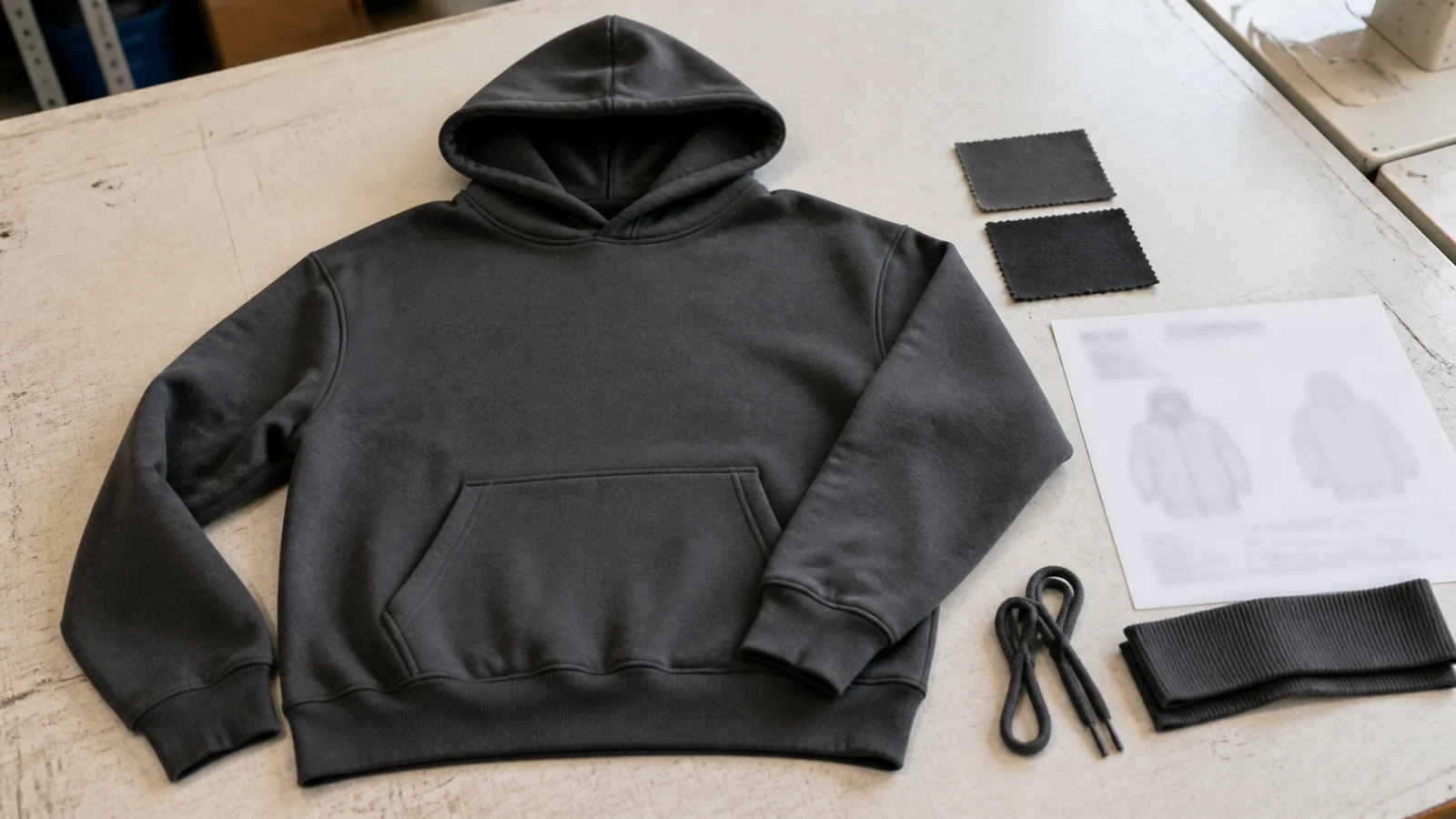
How to Customize a Hoodie: The Complete Process
The process moves from product direction to measurable approval. A brand may not know every technical specification initially, but each decision should remain traceable to the intended customer and garment use.
The following 14 steps provide a practical sequence. Projects may require additional reviews, but the order prevents decoration, materials or trims from being selected before the garment direction is defined.
1. Define the Hoodie You Want to Create
Start with a concise product brief. It does not need to solve every detail immediately, but it should give the development team one direction. Define:
- Target customer, season and use: Identify who will wear the style and in what context.
- Brand positioning: Describe the visual direction, such as minimal, premium, washed, graphic-led or athletic-inspired.
- Basic construction: State pullover or zip-up and the preferred pocket direction.
- Fit direction: Record regular, relaxed, oversized, boxy or drop-shoulder intentions.
- Fabric direction: Note the desired surface, hand feel and structure before choosing technical parameters.
- Decoration concept: Identify the type, approximate size and visual importance of the artwork.
A useful brief gives the manufacturer context for feasible options and provides a reference for later decisions. Brands exploring broader custom hoodie manufacturing can use it to separate collection strategy from technical selections.
2. Choose Pullover or Zip-Up Construction
Pullover and zip-up hoodies support different front constructions and decoration layouts. The choice depends on styling, layering, function and artwork.
| Feature | Pullover Hoodie | Zip-Up Hoodie | Development Consideration |
|---|---|---|---|
| Front construction | Continuous front body | Center-front opening | Check how the opening changes balance and assembly |
| Decoration area | Broad uninterrupted front | Divided by the zipper | Full-front artwork may need splitting or repositioning |
| Often a kangaroo pocket | Usually two separated pockets | Confirm pocket shape and graphic clearance | |
| Zipper | Not required | Functional and visible trim | Specify type, length, color and finish |
| Layering | Pulled over the head | Opens fully | Consider intended styling and ease of use |
| Visual style | Continuous silhouette | Strong center line | Review the front view in the actual sample |
| Production complexity | Fewer center-front components | More alignment and trim decisions | Check zipper, panels, pockets and decoration together |
A pullover offers a continuous chest area, although pockets and seams still restrict placement. A zip-up can interrupt full-front artwork, so review the design with the garment open and closed.
3. Decide the Fit and Silhouette
Fit should be defined through proportions, measurements and a physical sample. Common terms provide direction but do not create a complete pattern:
- Regular fit follows familiar proportions with moderate ease.
- Relaxed fit adds comfort and volume without a dramatic silhouette.
- Oversized fit may combine body width, sleeve volume and shoulder extension.
- Boxy fit emphasizes width with a relatively compact body.
- Drop shoulder extends the shoulder seam and changes sleeve hang.
An oversized hoodie is not created by enlarging every measurement equally. Balance body width and length, shoulder position, sleeve volume, hood proportion and rib tension in a measurement chart, then confirm them on a sample.
4. Select the Hoodie Fabric
Fabric selection should connect construction, feel, season and decoration. CottonWorks explains the fundamentals of knit fabrics, including how intermeshing yarn loops form a knit structure and contribute to flexibility and garment behavior. Within that broad category, hoodie fabrics can still differ substantially.
Review fiber composition, knit construction, technical face and back, hand feel, stretch, recovery, surface and intended season. The face affects the exterior and decoration surface; the back affects next-to-body feel and may show loops or a brushed finish. Stretch and recovery also influence shape and drape.
French Terry commonly retains a loopback inner surface, while sweatshirt fleece usually has a brushed or napped inside. Both vary in blend, density, thickness and finish. The French Terry and brushed fleece comparison provides the detailed distinction.
Evaluate shortlisted swatches with the intended fit and decoration, then confirm the material in a complete sample.
5. Choose the Right Fabric Weight
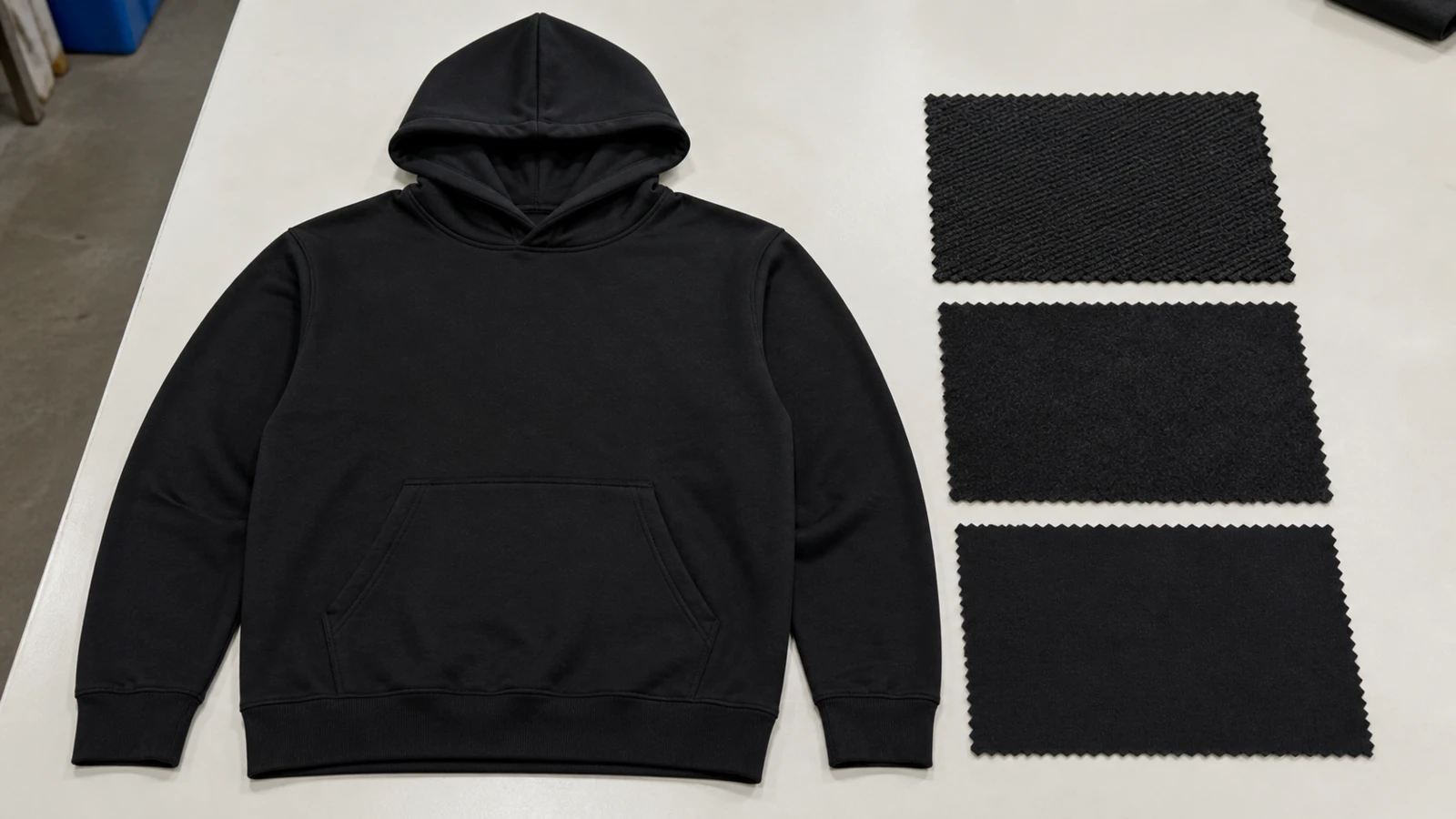
GSM expresses fabric mass per unit area, but it does not measure quality by itself. A higher GSM does not automatically mean a better, more durable or more appropriate hoodie for every market.
Compare GSM together with knit density, yarn characteristics, fiber blend, brushing, thickness, structure and target season. Two fabrics with similar weight may feel different because one traps more air at a brushed surface while another is compact and smooth. Conversely, two fabrics that appear similarly thick may not have the same mass, recovery or drape.
Use the project’s product direction to shortlist fabrics, then compare real swatches and samples. The separate fleece hoodie fabric and GSM guide provides deeper material-selection context without making GSM the only approval criterion.
6. Define the Color
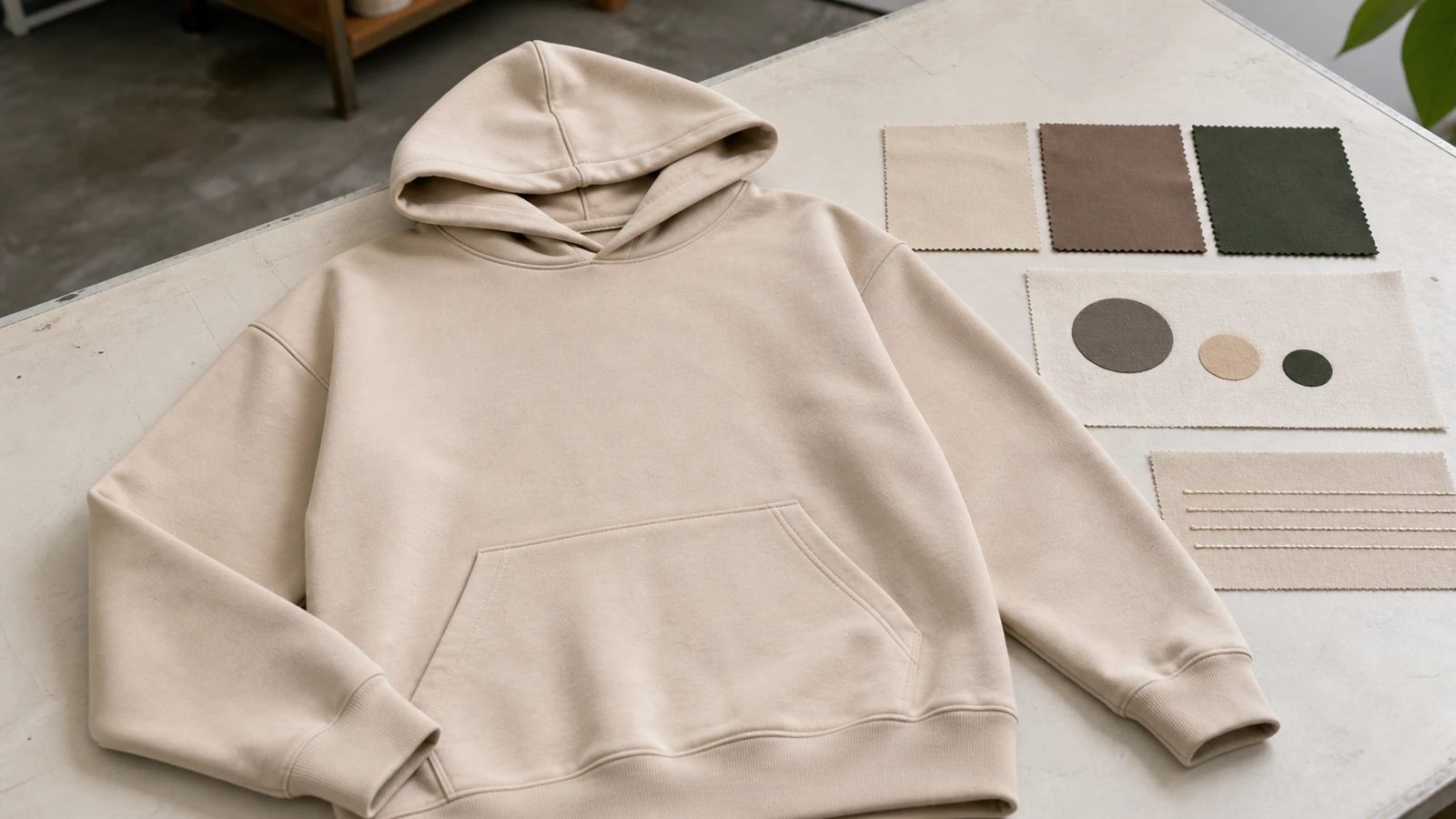
Color development requires a shared target. A brand can provide a physical swatch, an approved color standard or another controlled reference; screen colors and casual photographs are useful only for direction.
Pantone’s textile color system helps designers, brands and production partners communicate references. Because materials can render a target differently, a color code improves communication but cannot guarantee an identical result on every fabric.
Fiber, structure, dyeing, finish and lighting influence appearance. Review a lab dip or fabric sample under agreed conditions and record the accepted reference.
Define whether trims, rib, zipper tape, print and embroidery should match, coordinate or contrast so components are approved as one garment rather than as isolated color names.
7. Choose Printing, Embroidery or Other Decoration
Select decoration after defining the artwork, fabric surface, garment construction and target hand feel. Options include screen printing, puff printing, DTG, embroidery, appliqué and chenille or towel embroidery.
Screen printing may suit bold graphics, puff adds a raised effect, DTG may suit detailed artwork, and embroidery creates structured detail. Appliqué and chenille-style techniques can support dimensional motifs.
Graphic size, color count, detail, surface hairiness, stretch, wash treatment, placement and hand feel can change the result. Review the guide to custom hoodie printing and embroidery methods when choosing a technique.
Approve the selected method on the intended fabric, checking appearance, flexibility, coverage and interaction with seams or pockets.
8. Decide Artwork Size and Placement
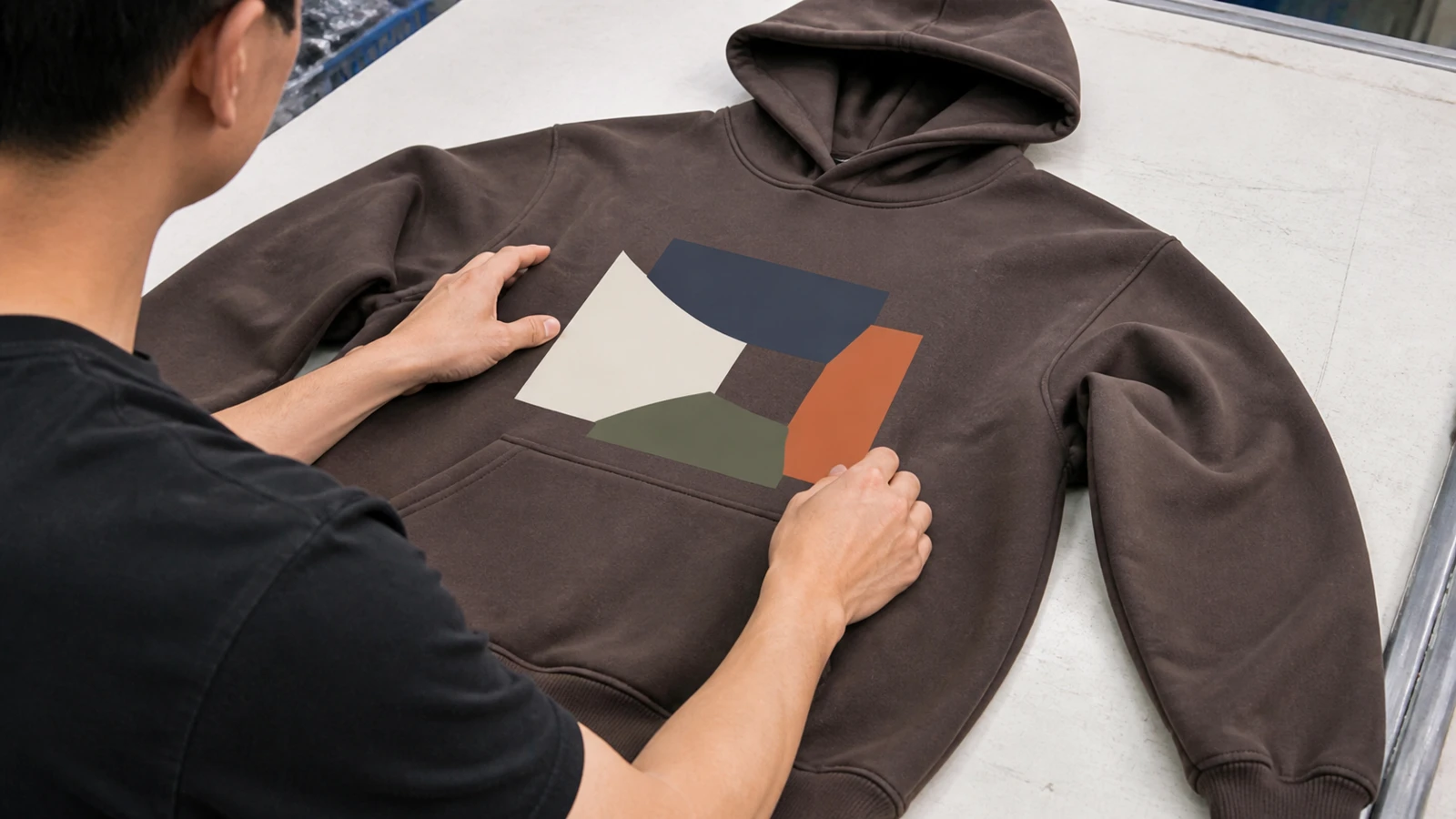
Specify placement with finished artwork dimensions and reference points, not only visual mockups. Confirm it on the correct size and fit because an oversized body, drop shoulder or zip front changes visual balance.
- Left chest: Suits small marks; check the neckline, center front and armhole.
- Center chest: Creates a focal point; confirm its height above the pocket.
- Full front: Offers a large pullover area; check pockets, seams and zip-up interruption.
- Back: Supports larger graphics; check the hood, shoulder seams and hem.
- Sleeve: Adds a directional detail; check taper, seam rotation and cuff clearance.
- Hood: Requires review of panel seams, curvature and the up/down appearance.
- Pocket area: Must respect openings, stitching, bulk and function.
For a zip-up, decide whether artwork sits on one side, crosses both panels or avoids the zipper. Approve the placement on a garment because pockets, seams, rib and the worn view can change the result.
9. Customize Labels and Branding
Labels combine brand identity with market information. Options include main, size, care, woven and printed labels plus hang tags, but their content is not purely a design choice.
For the United States, the FTC apparel-labeling overview explains that most textile and wool products require labels identifying fiber content, country of origin and the manufacturer or another responsible business. This is a U.S. reference, not a universal global rule. Brands selling in other markets should confirm the applicable local requirements.
The FTC Care Labeling guidance addresses appropriate instructions and a reasonable basis for covered U.S. apparel. Care instructions should reflect the actual fabric, decoration, trims, finishing and garment tests.
Choose label construction and position with comfort and durability in mind. Hang tags and packaging can carry brand communication, but they should not replace required on-garment information where it applies.
10. Choose Trims and Small Construction Details
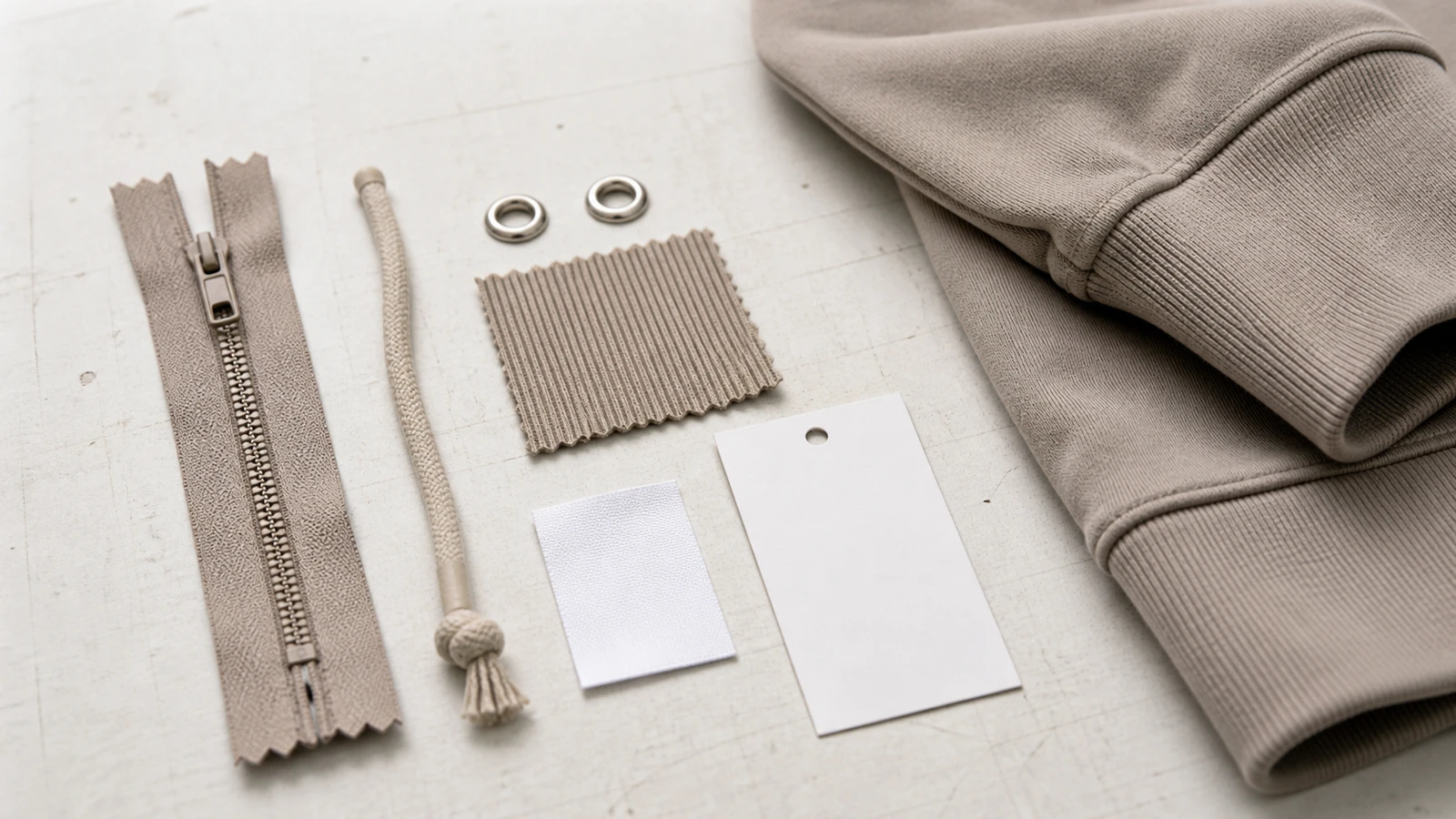
Trims should support the hoodie’s weight, style, function and wash finish. Specify zippers, drawcords, eyelets, rib, cord ends and any buttons by relevant size, material, color and finish rather than calling them “standard.”
Check zipper movement and front balance, drawcord compatibility with the hood and eyelets, and rib stretch and recovery. If the hoodie receives a wash treatment, review how metal, coated and textile trims respond with the garment.
11. Create a Hoodie Tech Pack or Development Brief
A tech pack turns the concept into reviewable instructions. Complete information reduces misunderstandings, although no document eliminates every error.
Include, as appropriate:
- Garment sketches and annotated references
- Measurements and defined points of measure
- Fabric, color and finish references
- Production-ready artwork, dimensions and placement
- Label artwork, content and position
- Zipper, drawcord, rib, eyelet and other trim details
- Packaging, wash and special construction notes
Use version control and update the specification and revision record together when a measurement, artwork or trim changes.
Brands can consider how their documentation fits an OEM/ODM apparel development process. The objective is one reliable source of instructions for sampling and production preparation.
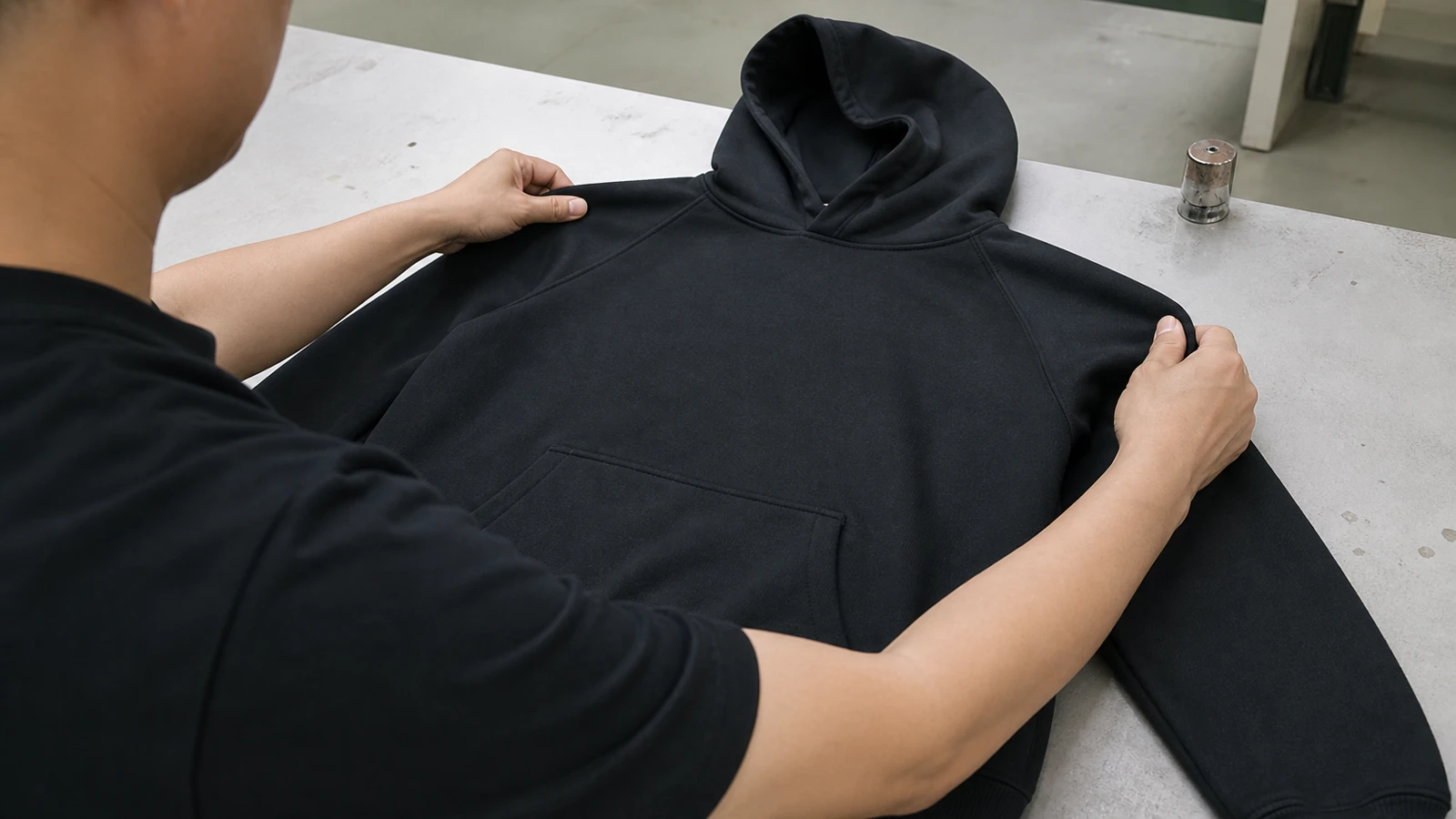
12. Make and Review a Sample
Do not move directly from a design rendering to bulk production. A sample brings the pattern, fabric, color, decoration, labels and trims together so the brand can review the actual garment.
A practical sequence may include:
- Review requirements and missing decisions.
- Confirm materials and development references.
- Create the sample.
- Check fit and measurements.
- Review fabric, decoration and trims.
- Record revisions in one controlled document.
- Review revisions when they affect approval.
- Freeze the approved specification.
The number of samples depends on the project. Review each sample as a complete product because decoration, fabric, fit and hood structure must work together.
13. Test the Garment Before Approval
Select testing according to the product, target market and performance requirements. The goal is to identify relevant changes before specifications are frozen.
Depending on the project, review dimensional change, colorfastness, decoration, seams, fabric surface, relevant pilling and appearance after intended care. Record the method, sample condition and result.
The AATCC colorfastness training overview shows that methods address exposures such as laundering, crocking, water, perspiration and light. Not every hoodie requires every test; selection should reflect the fiber, dye, decoration, care, use and market.
Because fabric, decoration and trims interact, confirm relevant results on the product specification.
14. Approve the Final Specification for Production
Final approval identifies the version production should follow. Record the approved sample, measurements, fabric, color, artwork, placement, labels, trims, finish, packaging and relevant test decisions.
Compare the physical sample with final documents before bulk preparation. Confirm matching versions, final artwork dimensions, traceable material references and no unresolved comments so approved requirements are distinct from earlier options.
Custom Hoodie Options Comparison
This table is a decision map, not a substitute for swatches, samples and approved specifications.
| Customization Area | Common Options | What It Changes | What Brands Should Confirm |
|---|---|---|---|
| Style | Pullover or zip-up | Front construction and use | Opening, pocket and artwork strategy |
| Fit | Regular, relaxed, oversized, boxy | Silhouette and proportions | Measurements, shoulder, sleeve and hood balance |
| Fabric | French Terry, brushed fleece or another approved knit | Feel, drape, surface and season | Composition, construction, face, back and recovery |
| GSM | Project-specific fabric weight | Mass and perceived substance | Evaluate with density, thickness, finish and fit |
| Color | Standard reference, lab dip or approved swatch | Brand appearance and coordination | Actual material result under agreed lighting |
| Printing | Screen, puff, DTG or another approved method | Graphic detail, texture and hand feel | Fabric compatibility and decorated sample |
| Embroidery | Flat, appliqué, chenille or towel effect | Dimension and structural load | Backing, stitch plan, size and placement |
| Artwork placement | Chest, front, back, sleeve, hood or pocket area | Visual balance and production access | Dimensions, seams, zipper, pocket and worn view |
| Labels | Main, size, care, woven or printed | Branding and required information | Market rules, content, comfort and location |
| Trims | Zipper, drawcord, eyelets, rib and cord ends | Function and detail quality | Color, weight, finish and wash response |
| Wash finish | Clean, washed or distressed direction | Color and surface character | Actual sample appearance and component response |
| Packaging | Folding and project-specific branded elements | Presentation and handling | Materials, labeling and approved packing instructions |
Custom Hoodie Development Checklist
Use this checklist before final approval:
- Define the customer, season and use.
- Choose pullover or zip-up construction.
- Confirm the fit, measurements and proportions.
- Select fabric by structure, surface, recovery and feel.
- Evaluate GSM with density, thickness and finish.
- Approve color on the actual material.
- Finalize production-ready artwork.
- Match decoration to artwork and fabric.
- Record placement dimensions and reference points.
- Prepare brand and market-required labels.
- Approve zippers, drawcords, rib and other trims.
- Create and review a complete sample.
- Check fit, fabric, decoration and construction.
- Review relevant wash or test results.
- Record all accepted revisions.
- Freeze the final sample and specifications.
Common Hoodie Customization Mistakes
- Choosing fabric only by GSM: Weight does not define structure, surface or drape, so approve a swatch.
- Sending low-quality artwork: Blurred files make separation, scaling, digitizing and edges difficult to assess.
- Not defining artwork dimensions: A mockup without finished measurements can be interpreted differently across sizes or samples.
- Ignoring zipper or pocket interference: Front components can divide artwork or reduce the usable area.
- Selecting decoration before checking fabric: Surface hairiness, stretch, density and finishing can change print or embroidery behavior.
- Using vague color references: Names and screen images do not provide a controlled approval target for actual fabric.
- Skipping sample review: Drawings cannot confirm fit, drape, hood proportion, trim function or decorated hand feel.
- Changing multiple specifications after approval: Their combined effect becomes difficult to track.
- Leaving labels or packaging until late development: Missing artwork, market information or component decisions can delay a complete sample and create inconsistent instructions.
Frequently Asked Questions
Can a brand customize more than the hoodie logo?
Yes. Customization can cover style, pattern, fit, fabric, GSM, color, construction, decoration, labels, trims, wash effects and packaging. The selected options should be confirmed through specifications and sampling.
Does a brand need a complete tech pack before asking for development help?
Not always. A clear brief and references can start development, but measurements, artwork dimensions, materials and trims should be resolved and documented as the project progresses.
How should a brand confirm an oversized hoodie fit?
Use a measurement chart and physical sample. Review body width and length, shoulder position, sleeve volume, hood, pocket and rib together rather than enlarging every measurement equally.
When is a custom hoodie ready for bulk production preparation?
It is ready when the physical sample and matching measurements, materials, decoration, labels, trims, packaging and test decisions are approved and frozen. Later changes require impact review.
Conclusion
Successful hoodie customization is not a single logo choice. It is the coordination of fabric, fit, color, decoration, branding, trims, sampling and testing so that the creative idea becomes a clear product specification.
The most reliable sequence is to define the product, choose materials and decoration, review a sample, confirm relevant performance and care considerations, and freeze the approved version for production preparation.
This sequence makes revisions more traceable and keeps design intent connected to manufacturing decisions.
Discuss Your Custom Hoodie Project
If your brand is developing a custom hoodie, prepare the intended style, fabric direction, fit, artwork, decoration method, label files and sample requirements. You can share your hoodie development requirements with YECHENG APPAREL to discuss how those decisions can be organized for sampling and production preparation.