Someone who is 5’7"—approximately 170 cm—may reasonably wonder whether a small, medium, or large hoodie will fit best. The problem is that height does not describe chest size, shoulder width, body weight, torso proportions, or how much room the wearer wants.
Two people at the same height can therefore choose different sizes. Start with body measurements and the specific garment chart, then consider the intended silhouette and layering.
What Size Hoodie Should I Get If I’m 5’7"?
At 5’7", there is no universal hoodie size. On many adult charts, this height sits within a regular or standard length range, but the correct alpha size—S, M, L, or another option—should primarily come from your chest measurement and the chart for the exact hoodie.
For a fitted look, stay close to the size indicated by your body measurements. For a relaxed look, check how much room is already built into the garment. For an intentionally oversized look, do not automatically size up: a hoodie designed with a wide chest, drop shoulder, and generous sleeve may already look oversized in your measured size. The better rule is simple: measure first, compare the garment, and use height mainly to judge body and sleeve length.
Why Isn’t Height Enough to Choose a Hoodie Size?
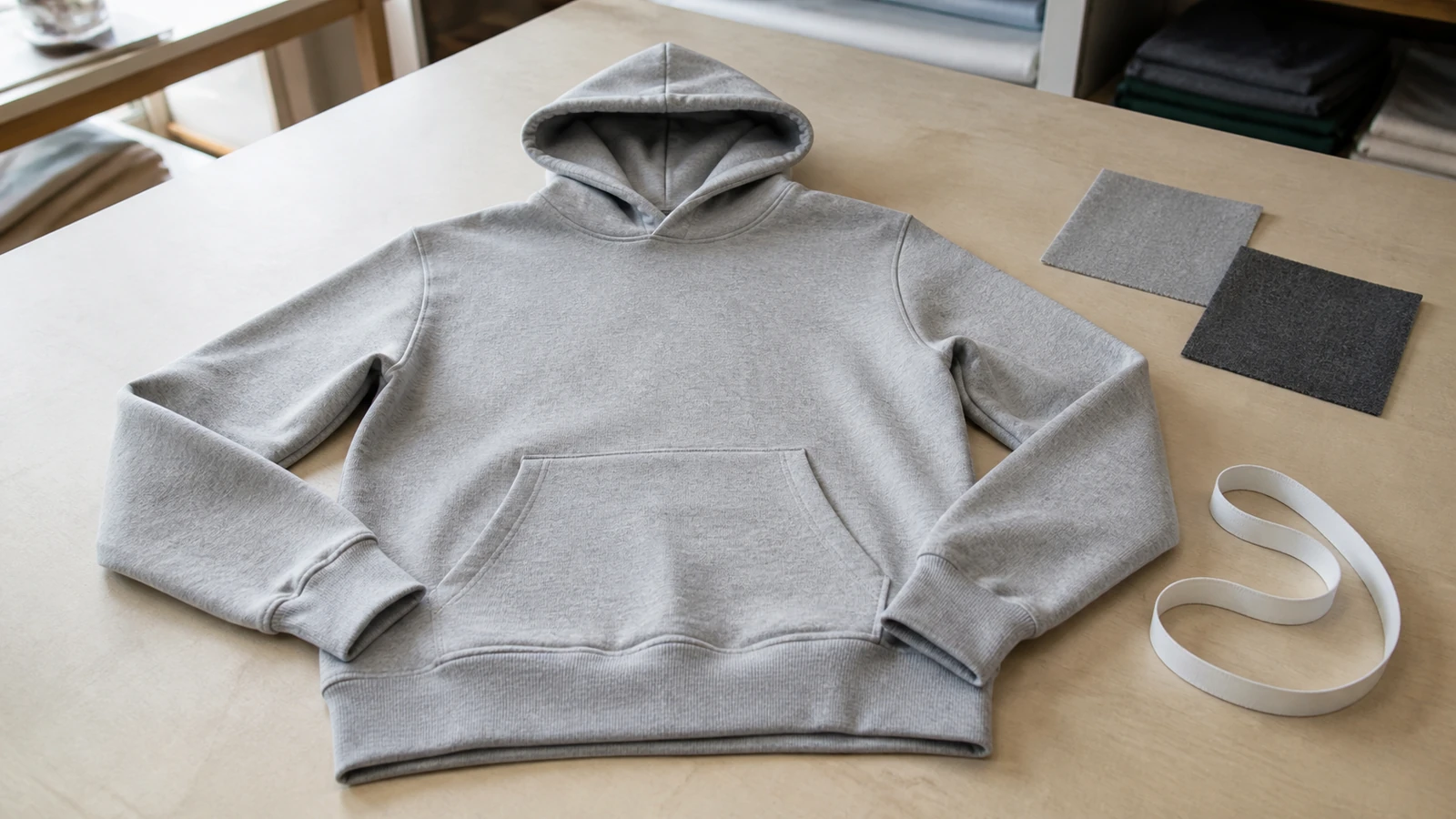
People who are 5’7" can have different chest girths, shoulder breadths, torso lengths, and body shapes, so a rule such as “5’7" equals medium” is not dependable.
ISO 8559-1:2017 describes body measurements used in clothing development, while ISO 8559-2:2025 defines primary and secondary dimension indicators for size designation. Height helps identify length needs, but a top still needs a girth measurement—usually chest—to select its main size.
What Measurements Matter Most for a Hoodie?
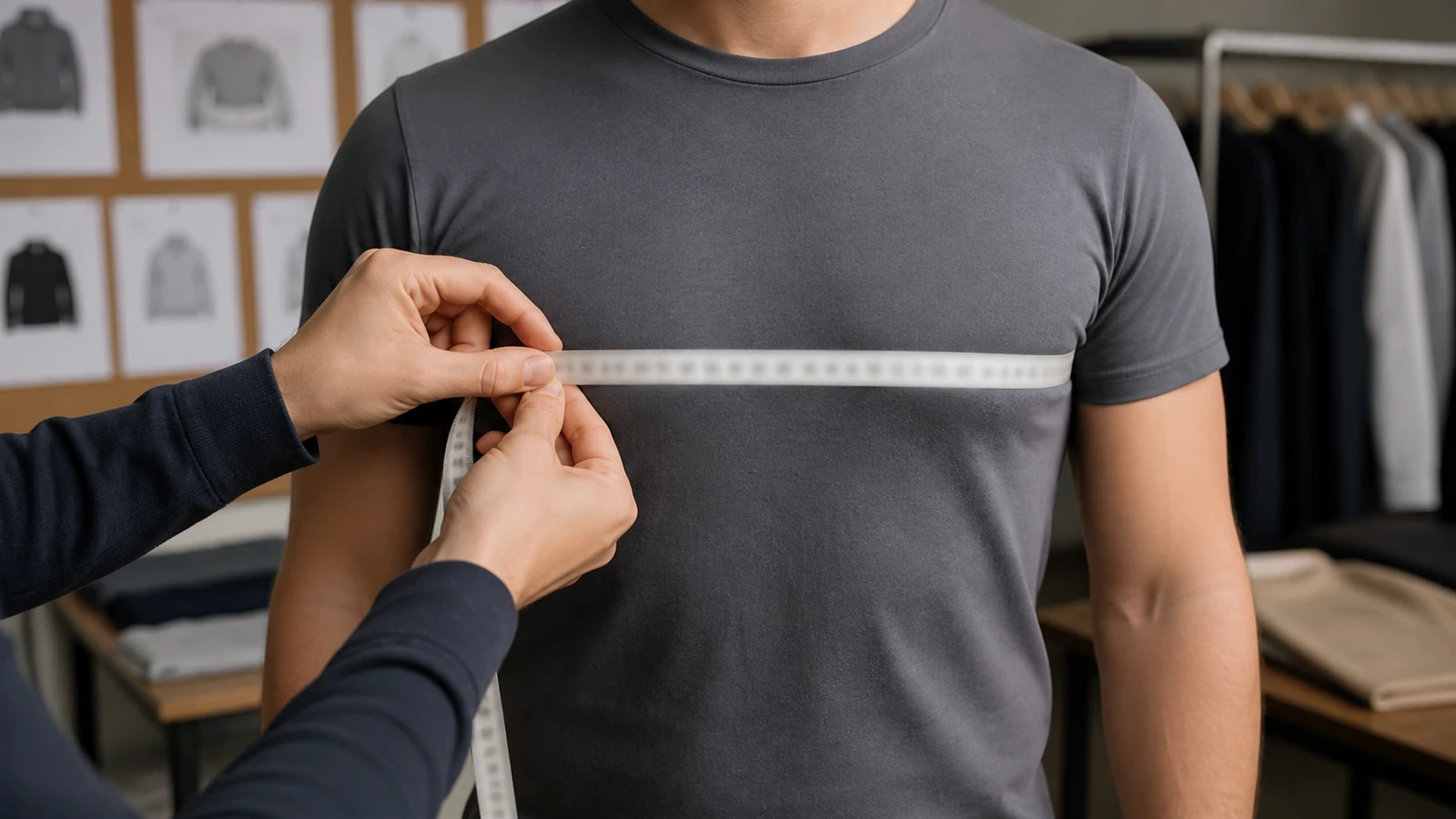
Chest is usually the best starting point. Measure around its fullest part with the tape level, without compressing the body. Both the Nike men’s tops chart and the Under Armour men’s tops guide use chest as a main size input.
Waist and shoulder width can clarify the choice when a hoodie has a close cut or when the wearer has broader shoulders. Body length and sleeve length then help confirm whether the chosen size will sit correctly at the hem and wrist. The adidas men’s tops size guide similarly organizes its alpha sizes around chest, waist, and hip measurements rather than height alone.
What Does 5’7" Mean on Real Hoodie Size Charts?
Nike’s men’s regular tops chart places the 5’7"–6’0" height range across S, M, L, XL, and larger sizes. Chest ranges change while the height band repeats. Nike also advises following chest when chest and waist suggest different sizes.
adidas likewise uses chest, waist, and hip for alpha size, then separates Short, Regular, and Tall/Long lengths. Its Short category includes heights up to 5’9" but still contains multiple alpha sizes. These brand examples show that height and girth answer different fit questions.
Should Someone Who Is 5’7" Choose Small or Medium?
Choose small if your chest falls within that product’s small range and its garment measurements match the fit you want. Choose medium when your chest belongs in the medium range or when the small would not provide enough ease for your shoulders, torso, or planned layers. Because brand ranges differ, the letter is meaningful only beside the chart.
A slim and a broader-chested 5’7" wearer may need different sizes. Between S and M, compare hoodie width and decide whether a closer fit or more ease matters.
Does Body Weight Change the Hoodie Size You Need?
Body weight is background, not a replacement for chest measurement. The same weight can be distributed differently across the chest, waist, and shoulders.
Use weight only as supporting context when a chart specifically requests it. For adult hoodies, chest, garment measurements, and desired ease generally provide a clearer decision than a universal weight-to-size table.
What Size Should You Choose for an Oversized Hoodie at 5’7"?
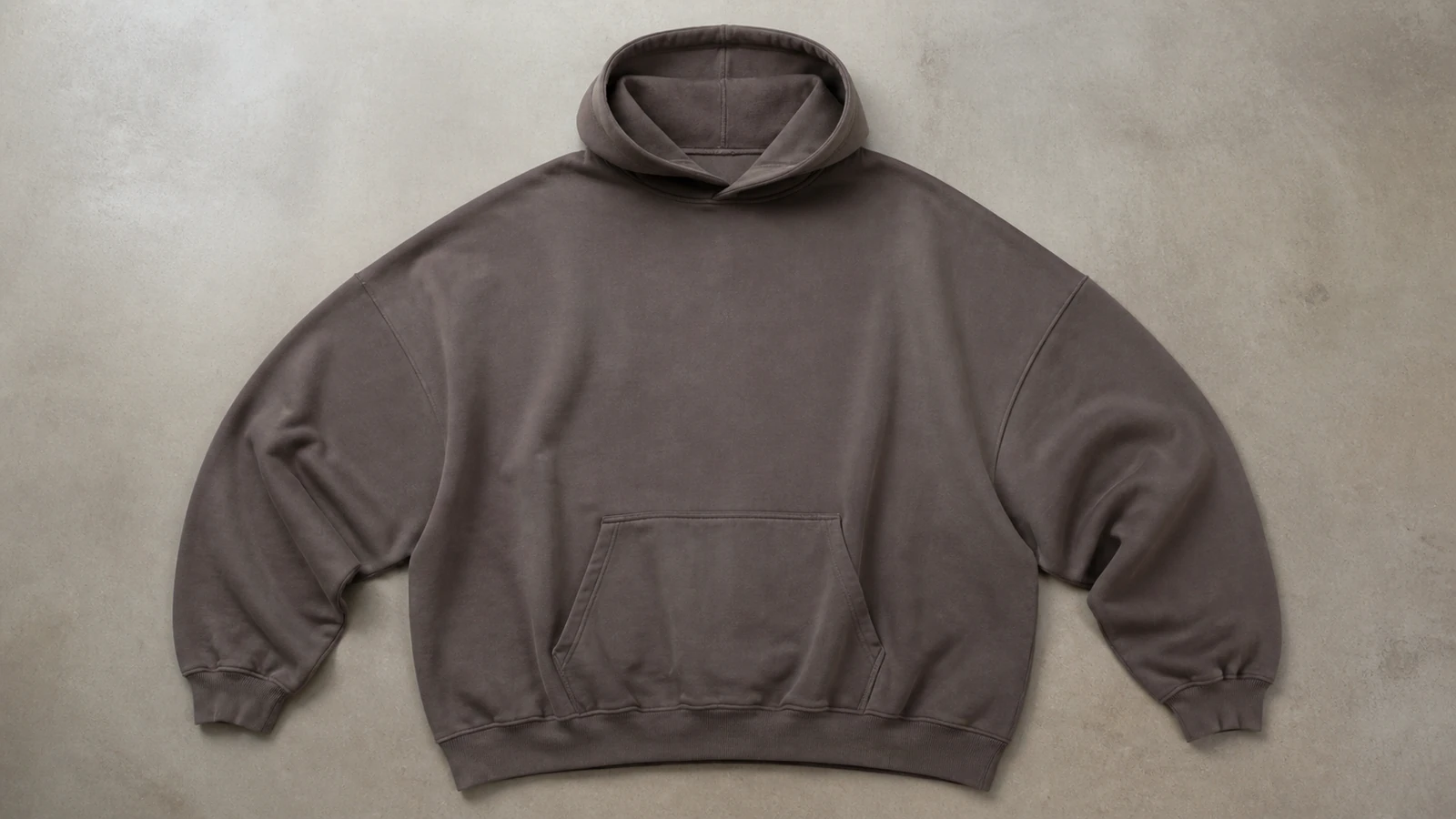
An oversized hoodie does not automatically require sizing up. If the pattern already has a drop shoulder, wide chest, boxy body, and longer sleeves, your normal measured size may deliver the intended silhouette. Under Armour’s fit guide, for example, distinguishes oversized from regular and relaxed fits as a design category rather than a simple height change.
With a regular-fit hoodie, a larger size may add room, but compare width, body length, and sleeve length first. For custom products, the silhouette should come from the pattern and measurements; the custom hoodies page treats fit and size-chart development as separate decisions.
How Should a Hoodie Fit at 5’7"?
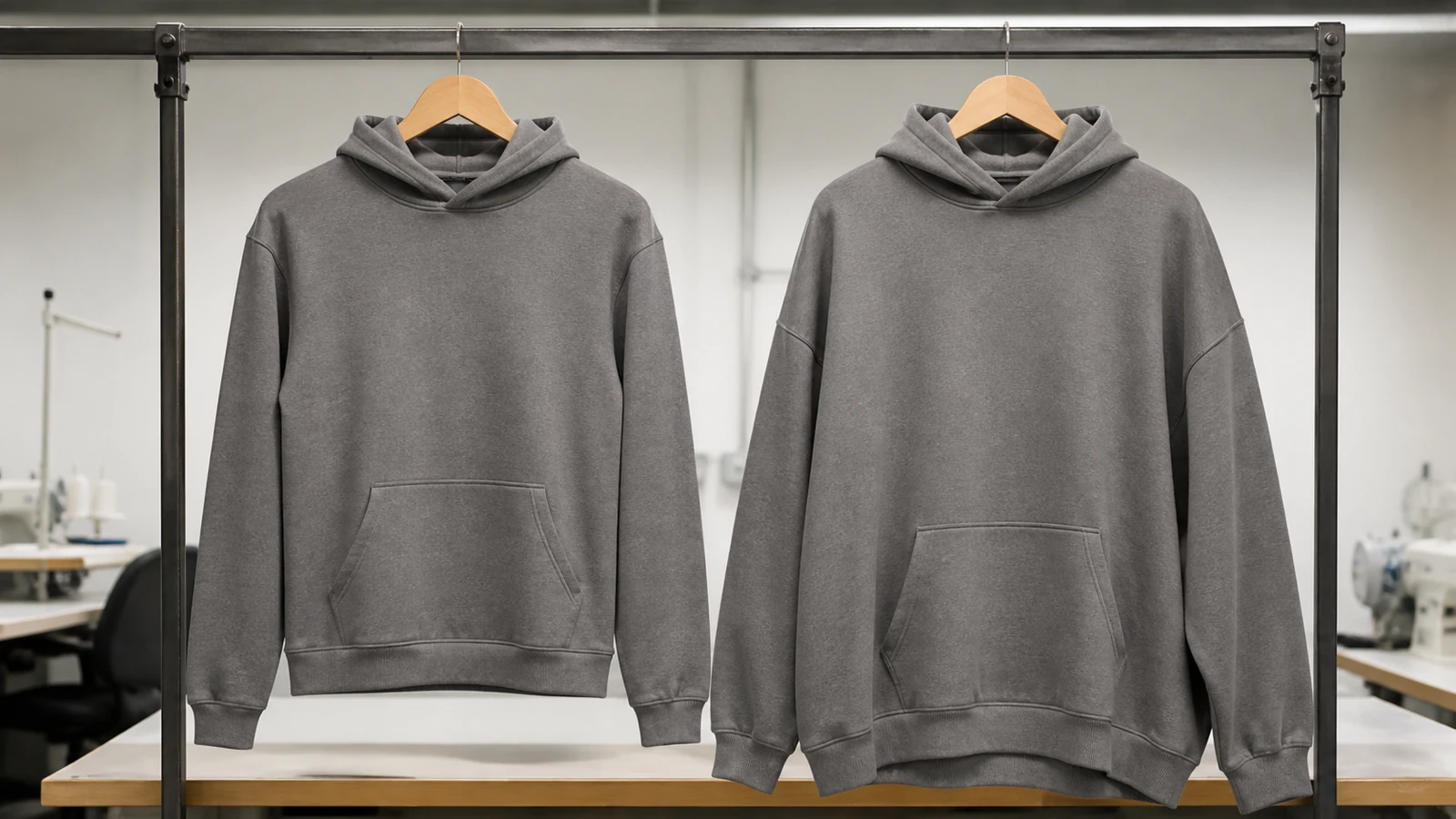
A correct fit depends on the design. In a regular fit, the shoulder should sit near its intended position, the chest should allow comfortable movement, the hem should land where the style calls for it, and the sleeves should not overwhelm the hands. A relaxed hoodie adds ease without necessarily changing the basic proportion.
Oversized designs may move the shoulder outward, widen the body, or lengthen sleeves. Fabric structure also changes how measurements look; a structured fleece can hold shape differently from a softer fabric, as discussed in the fleece hoodie fabric and GSM guide. Judge the intended silhouette, not one universal length.
Should You Measure Your Body or Your Favorite Hoodie?
Use both. Body measurements establish your baseline size, while a well-fitting hoodie gives a practical garment reference. Lay the favorite hoodie flat and record pit-to-pit width, body length, shoulder width, and sleeve length, then compare those numbers with the target product’s garment chart.
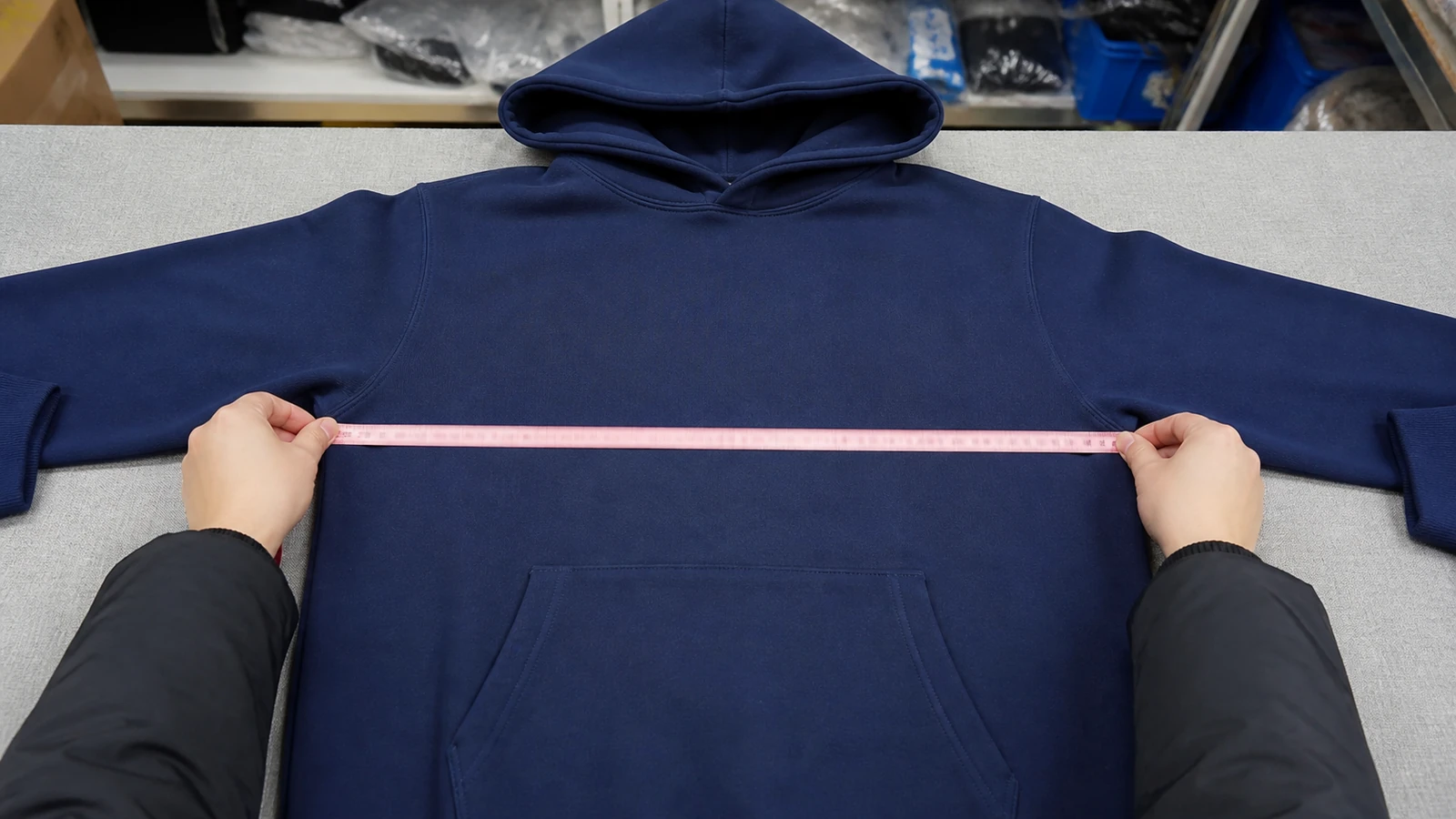
Do not confuse body and garment measurements. Chest is measured around the body; pit-to-pit is a flat width and usually represents half the hoodie chest. The garment also includes ease. Brands can use both references in a custom hoodie development process.
What If You’re Between Two Hoodie Sizes?
When your measurement falls between sizes, decide which compromise better matches the product. The smaller option usually sits closer to the body; the larger option generally provides more ease and space for layering. Nike’s official fit tip uses the same tighter-versus-looser distinction for customers on a size boundary.
Before moving up, confirm that added body and sleeve length are acceptable. Before moving down, confirm that chest and shoulder movement remains comfortable. An already oversized hoodie may not need another size increase.
Why Do Hoodie Sizes Differ Between Brands?
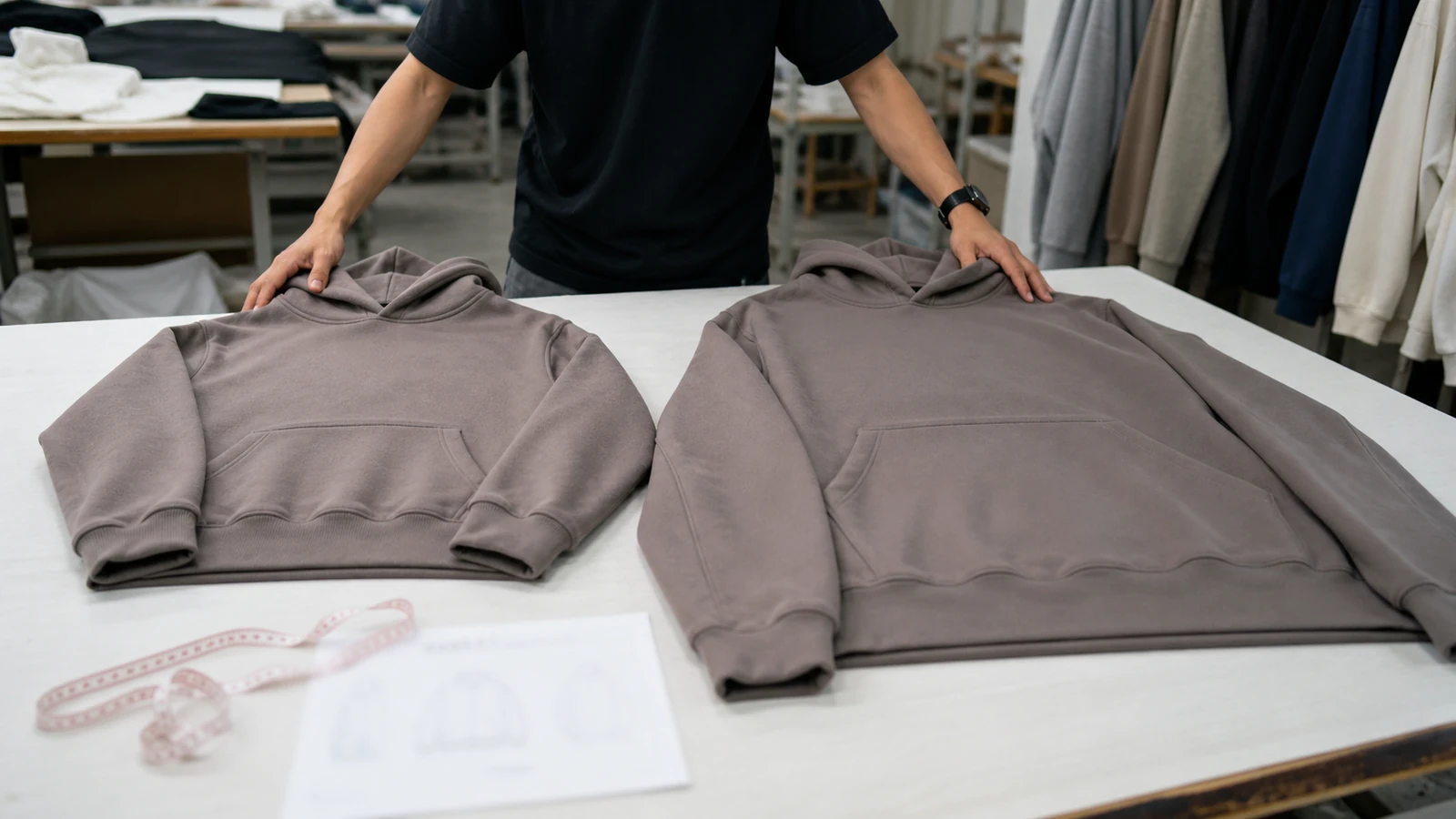
S, M, and L are not identical garment dimensions worldwide. Brands use different blocks, ease, target markets, grading, and silhouettes, so a medium in one program may resemble another brand’s small or large.
ISO 8559-2:2025 bases size designation on body dimensions, but the garment itself must still be designed for a particular style, cut, and wearing position. That is why the specific brand chart and product measurements remain essential. For a private-label collection, garment measurement and size grading can translate target-customer measurements into a controlled size range rather than copying another brand’s letter labels.
Frequently Asked Questions
Is 5’7" considered short for hoodie sizing?
It depends on the chart and market. Some brands include 5’7" in their regular-height range, while others offer a Short length category that also covers this height. That difference mainly affects body and sleeve length. It still does not decide the alpha size, which should be checked against chest and other body measurements.
Can a 5’7" person wear a large hoodie?
Yes, if the person’s chest measurement belongs in that brand’s large range or if the garment measurements create the desired loose silhouette. A large may also be chosen for layering, but it can add sleeve and body length. Check those dimensions before assuming the larger letter will look proportionate.
Should I size up for an oversized hoodie?
Not automatically. A purpose-built oversized hoodie may already include a wider chest, drop shoulders, a boxier body, and longer sleeves in the measured size. Size up only after comparing its garment dimensions with a hoodie you like and confirming that the additional length and volume support the intended look.
How do I measure my chest for a hoodie?
Wrap a flexible tape around the fullest part of your chest, pass it under the arms, and keep it level around the body. Stand naturally and avoid pulling the tape tight. Record the body circumference, then compare it with the same type of measurement—not a flat garment width—on the product chart.
What if the sleeves are too long but the chest fits?
Keep the chest fit as the main size signal, then look for a Short length, a different fit block, or a style with shorter sleeves. Sizing down may shorten the garment but can also make the chest and shoulders too tight. For brand development, sleeve length can be adjusted separately during fit and grading work.
Final Takeaway
If you’re 5’7", do not choose a hoodie size from height alone. Measure your chest first, check the chart for the exact product, and compare garment measurements when they are available. Use height mainly to evaluate sleeve and body length.
Then decide whether the hoodie should fit regular, relaxed, oversized, or boxy. That sequence gives a more reliable S, M, or L decision than any one-to-one height chart.
Developing a Custom Hoodie Size Range?
Buying one hoodie and developing a branded size range are different tasks. If you are creating a hoodie for your own market, YECHENG APPAREL can support measurement, grading, fit, and sample discussions as part of product development. Share your target customer and fit direction when you contact YECHENG APPAREL.