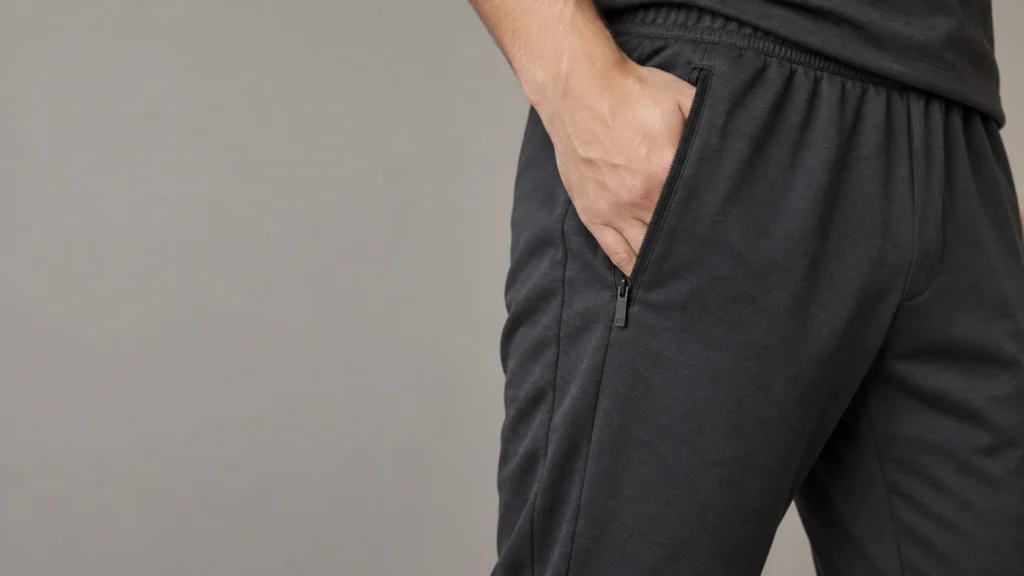
A sportswear brand can approve the specified zipper length and still receive tracksuit pants with pockets that are awkward to use. The zipper may be the right trim, yet its stops, slider, stitching and position leave less room for a hand than the number in the trim list suggests. To judge a pocket, review the opening on the finished pants as well as the zipper ordered for them.
Specify two lengths, not one
The zipper ordering length describes the component supplied. The effective opening is the space available when that zipper is installed and fully open. Coats explains that the effective opening is shorter because of the slider and end components. Its example says an 18 cm effective opening needs at least a 19 cm zipper and may need a longer one, depending on zipper size and garment construction. That is an example from Coats, not a standard dimension for tracksuit pockets.
Put both dimensions in the development specification. Record the supplier’s zipper type and ordering length in the trim list. Record the brand’s required clear opening on the assembled pocket in the garment specification. Define where to measure that clear opening, with the slider fully moved aside and the pocket mouth in its normal finished position. If the opening falls short on the sample, the team can change the zipper length, construction or placement before approval.
This distinction matters especially on a compact pocket. A small loss of access at the ends can make a visible difference to whether someone can insert or withdraw a hand. Coats says pockets should be accessible if they are presented as usable pockets and cautions that an opening that is too short can hurt fingers or hands in a tight-fitting application. The buyer’s acceptance decision should therefore include use, not just a ruler check on loose trim. See Coats’ pocket guidance.
Compare pockets in the finished garment
Start with the intended job. Is the pocket meant for quick hand access, a small item, or both? Choose a representative item if storage matters, then use the same item and review method for each sample. This makes two zipper options easier to compare than an undefined request for a “functional pocket.”
Next, check the pants on a wearer or fit form at the intended fit. Open the zipper completely. Can a hand enter and leave without scraping the ends or pulling the pocket mouth out of shape? Can the wearer reach the puller without twisting the hip or lifting the fabric? Repeat while standing, sitting and moving through the positions relevant to the product. A pocket that works on a flat table may feel different when the waistband, hip and thigh are under tension.
Compare the clear opening with the pocket bag. A long opening adds little value if the bag is too shallow for the intended item, narrows immediately below the mouth, or shifts so that access is blocked. Conversely, a roomy bag does not rescue an opening that is hard to enter. Review the bag’s depth, entry angle, attachment and outline on the worn sample. Check whether an item can be removed without catching at the zipper end. These are proposed sample checks; their acceptance limits should come from the brand’s intended use.
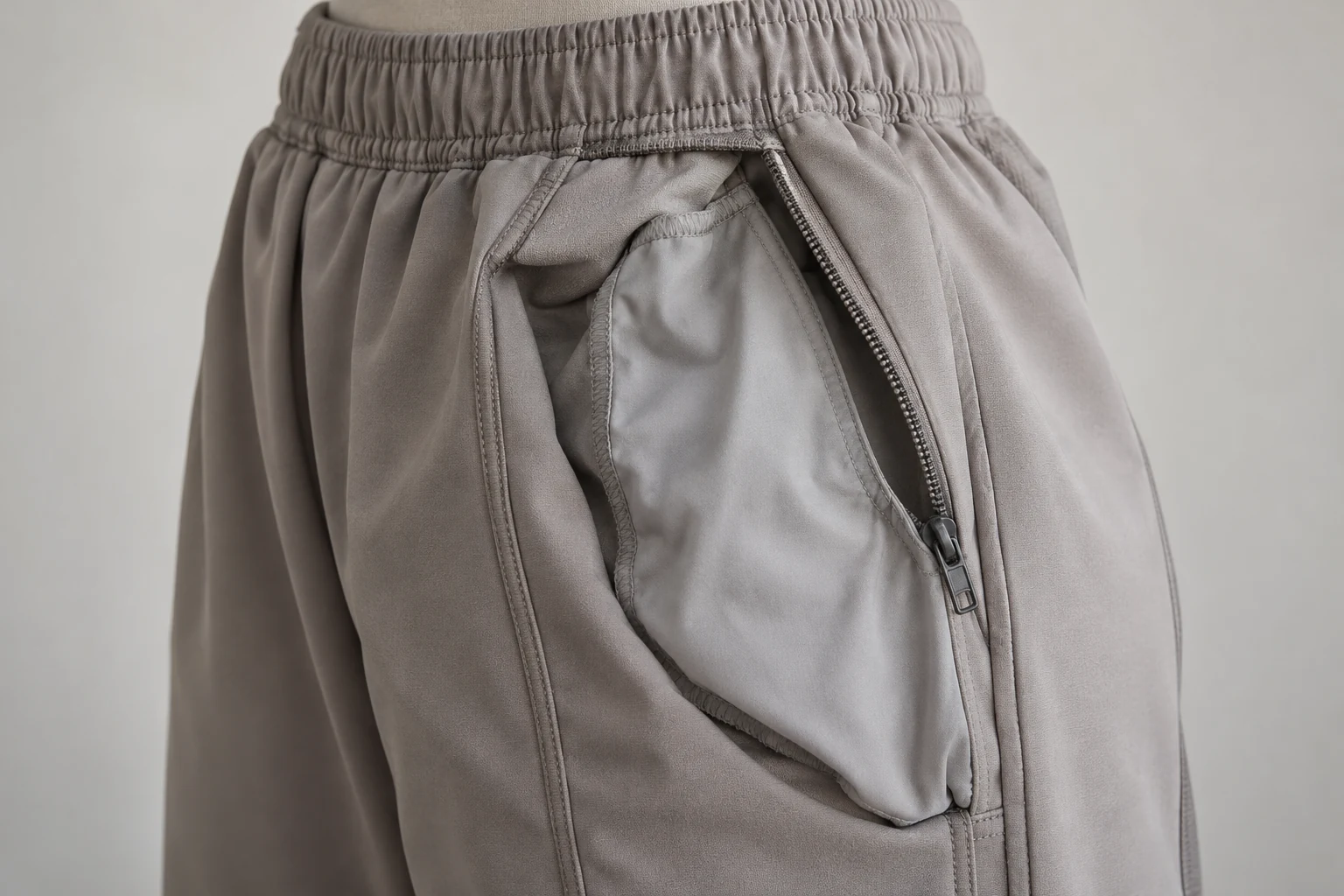
Check placement and slider travel
Pocket location changes the way the opening works. For a side pocket, look at its distance from the waistband and side seam, its angle, and whether the puller remains easy to grasp. Check both sides of the pants. A mirrored drawing can still produce different handling if the closures, panels or construction differ.
Run each slider through its full travel on the assembled garment. Watch where stitching, seam allowances and pocket-bag layers sit near the chain. Coats’ guidance for its S StitchLine zipper calls for clearance so that the slider passes smoothly and flags thick cross-seams as possible trouble points. That page describes a particular Coats product; its stated clearance figure should not be copied as a universal tracksuit-pocket rule. The useful review question is whether the selected zipper runs cleanly in this construction.
A concealed pocket opening can look neat while hiding a difficult puller or compressing the hand entry. An exposed zipper may be easier to see and grip but may change the intended appearance. Compare these alternatives on actual samples, using the same access and slider checks. Appearance, access and bulk around the hip should be approved together.
Write an acceptance check a supplier can repeat
A purchase specification becomes clearer when it names the sample condition and the decision method. For example: measure the clear pocket opening on the finished, fully opened pocket; verify that the selected test item passes in and out; and check that the intended wearer can reach the puller and use the pocket at the approved fit. The brand can add its own minimum opening and tolerances after reviewing samples. No single number suits every pocket position, pant fit or use.
Record a photo of the approved pocket while open, a close view of its ends and puller, and the corresponding trim reference. If the pants will receive a wash or other finish, review the pocket after that planned process as well. The goal is for the approval reference to show the finished result that production should follow, rather than only the loose zipper supplied before assembly.
Use this checklist when comparing samples:
- State what the pocket is intended to hold and how often it should be accessed.
- Identify the zipper type, supplier reference, puller and ordering length.
- Specify and measure the clear opening on the finished pocket.
- Check hand access and removal of the representative item at the intended fit.
- Check the pocket bag’s usable space, angle and attachment.
- Run the slider end to end and inspect nearby seams and fabric for interference.
- Review left and right pockets, plus appearance and bulk when worn.
- Record the approved sample and any agreed measurement tolerance.
A short zipper is not automatically a poor choice, and a longer zipper does not automatically solve an awkward pocket. The correct choice is the construction that meets the brand’s agreed appearance and use criteria on the finished pants. For a coordinated range, place those decisions alongside the broader custom tracksuit specification.
If you are developing tracksuit pants, send your fit reference, intended pocket use, zipper preference and any representative item or access target with your quote request. Those details make the requested pocket easier to describe and evaluate during development.