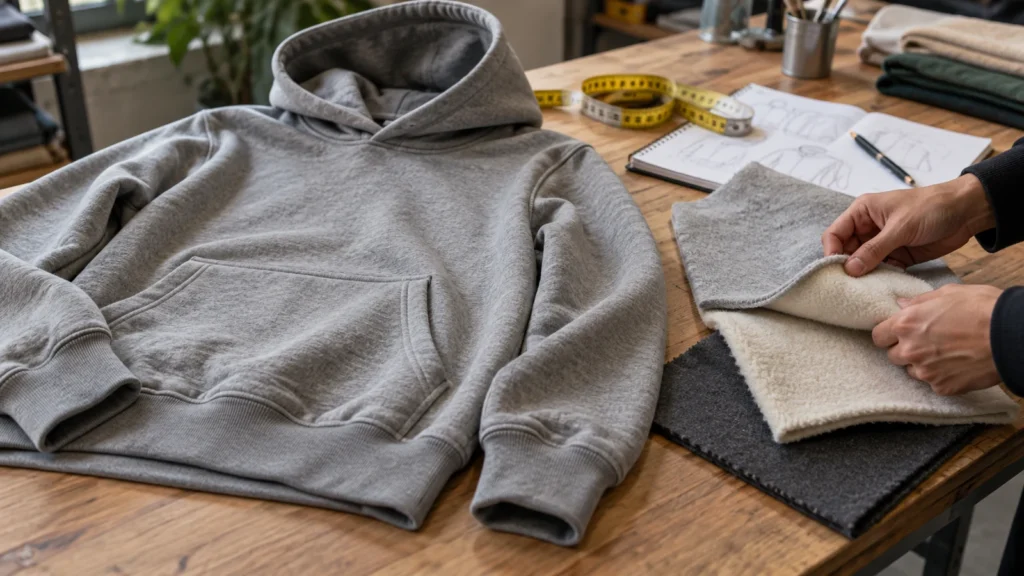
Two hoodies can share a similar fiber blend and measured weight yet hang and feel different. One reason is the yarn architecture inside the sweatshirt fabric: a 2-end fleece and a 3-end fleece do not build their face and back in exactly the same way. That difference can influence fullness, surface consistency and the way a garment responds to sewing, decoration and washing.
The terms are not quality grades. A poorly finished 3-end fabric is not automatically preferable to a well-developed 2-end fabric, and neither term tells a brand the finished garment weight or cotton content. For a custom hoodie, the useful question is which construction supports the intended silhouette, hand feel, print and production standard. This guide explains the technical distinction and the sample checks that turn a fabric name into a usable specification.
What Is the Main Difference Between 2-End and 3-End Fleece?
A 2-end fleece uses two yarn systems to form its technical face and back floats. A 3-end fleece uses three: a face or ground yarn, a tie-in yarn and a pile yarn. CottonWorks' explanation of single-knit fleece structures describes the three-end arrangement as particularly full and structurally stable. In each case, brushing or napping can raise the backing yarns into a soft interior.
2-End vs 3-End Fleece at a Glance
| Feature | 2-End Fleece | 3-End Fleece |
|---|---|---|
| Yarn architecture | Face yarn and backing float yarn | Face/ground, tie-in and pile yarns |
| Typical fullness | Can be compact or substantial | Often fuller in comparable constructions |
| Structural tendency | Depends strongly on yarn and knit settings | Third yarn system can support a stable, full build |
| Back surface | Floats may remain visible or be napped | Pile-side loops are typically napped for fleece |
| Weight | No fixed GSM | No fixed GSM |
| Print consideration | Check the actual face and blend | Check the actual face and blend |
| Hoodie use | Useful across casual and less bulky directions | Useful when a fuller body is desired |
| Approval priority | Check face, back, recovery and wash response | Check face, pile, recovery and wash response |
How Is 2-End Fleece Constructed?
In the 2-end arrangement, one yarn knits a jersey-like technical face while another produces floats on the technical back. Those floats can remain un-napped, or they can be brushed to raise fibers and create a fleecy interior. CottonWorks notes that the backing yarn chosen for napping often has a coarser, lower-twist character than the face yarn because it raises more readily. That is a common design approach, not a mandatory yarn recipe.
An un-napped 2-end fleece is often called French terry. The label refers to a related construction and finishing choice; it does not mean the fabric is woven toweling. For the broader finished-fabric comparison, see the existing French terry versus fleece hoodie guide. Here the decision is how the two yarn systems affect the intended hoodie, whether or not the back is subsequently brushed.
How Is 3-End Fleece Constructed?
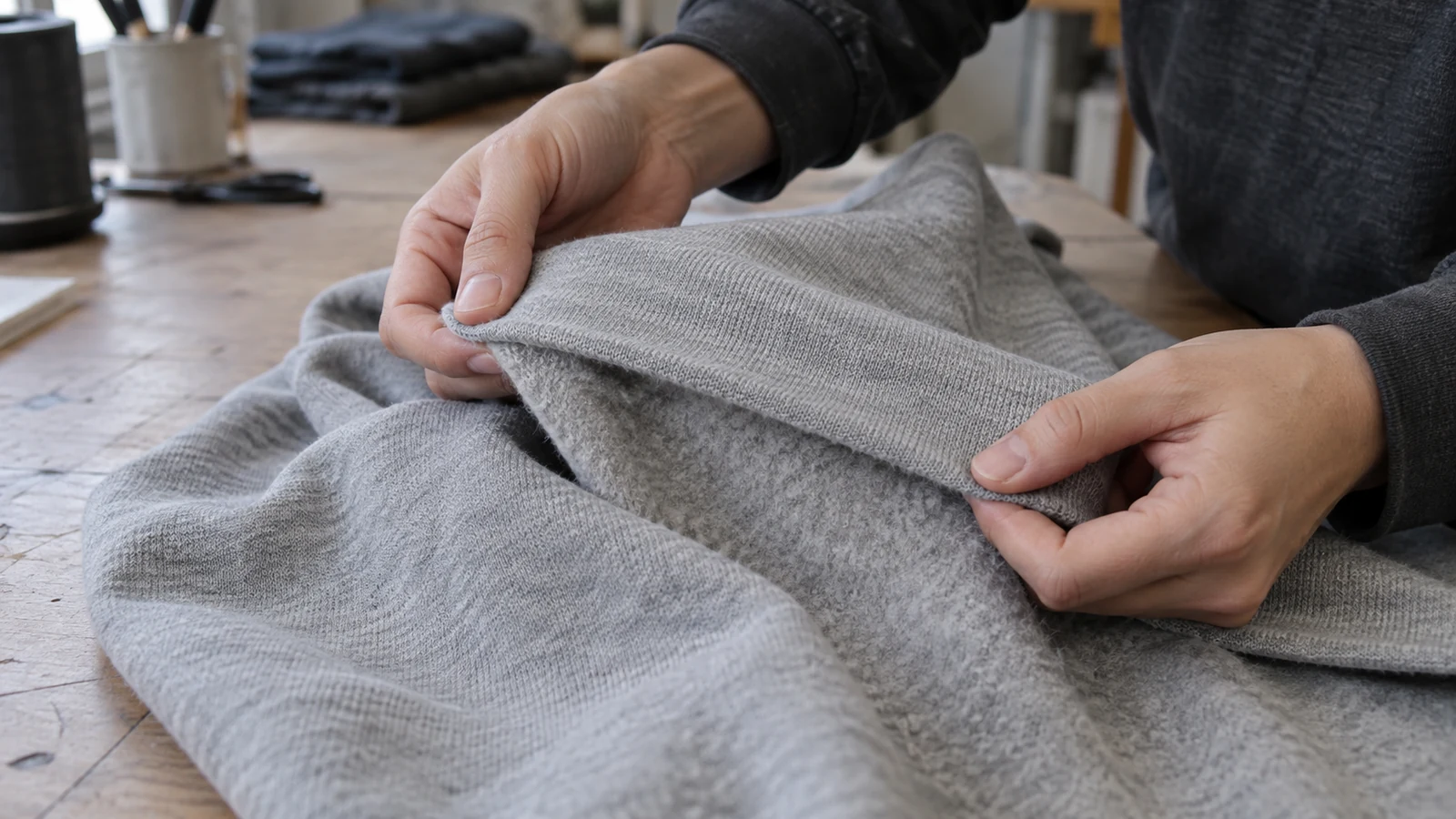
Three-end fleece separates face or ground, tie-in and pile yarn functions. The additional tie-in system helps secure the structure while the pile yarn supplies the technical-back surface that can be napped. CottonWorks characterizes this family as fuller and more stable than its two-yarn counterpart. That describes a construction tendency under comparable conditions, not a guarantee that every 3-end mill fabric will outperform every 2-end option.
The term three-end counts yarn systems participating in the fabric architecture. It is not the same as a three-ply yarn, which describes strands combined within a yarn. A development brief should therefore identify both the knit construction and the relevant yarn specifications rather than using either term as shorthand for the other.
Is 3-End Fleece Always Heavier Than 2-End Fleece?
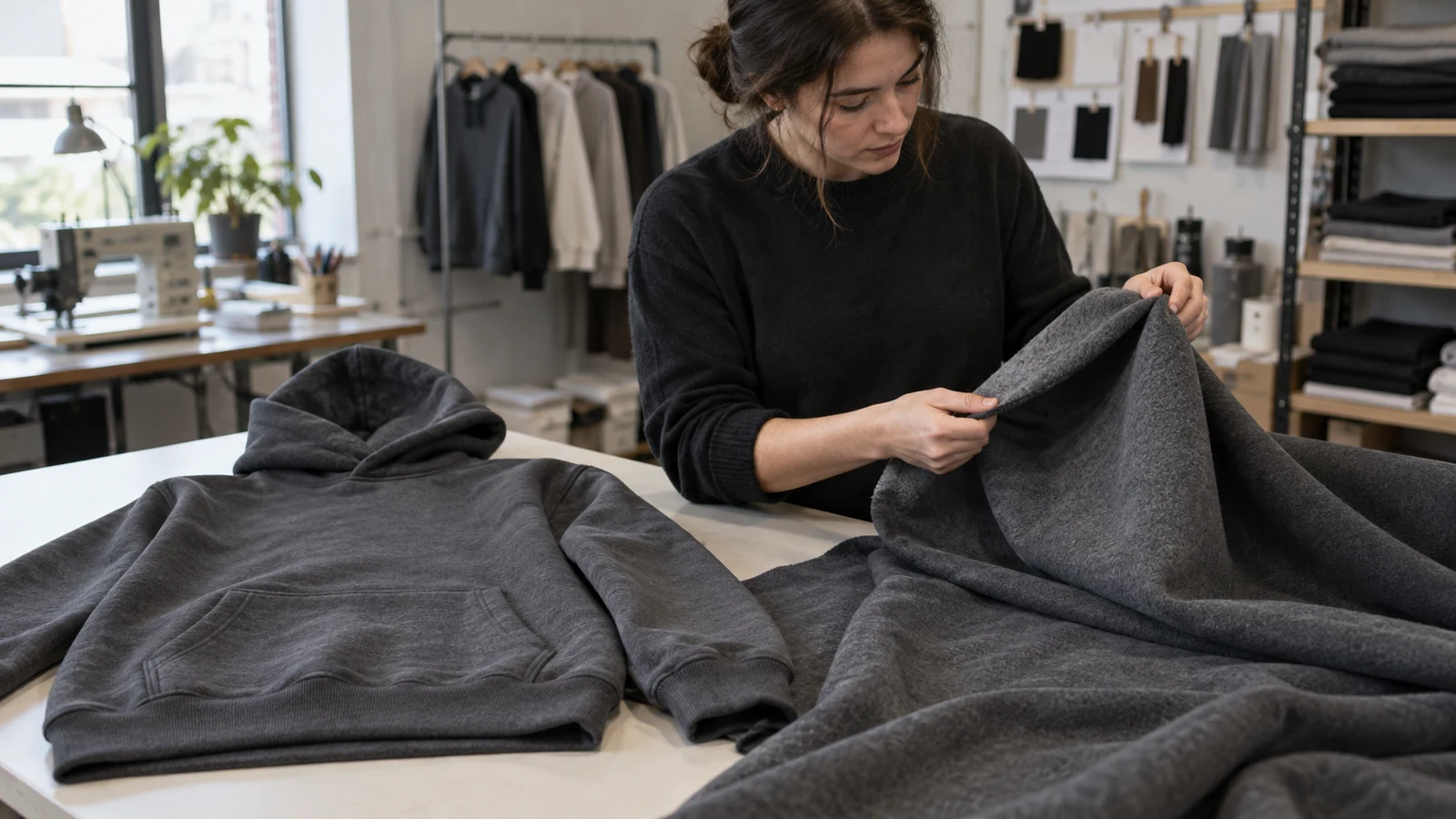
No. GSM measures fabric mass per square meter; it is not encoded by the number of yarn systems. Yarn sizes, stitch length, density, fiber blend, pile design and finishing can all change the measured value. Three-end fabric can look loftier without that visual bulk proving a particular GSM, while a dense 2-end construction can be substantial.
As a market example rather than an industry standard, the current Fairway Fabrics fleece and French terry catalog lists multiple three-end weights and also shows two-end offerings with different compositions. Its product mix illustrates variability, not a required range for all suppliers. If the main question is how to specify weight, the existing fleece hoodie fabric and GSM guide covers that broader decision. On this project, request measured weight for each proposed construction.
Which Construction Gives a Smoother Hoodie Face?
Neither end count alone guarantees a smoother face. Three-end architecture allows face, tie and pile functions to be specified separately, which can help a developer seek a controlled face. A 2-end fabric may also have a clean jersey-like outer surface. Face-yarn fineness, hairiness, knit uniformity, finishing and handling matter more to visible smoothness than the numeric label by itself.
Is 3-End Fleece Better for Screen Printing and DTG?
Potentially, but not automatically. A stable, even face can help decoration, yet a 3-end label does not promise one. CottonWorks' textile-printing guidance stresses surface smoothness, cleanliness, uniform preparation, fiber and yarn behavior. Those are properties to verify on the actual material. The fiber used at the face also matters to the chosen ink or transfer system; it cannot be inferred from “three-end.”
For screen printing or DTG, approve artwork on the selected color and fabric after the intended finish. Look for detail clarity, hand feel, distortion and wash response. Polyester-containing faces or blends may need extra attention to heat and color behavior. The related DTF on cotton versus polyester guide explains that separate substrate question; it does not establish a universal printing winner between two- and three-end fleece.
Which Construction Feels Warmer?
A fuller, loftier three-end option may support a warmer-feeling hoodie, especially when its back is napped. But “3-end” is not a thermal rating. Actual warmth depends on thickness, measured weight, fiber, brushing, trapped air, fit and how the garment is layered. A substantial 2-end fabric can be warmer than a light 3-end fabric.
How Does 2-End vs 3-End Fleece Change Hoodie Drape?
The fuller body often associated with three-end fleece can give an oversized or structured hoodie a more substantial hang. A less bulky two-end option may suit a cleaner zip-up front or a casual sweatshirt with easier movement. These are development directions, not fixed outcomes: a heavy two-end fabric may stand away from the body, and a softer three-end may drape gently.
Does 3-End Fleece Pill Less?
Not necessarily. Pilling and fuzzing depend on fiber type and dimensions, yarn and knit construction, finishing, laundering and wear. The active ASTM D3512/D3512M-22 pilling method explicitly treats surface change as a multi-factor property. It does not assign an automatic performance grade to either end count.
Assess the proposed face and napped back separately where relevant. A pile may change in loft or develop fuzz without displaying the same behavior as the outer face. Specify the testing approach and acceptable appearance for the actual project; do not declare every two-end fabric inferior or every three-end fabric pill-resistant. Keep a production swatch so later lots can be reviewed against an approved visual reference.
Which Is More Stable After Washing?
Construction influences a fabric's starting behavior, but it does not decide finished shrinkage by itself. Fiber, stitch density, relaxation, brushing and later finishing also matter. AATCC TM135-2025 addresses fabric length and width changes after home laundering; AATCC TM150-2025 addresses dimensional changes of garments. These are relevant methods, not universal acceptance thresholds.
Measure the intended fabric and a finished hoodie through an agreed care procedure. Check body length, chest width, sleeve length, skew or seam twist when relevant, and changes in hand or pile appearance. A fabric can test acceptably in isolation yet create fit problems once rib, pockets, hood and decoration are assembled. Approval should follow the actual planned laundering and drying route.
When Does 2-End Fleece Make Sense for Hoodies?
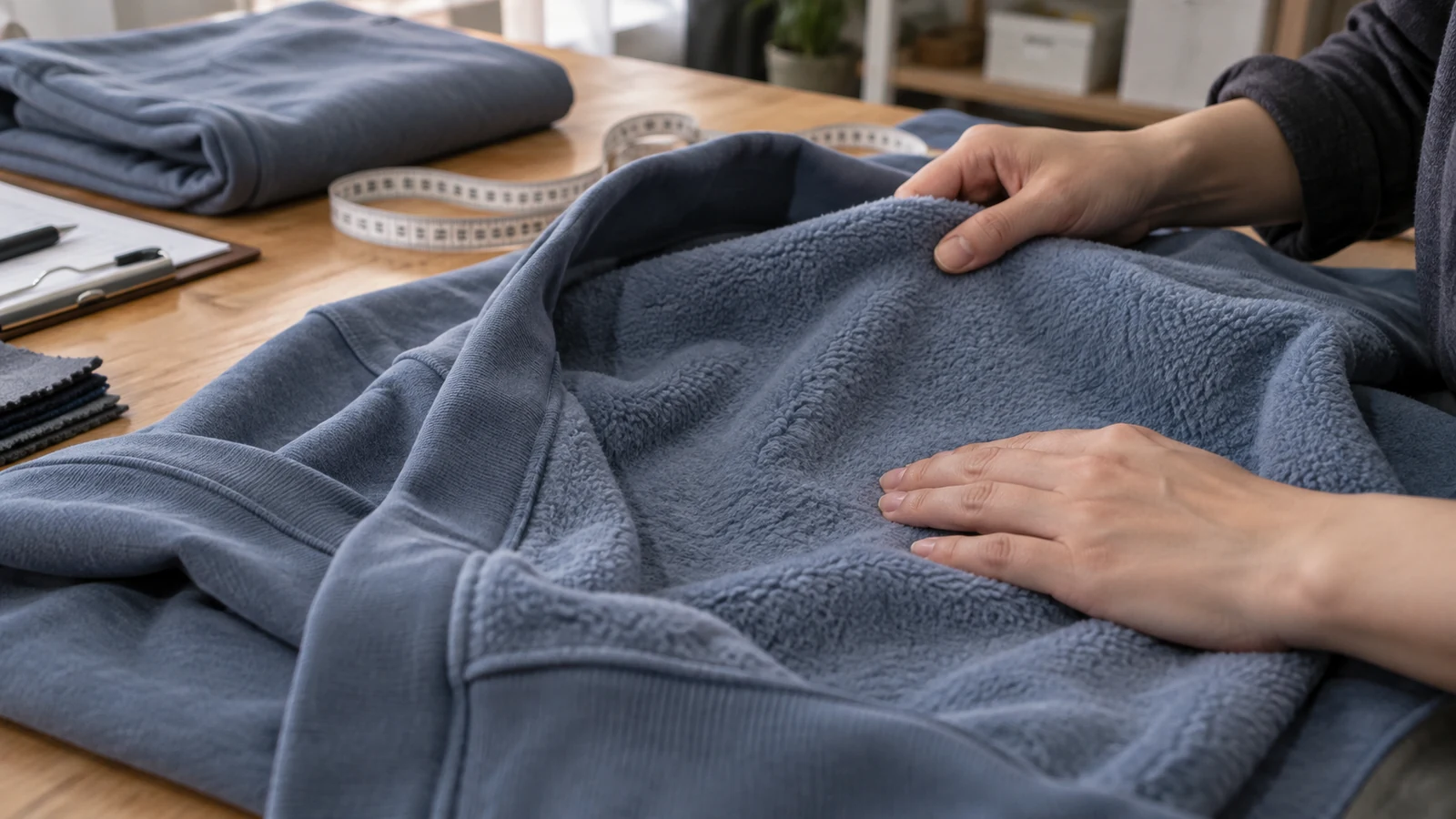
Two-end construction is a credible option when the approved swatch delivers the intended body without unnecessary fullness. That may be a midweight pullover, a less bulky full-zip hoodie, or a coordinated casual set. It can also be developed as a heavier fabric; “two-end” is not shorthand for lightweight or low quality.
Consider the relationship between the back yarn and the outer face. If brushing is specified, define the desired nap and inner touch. If loops remain visible, describe that choice clearly. Then review pattern balance, pocket placement, hood weight and garment recovery on a custom hoodie sample. The approval decision should rest on the garment's performance and appearance, not on an assumption that a simpler architecture is a budget substitute.
When Does 3-End Fleece Make Sense for Hoodies?
Three-end construction makes sense when the fuller, stable yarn arrangement helps deliver a particular garment body or back-surface design. Streetwear hoodies with a substantial hand are one possible use, as are products whose face and pile yarn functions need deliberate control. The actual weight, fiber composition and degree of napping must still be specified.
What About Sweatpants and Matching Sets?
Matching sets need more than matching fabric names. Hoodie and pant panels should agree in shade, surface texture, hand, perceived weight and post-wash measurements. Two-end and three-end materials can sometimes be combined in one range, but the difference may become obvious under daylight or after laundering. Even fabrics described with the same fiber percentages can age differently because yarn systems and finishes differ.
For a custom tracksuit program, request swatches in the intended color and make samples of both pieces. Compare them together after the proposed decoration and wash. Define whether an exact visual match or a coordinated contrast is the design intent. Keep separate approved specifications if the top and pants use different constructions.
Does 3-End Fleece Mean Higher Quality?
No. Three-end identifies a construction architecture, not a quality certification. Yarn quality, knit consistency, surface appearance, color consistency, finishing, seam workmanship and tested dimensional stability all influence the final garment. A carefully engineered two-end fabric can outperform a poorly controlled three-end fabric for a given hoodie brief.
How Should a Brand Choose Between 2-End and 3-End Fleece?
Start with the product, not the yarn count. Define whether it is a pullover, zip-up or coordinated set; the target season, silhouette and hand; desired fiber composition and measured weight; face appearance, inner nap and planned decoration; and the intended care route. A target price can be part of the business brief, but it does not replace physical performance requirements.
Then request identified swatches and make comparable samples with the same key pattern and decoration. Record each fabric's construction, supplier reference, blend, weight, finish, color and test results. Choose the material that best meets the approved garment standard. A short instruction such as “use premium 3-end fleece” leaves too much unresolved for reliable repeat production.
What Should Be Tested Before Bulk Production?
Test the production-candidate material in the form in which it will be sold. At minimum, the review should cover measured fabric weight, face and back appearance, pilling or fuzzing behavior, fabric and garment dimensional change, color consistency, print compatibility and seam performance. Review a finished sample after its intended wash, not only a fresh swatch.
Use relevant test methods and project-specific acceptance criteria. ASTM's pilling method and the AATCC fabric/garment laundering methods above provide defined ways to investigate particular risks, but they do not prescribe one pass grade for every brand. Coats' sweatshirt sewing guidance also illustrates why seam strength and elongation should be considered with the actual knit. Its thread and stitch suggestions are guidance, not compulsory settings for all hoodies.
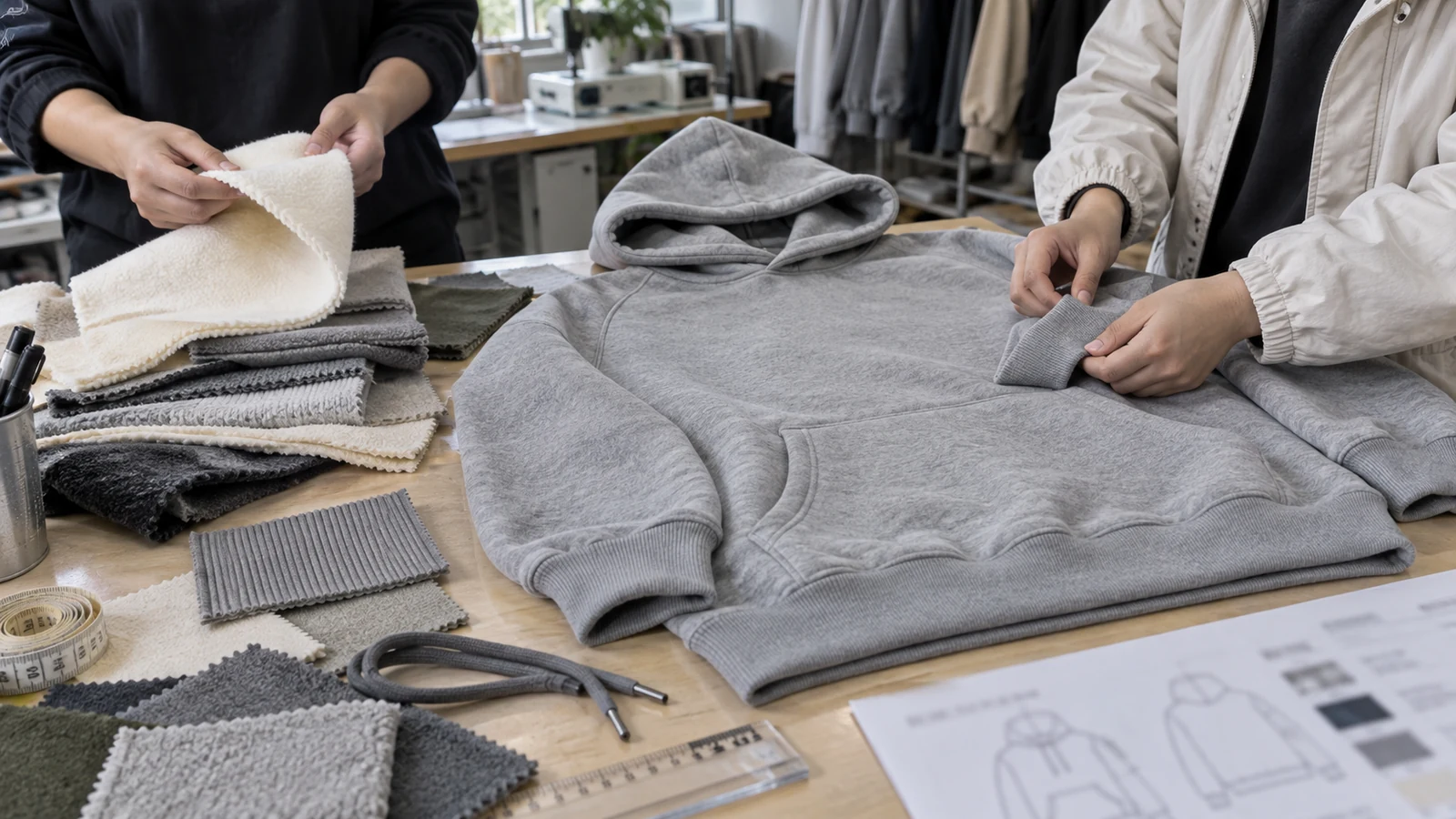
The Simple Choice: 2-End or 3-End Fleece?
Two-end fleece builds face and back from two yarn systems and can support many casual hoodie directions, with an un-napped or brushed back. Three-end adds a tie-in system between face and pile functions and is generally associated with a fuller, more stable construction. Neither is automatically heavier, warmer, more printable or more premium.
Specify the fiber, yarn and knit structure, measured weight, face, back finish, color and decoration alongside the end count. Then compare real swatches and finished samples after the intended care procedure. That process turns a technical label into a fabric choice a brand can defend and reproduce.
Choosing Fleece for a Custom Hoodie?
For custom hoodie development, review two-end or three-end architecture together with GSM, fiber content, brushing, outer-face quality and sample performance. YECHENG APPAREL can discuss the fabric direction and sampling requirements for your brand. Contact YECHENG APPAREL with your design brief and the properties you want the finished hoodie to achieve.