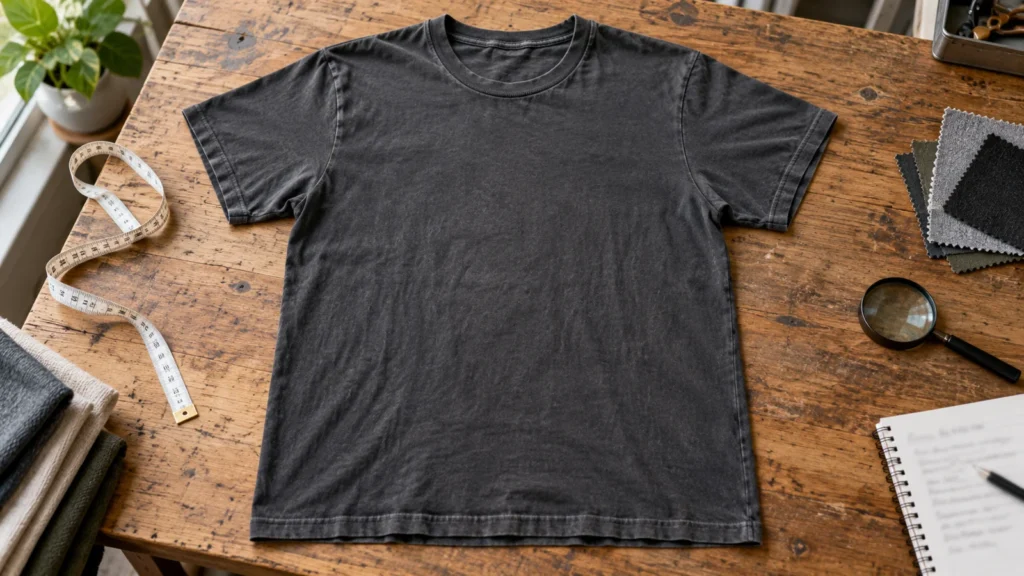
A faded graphic, cracked-looking print and soft cotton can make a T-shirt look old. But do they make it vintage? A new garment can be washed, printed and finished to resemble a shirt worn for decades. Conversely, a carefully stored older shirt may have little visible damage. Appearance is useful evidence, not a birth certificate.
The stronger question is whether the shirt was actually made in the earlier period it appears to represent. That takes several clues together: its ownership history, labels, construction, fabric, graphic, wear and the cultural context of the design. Some clues narrow the possibilities; none alone settles the date. This guide explains how to evaluate them without treating a single stitch, an RN number or a faded collar as a secret authentication code. It also separates authentic vintage clothing from a new, intentionally vintage-inspired product—a distinction that matters to collectors and clothing brands alike.
What Actually Makes a T-Shirt Vintage?
A genuinely vintage T-shirt was produced in an earlier era. The Cambridge Dictionary’s clothing sense of “vintage” describes clothing that is not new and represents a style from the past. Age conventions vary; there is no universal legal cutoff.
Age and historical context come first. A faded surface, old-looking tag or single-stitched hem may support an assessment, but none proves when the shirt was made. A clean older piece may be authentic; a distressed new piece may be a convincing reproduction.
Authentic Vintage vs Vintage-Inspired T-Shirts
Authentic vintage means the physical garment is from the past. Vintage-inspired means a modern garment deliberately evokes an earlier one through fit, color, fabric, print or finishing. One carries historical age; the other offers a designed aesthetic.
The distinction is not just marketing semantics. An AATCC Review technical article on intentional color loss describes garment washing used to simulate weathering over time. Its worked example concerns washed bottoms, not a universal T-shirt recipe, but it establishes the relevant point: modern processing can intentionally produce aged-looking color and abrasion. Our separate guide on how to make a vintage T-shirt covers that product-development process; this guide concerns identification.
Vintage clothing also carries cultural context. The Smithsonian’s account of the rise of vintage fashion traces how older garments acquired appeal as objects connected to previous styles and histories, rather than merely as worn-out clothing. That is why a garment’s real period matters when someone calls it authentic vintage.
8 Clues That Help Identify a Vintage T-Shirt
Use these clues as a set of cross-checks, not a pass/fail score. A credible account of age should make sense across the garment, its graphic and any information about where it came from. If one detail conflicts with the claimed era, investigate before assigning a precise date.
1. Age and Provenance Matter More Than Surface Wear
Provenance is the shirt’s known history. An original purchase account, dated photograph, documented collection, event program or reliable production record can connect a garment to a period more strongly than fading can. For a concert shirt, a known attendee’s old photo may be useful context alongside the garment itself; a concert date printed on the front is not equivalent evidence.
Most T-shirts lack a complete paper trail; missing provenance does not make them fake. Instead, assess labels, construction and design consistency. “Consistent with an earlier release” is more defensible than an exact year inferred from softness alone.
2. The Label Can Help Date the Garment
Look at the neck and side-seam labels, including their artwork, wording, fiber information and condition. The Vintage Fashion Guild’s Label Resource places historical labels alongside company and use context. It is a research aid maintained by a specialist vintage-fashion organization, not a government authentication registry.
A matching label can support a time range, but a design may have been used for years. Labels can also be removed, replaced or reproduced. Compare the tag with the fabric, stitching and graphic rather than treating a familiar logo as proof of an exact year.
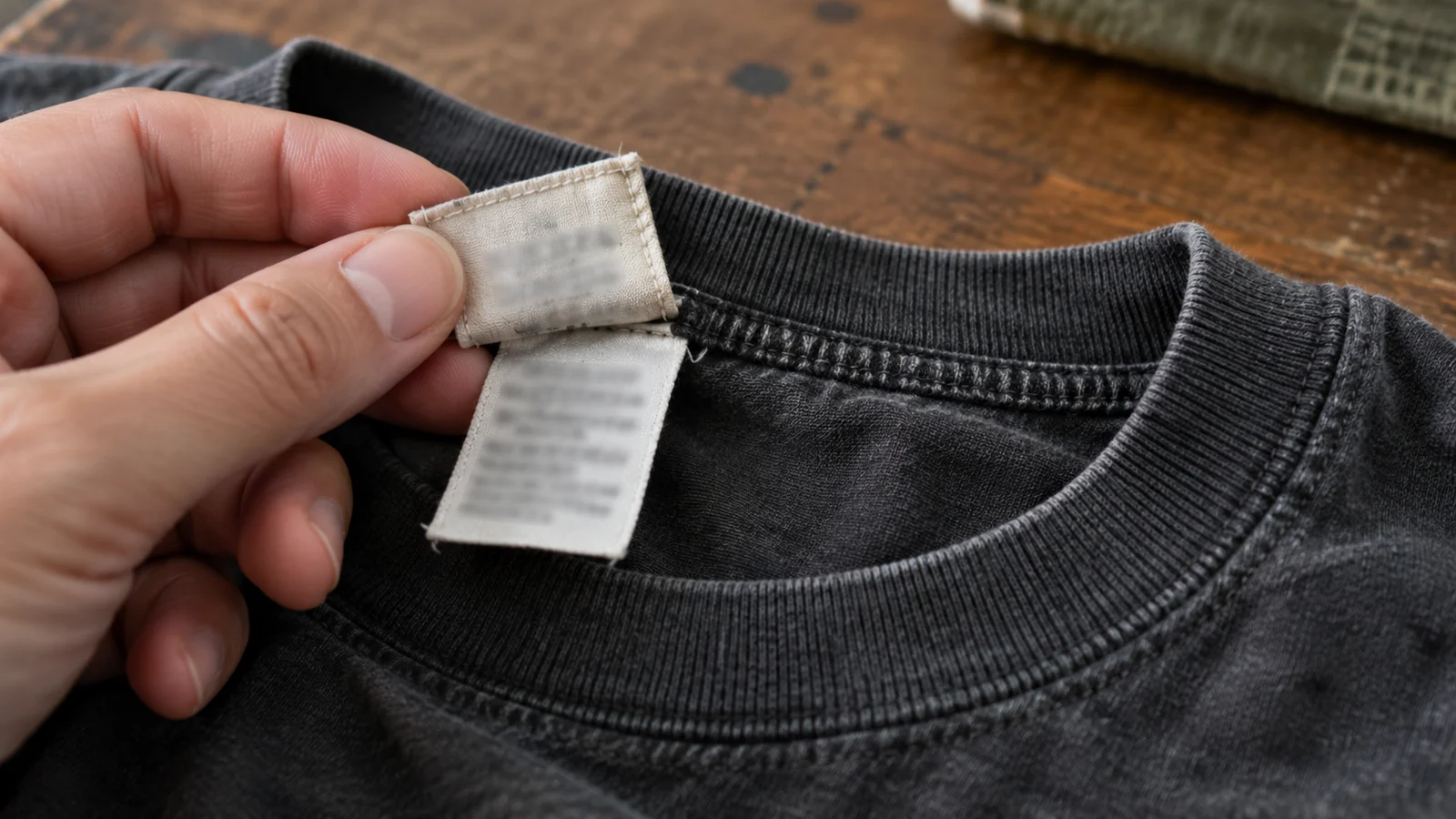
3. RN Numbers Can Help Identify the Company
An RN on a US textile label is a registered identification number that may stand in for a company’s name. The FTC RN database lets you look up the registered business. That can help identify a manufacturer, importer or marketer and guide further research into the company and label.
The number itself is not a timestamp. A business may use its RN across products and years, and a label may reflect distribution rather than sewing. Do not convert an RN lookup into an exact production date.
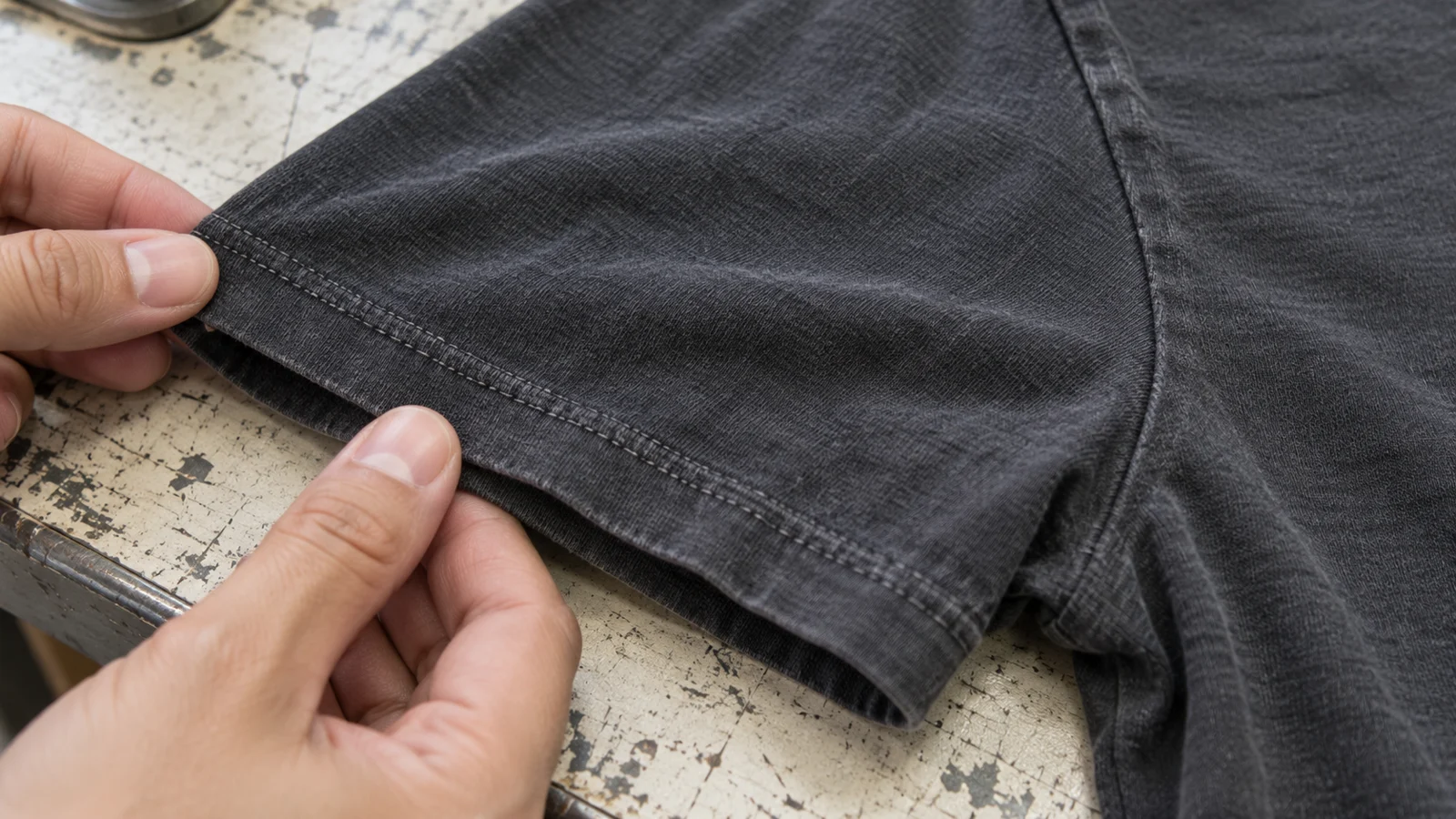
4. Construction Details Can Support a Date—but Rarely Prove It
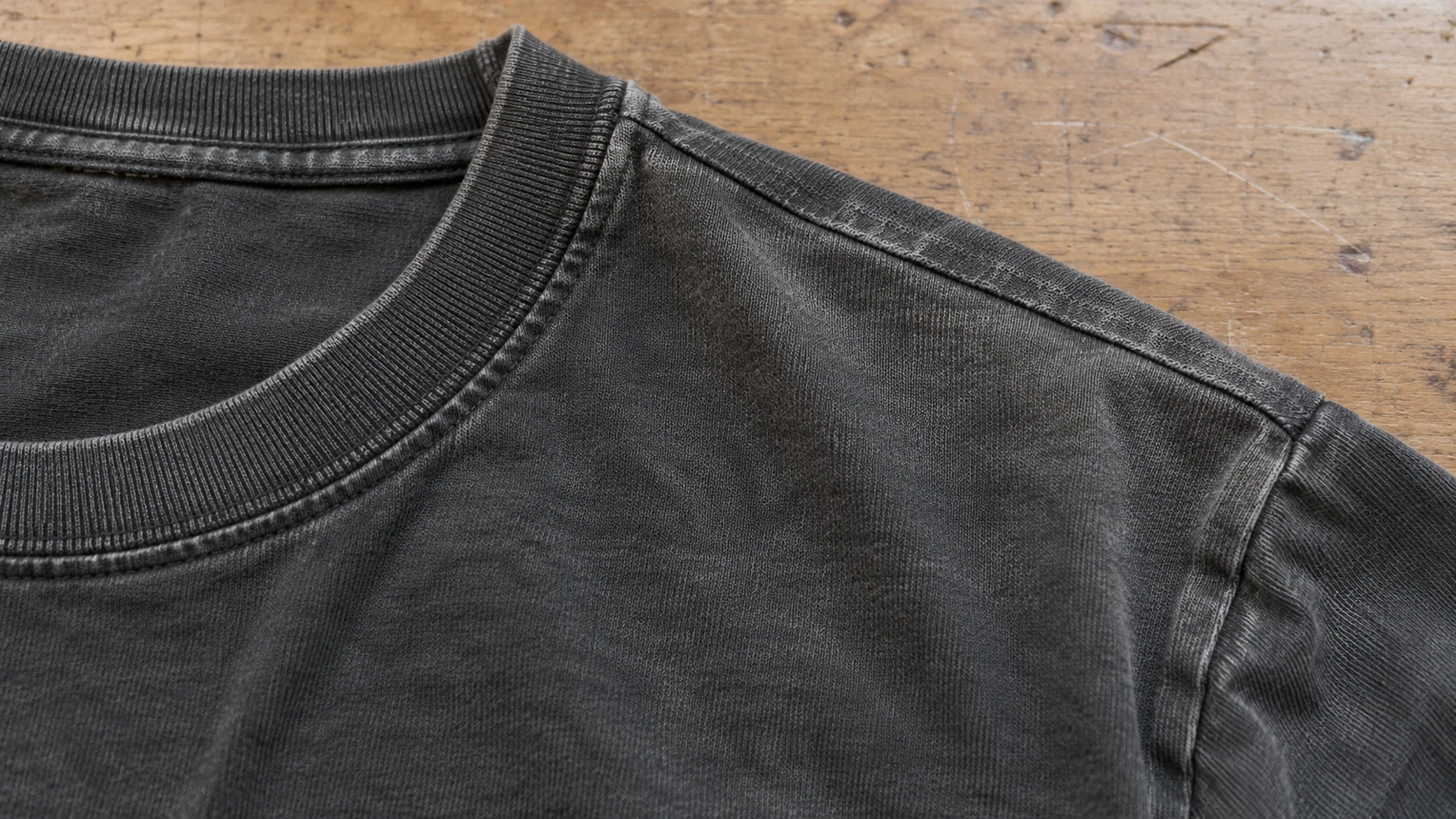
Collectors often inspect sleeve and bottom hems, side seams, collar attachment and overall pattern shape. A single-stitched hem or tubular body may be consistent with certain older production practices, but manufacturing methods overlapped across factories and years. Modern brands can deliberately reproduce these details. Different construction on two claimed contemporaries need not automatically invalidate either one.
The Vintage Fashion Guild’s dating tips explicitly frame construction observations as ways to narrow a range rather than pinpoint a year. Many examples in that resource concern garments other than T-shirts, so they should not be converted into rigid T-shirt date rules. Inspect the entire shirt, not one seam photographed for a listing.
5. Fabric and Hand Feel Can Reflect Age—but Can Also Be Manufactured
Years of wear and laundering may leave a shirt softer, thinner or less even at high-contact areas. Yet the starting fabric matters too. CottonWorks’ knit basics explains how knit construction influences fabric properties; fiber, yarn, weight and finishing also affect the feel of a T-shirt. A light jersey was not necessarily heavy when new, and a substantial older shirt need not feel fragile.
Modern finishing can soften and abrade a new garment. Compare hand feel with the collar, seams, labels and print instead of equating “thin cotton” with age. For material choices rather than authentication, see our guide to T-shirt fabrics.
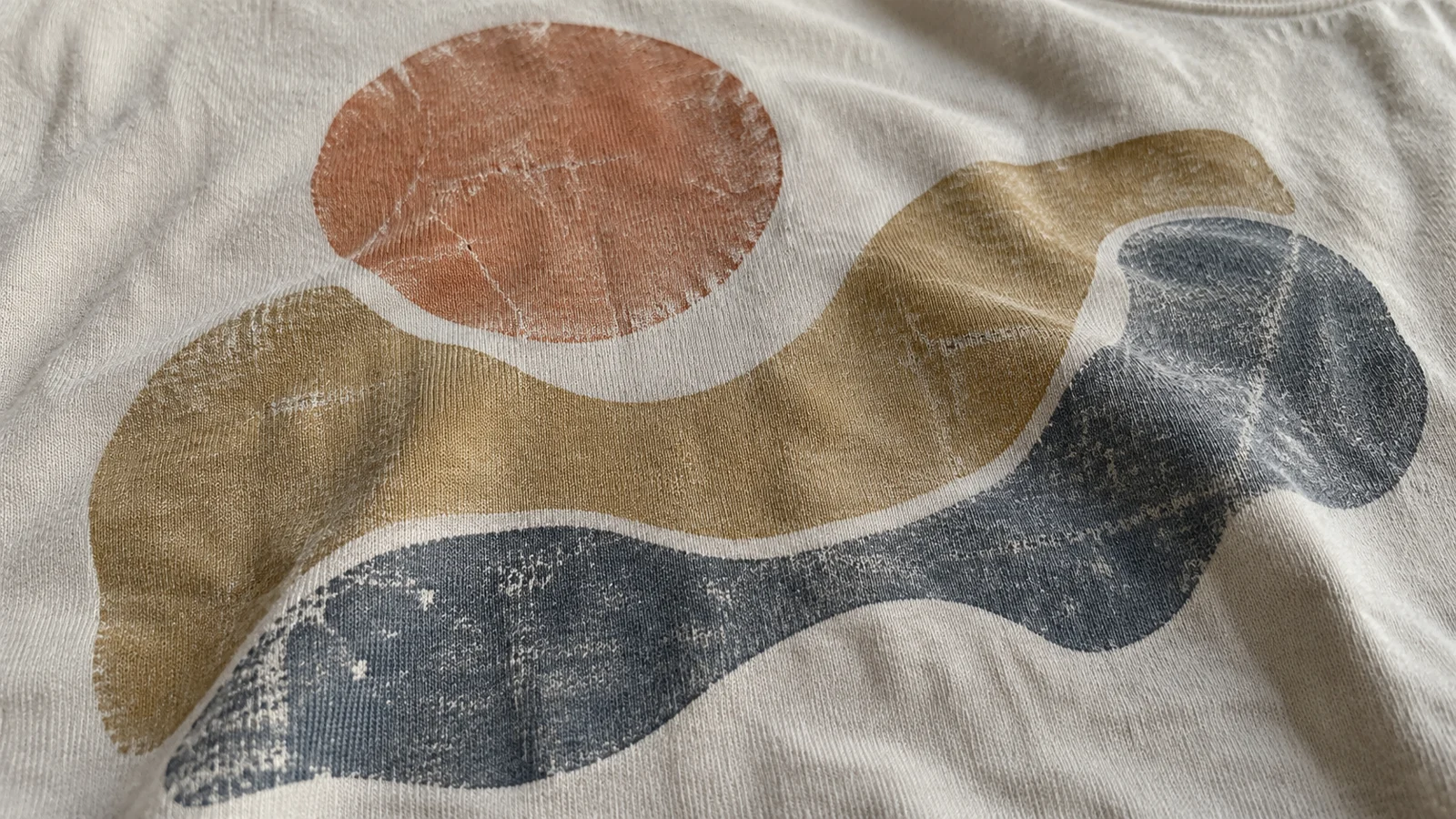
6. The Print Can Reveal Both Age and Reproduction
Study the ink surface, registration, graphic style, placement and how wear crosses the printed area. A worn graphic may be consistent with an older shirt, but printers can create distressed artwork and reduced coverage on new garments. Cracking by itself cannot date the print. A conspicuously aged graphic on otherwise untouched fabric is a reason to inspect further, not automatic evidence of a counterfeit.
A printed copyright or event year offers context, not the shirt’s production date. The design could have been reprinted later or paired with a new blank. Check the tag and construction against the claimed edition, seeking production history where authenticity matters.
7. Wear and Fading Should Make Sense Together
Natural use can leave related changes at the neck, hem, underarms, seams and print. Laundering can alter color as well: AATCC TM61 is a method for evaluating colorfastness to laundering, not a vintage-authentication test. The pattern of wear may support a story when it agrees with the garment’s other details.
Storage, care and use vary, so genuine pieces need not wear alike. An even fade or softened hand can also be produced intentionally. Look for coherence, not a prescribed set of holes or stains.
8. The Design Should Make Sense for the Era
The claimed period should be plausible for the shirt’s silhouette, artwork, colors and cultural references. The Library of Congress overview of twentieth-century American fashion shows how clothing and styling changed with social context; for example, it notes plain white T-shirts, denim and oversized looks in 1990s fashion. That background helps frame a claim, but it is not a catalog that dates every individual shirt.
A modern shirt can borrow an earlier graphic language or fit. A vintage band T-shirt may also have later authorized reprints. Compare the specific print, label and construction with credible records of that design if available. “Looks like the 1990s” is a style observation; “made in the 1990s” is a historical claim requiring more evidence.
Does Single-Stitch Construction Automatically Mean a T-Shirt Is Vintage?
No. Single stitching on a sleeve or bottom hem can be a useful construction clue, but it does not certify age. Older and newer production methods overlap, and a modern reproduction may intentionally use a single-stitch finish. The often-repeated claim that one exact year ended single stitching everywhere oversimplifies how different factories and markets adopted equipment.
Check whether stitching, tag, fabric, print and known history agree. Construction can strengthen a period estimate, but one hem cannot rescue an otherwise unsupported claim. A stitch-only photo hides the rest of the evidence.
Does a Faded or Cracked T-Shirt Automatically Count as Vintage?
No. Fading, a softened surface and broken-looking print are visual characteristics. They may develop through use, or they may be designed into a new shirt. The AATCC garment-washing discussion above shows that intentional color loss can imitate aspects of aging. Print artwork can also be distressed before it ever reaches a garment.
An untouched older T-shirt can be more authentically vintage than a newly distressed one. Judge age and context first; use surface wear to test the story. “Vintage-inspired” describes a new faded shirt without implying a false era.
Can Clothing Labels Help Estimate the Era?
Yes, but only approximately and in context. For most covered US textile products, the FTC’s labeling guide explains disclosures of fiber content, country of origin and a responsible business identity, which may be a name or RN. Care instructions come under a separate FTC rule. These details can help identify a product’s market and connect a label to a company.
Do not turn a label feature into an exact-year test. Rules changed, garments moved between markets, and labels can be replaced. Compare the garment with reliably dated examples. An absent tag limits confidence but proves neither age nor newness.
What Is the Difference Between Vintage, Retro and Vintage-Style?
In this guide, vintage refers to an actual older garment. Retro describes a look that refers back to an earlier period; the item expressing that look can be new. Vintage-style or vintage-inspired is an especially useful description for a newly produced shirt made to evoke an older one through its fit, wash or graphic. Retail language is not always consistent, so these are practical distinctions rather than legal categories.
For a listing, ask whether the claim concerns the shirt’s age or only its aesthetic. The first needs historical evidence; the second is about design and quality.
How Should You Check a T-Shirt Before Calling It Vintage?
Start with any credible ownership or purchase history, then inspect the physical shirt in good light. A useful sequence is:
- Photograph the whole shirt and each label without assuming a date.
- Research the label and any RN, while remembering that neither supplies an exact year.
- Inspect hems, seams, collar, fabric and print together.
- Compare the design and any printed date with documented examples of the claimed era.
- Consider whether wear, repairs or replaced labels change the interpretation.
- State the strongest conclusion the combined evidence supports, including uncertainty.
If a high-value garment has a disputed history, request additional provenance or specialist evaluation. A short online “vintage hack” is no substitute for examining the actual item and its context.
What Does “Vintage” Mean When a Brand Is Developing a New T-Shirt?
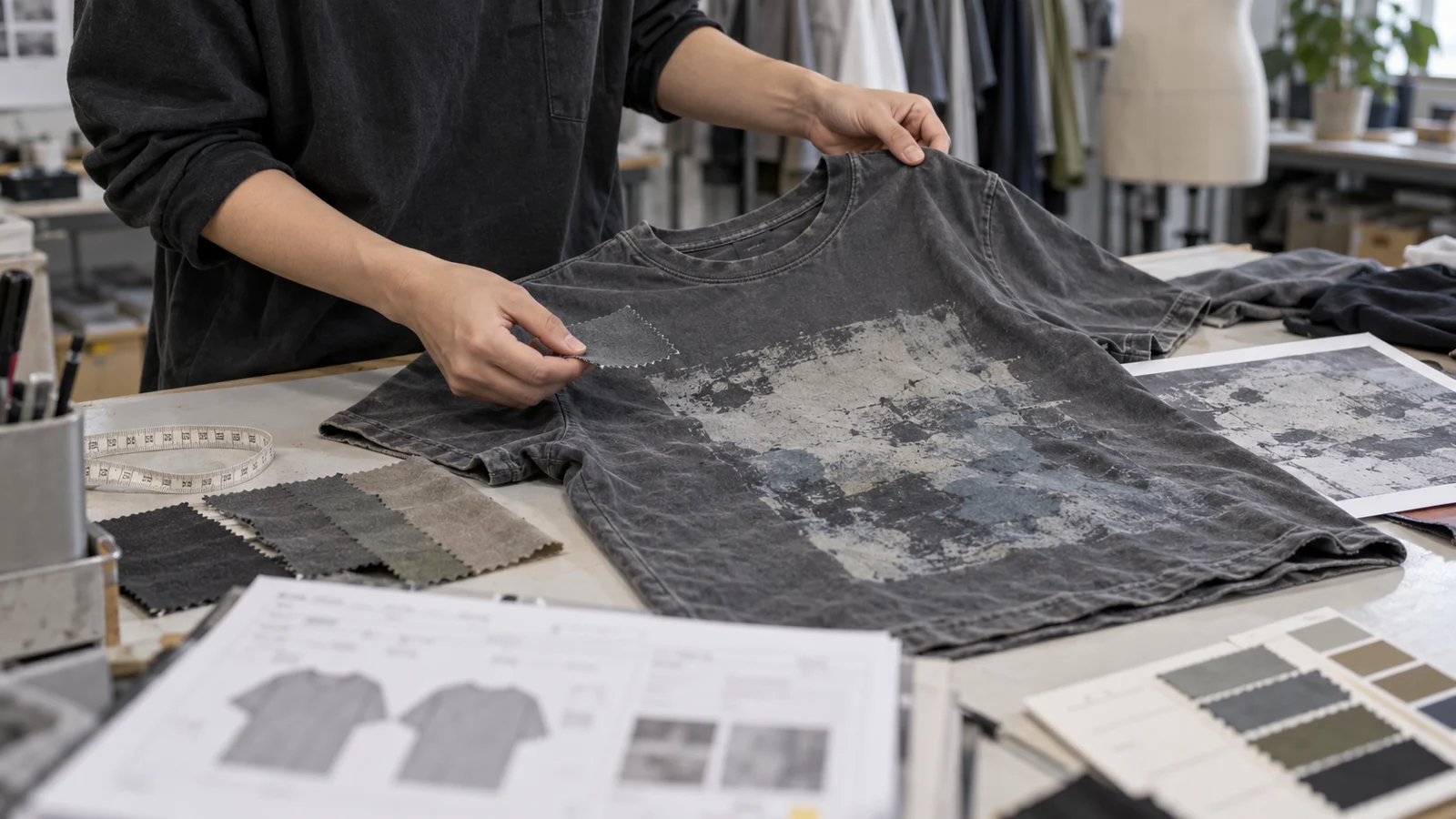
For a new product, “vintage” should be a design direction, not a claim that the garment is historically old. A tech pack that simply says “make it vintage” leaves the factory to guess at fabric, fit, shade, wash, print character and distress. Translate the reference into observable specifications and an approved physical sample instead.
For example, define the intended era, body shape, fabric hand, color range, artwork treatment and acceptable surface variation. Review how the final measurements and finish work together. The US shirt size guide explains why a size label alone does not define the fit. For manufacturing discussion, the Custom T-Shirts page describes the product category. The finished new garment should be described as vintage-inspired or vintage-style, not presented as an authentic old original.
The Simple Way to Decide Whether a T-Shirt Is Truly Vintage
Vintage authenticity is primarily about a garment’s actual age and historical context, not how aggressively it has faded. Start with provenance when available; then test the story against the label, RN, construction, fabric, print, wear and design. Each clue narrows or challenges an estimate. None—including a single stitch, cracked ink or a printed date—proves the case alone.
Keep two judgments separate. “This shirt resembles an earlier era” describes style. “This shirt was made in that era” describes origin. A newly washed reproduction can be an effective vintage-inspired design without being authentic vintage. Honest wording makes both the identification and the product description more useful.
Developing a Vintage-Inspired T-Shirt?
For a new brand collection, translate the reference into a fabric, fit, color, print and finish brief that a sampling team can review. YECHENG APPAREL can discuss project requirements and a physical sample before production; share your concept through our Contact page. A modern product can draw on vintage character while being clearly described as newly made.